
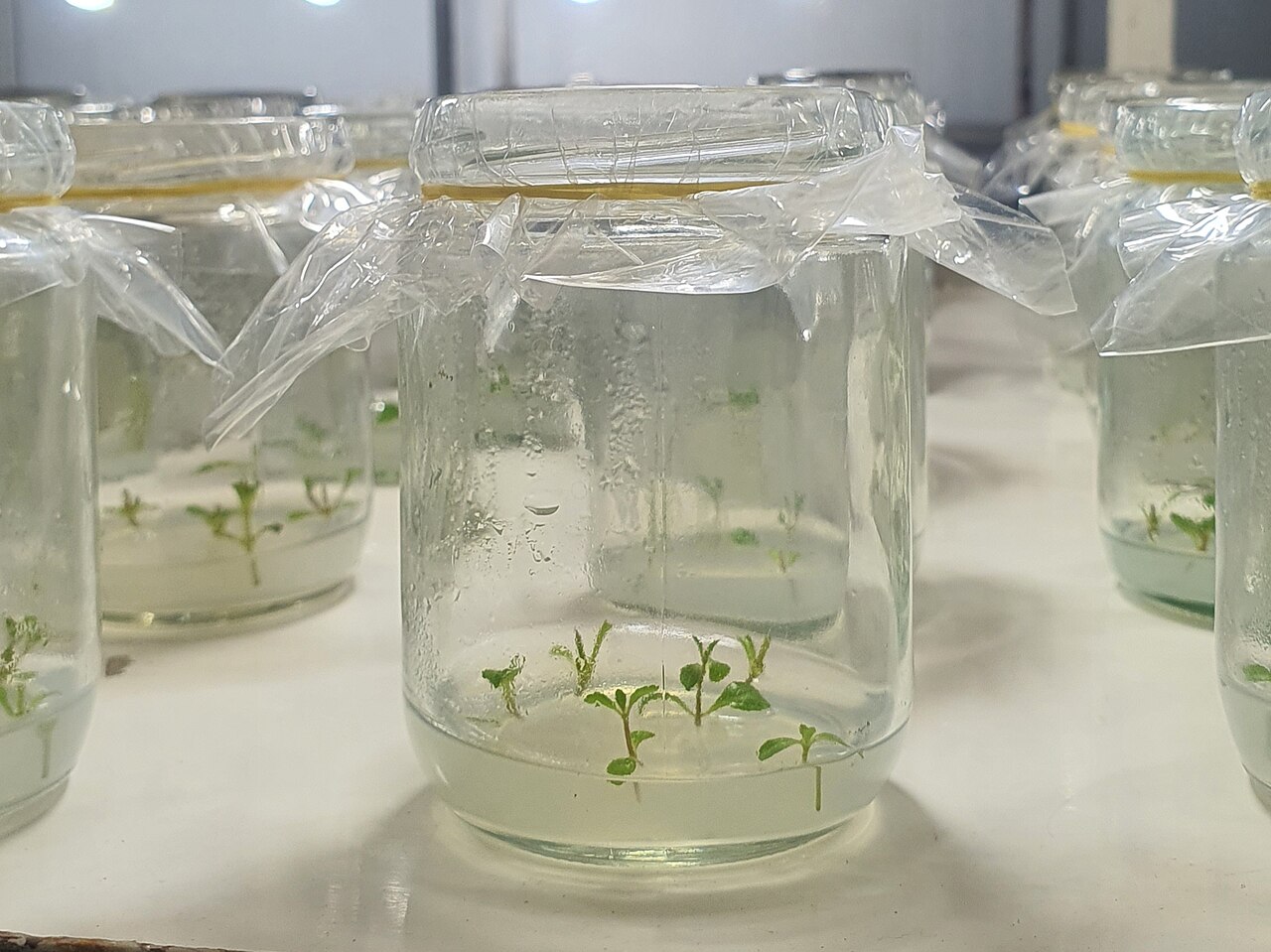
Changes in regulation, more than any scientific breakthrough, are now driving the take-up of gene editing in European crop breeding, according to Lotte Westerhof, co-founder and chief scientific officer of the Dutch company Hudson River Biotechnology. She spoke to AgNavigator at the World Agri-Tech Innovation Summit in London.
"The technology has been there for a long time. The need for traits is indeed growing," she said. "But from my perspective, 100% what is greasing the wheels now is the regulation." Removing regulatory uncertainty, she argued, is encouraging companies that had held back to start gene-editing programmes and partnerships.
Her comments follow a partnership between Hudson River, which specialises in CRISPR-based crop improvement, and Biographica, which has built a computational platform to discover gene targets. The combination joins predictive algorithms that pick out genes linked to desirable traits with Hudson River's genome editing and single-cell plant regeneration, so that promising targets can be edited and validated in plants quickly, the companies said.
Hudson River had expected breeders to arrive asking for specific edits; instead, many ask the more basic question of what to edit. Biographica chief executive Dominic Hall said disease resistance is the leading demand, followed by tolerance of abiotic stresses such as drought and heat. "Diseases evolve as well as plants evolve," he said, warning that a target that looks promising in the literature may already have been overcome by pathogens in the field.
Hall said large seed companies are increasingly turning to outside partners, much as drug makers outsource early-stage discovery, to widen the range of traits their own teams can handle. He expects a later wave of edited crops to offer consumers direct benefits, citing tomatoes enriched with vitamin D, and said such benefits could speed adoption further. The interview was conducted by Oliver Morrison.
Photo: Angphotorion (plant tissue culture in a laboratory) / Wikimedia Commons (CC BY-SA 4.0)
Source: AgNavigator

Comments
(0)