
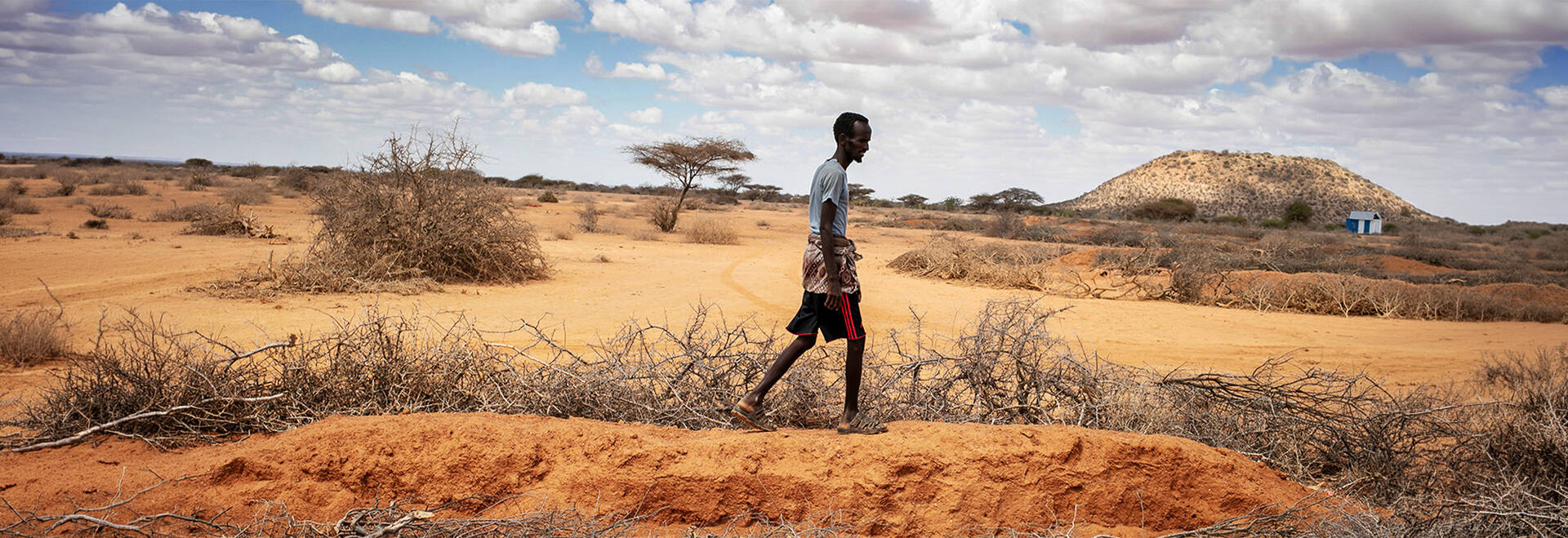
Millions of people in Somalia will go on facing high levels of hunger in the last quarter of 2026, and acute malnutrition among children is expected to worsen as heavy flooding linked to the anticipated El Niño hits the country, the Federal Government of Somalia and the United Nations warned on 23 September in a joint release carried by FAO.
The latest Integrated Food Security Phase Classification (IPC) analysis projects that 5.4 million people will face crisis levels of hunger or worse between October and December 2026, 1.5 million of them at emergency levels or worse. It estimates that 1.92 million children under five will need treatment for acute malnutrition between July 2026 and June 2027, including 433,000 with severe acute malnutrition.
The Deyr rainy season from October to December carries the highest risk. Heavy El Niño rains are expected to flood rural riverine and agropastoral communities, destroying crops and livestock, cutting households off from markets and income, and forcing people off the land they farm and graze. The Somalia Disaster Management Agency (SODMA) estimates that 2.5 to 3.5 million people could be exposed to flooding and about 1 million displaced.
Farming and herding families enter the season already weakened by successive poor harvests, including below-average Gu rains in 2026. Rural areas carry about two thirds of the malnutrition burden. The analysis found that conditions in Burhakaba district of Bay region, at risk of famine in April, have improved after the Gu rains and a larger humanitarian response, but it flags a risk of famine among displaced people in Baidoa, where a follow-up assessment is planned for October.
"Families already facing hunger cannot afford to lose their harvests or livestock to floods," said Etienne Peterschmitt, FAO Representative in Somalia, calling for urgent funding to turn early warnings into action and support early recovery for rural people.
The government and the UN are asking for food and cash assistance and malnutrition treatment to be financed without a break, for food, emergency livelihood and nutrition supplies to be pre-positioned in flood-prone rural areas before roads close in October, and for food security, nutrition, health and water services to be scaled up in the highest-risk districts. They say funding decisions in the coming weeks will determine whether help is in place when the floods arrive.
Source: FAONewsRoom
Comments
(0)