
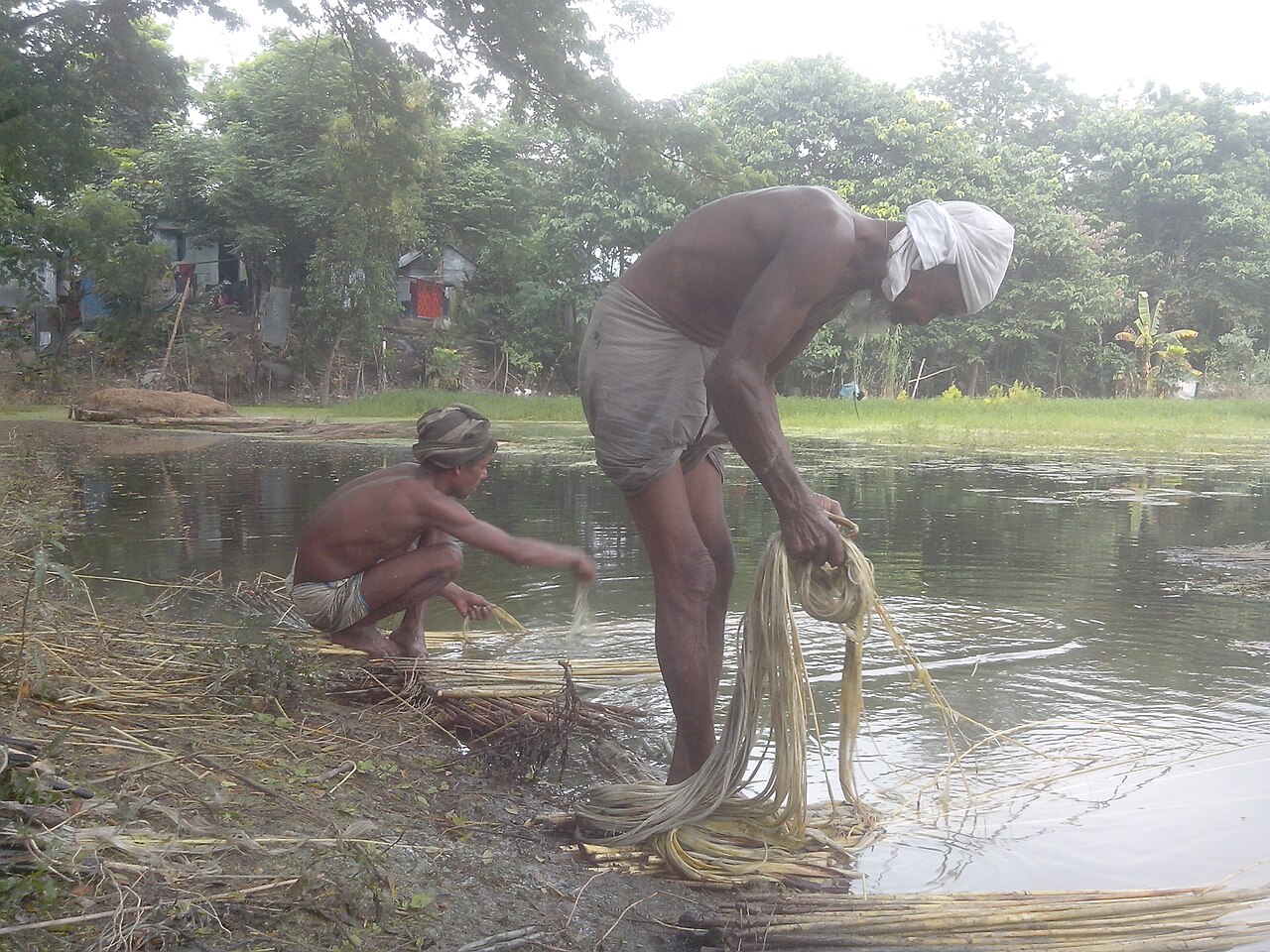
Bangladesh has presented jute as an eco-friendly substitute for plastic and a tool against climate change at the 31st UN climate conference (COP31) in Antalya, Turkey. A special session on the fibre was held on Tuesday at the Bangladesh Jute Pavilion in the conference Green Zone, organised by the Ministry of Foreign Affairs, the Ministry of Textiles and Jute and partners from the industry.
The session heard that jute absorbs carbon while it grows and that the fibre is fully biodegradable, leaving no harmful waste. According to the foreign ministry, jute grown on one hectare can absorb up to 15 tonnes of carbon dioxide in a single season, and carbon storage in the soil continues after the crop is cut.
Jute is no longer limited to sacks, hessian and rope, speakers said. It now goes into shopping bags, geotextiles, materials for car parts and high-grade nanocellulose. Jute geotextiles can be used to check river erosion, protect coasts and prevent soil loss. Jute sticks, once thrown away as farm waste, are being turned into charcoal and activated carbon, which have an international market.
The session also set out the money involved. Raw jute fetches about US$1,200 a tonne, according to the figures presented. Processed into packaging products, the same tonne can be worth US$2,400 to 2,500, and blended-fibre products can earn US$4,000 to 5,000.
Bangladesh has set a strategic target for 2026 to 2031 of doubling jute export earnings to US$1.64 billion. Over the same period it plans to raise the share of value-added goods in its jute products from about 45 per cent now to 70 per cent, by widening the fibre's uses, applying new technology and making products to the specifications of foreign buyers.
Examples of solar-powered and carbon-neutral jute mills were shown at the session. Speakers stressed research on nanocellulose, laboratories of international standard, digital traceability across production and supply, and compliance with the European Union's new environmental rules, and said all of this needs international partnerships, technical cooperation and investment.
The session noted room for demand for jute goods to grow as a replacement for single-use plastic, which could widen the market for both the fibre and jute sticks. Foreign buyers, investors and technology partners have been invited to visit the pavilion while the conference runs; COP31 talks continue until 20 November. The Daily Bangladesh special correspondent's report drew on United News of Bangladesh (UNB).
Photo: Rupon Das / Wikimedia Commons (CC BY-SA 4.0)
Source: Daily Bangladesh

Comments
(0)