
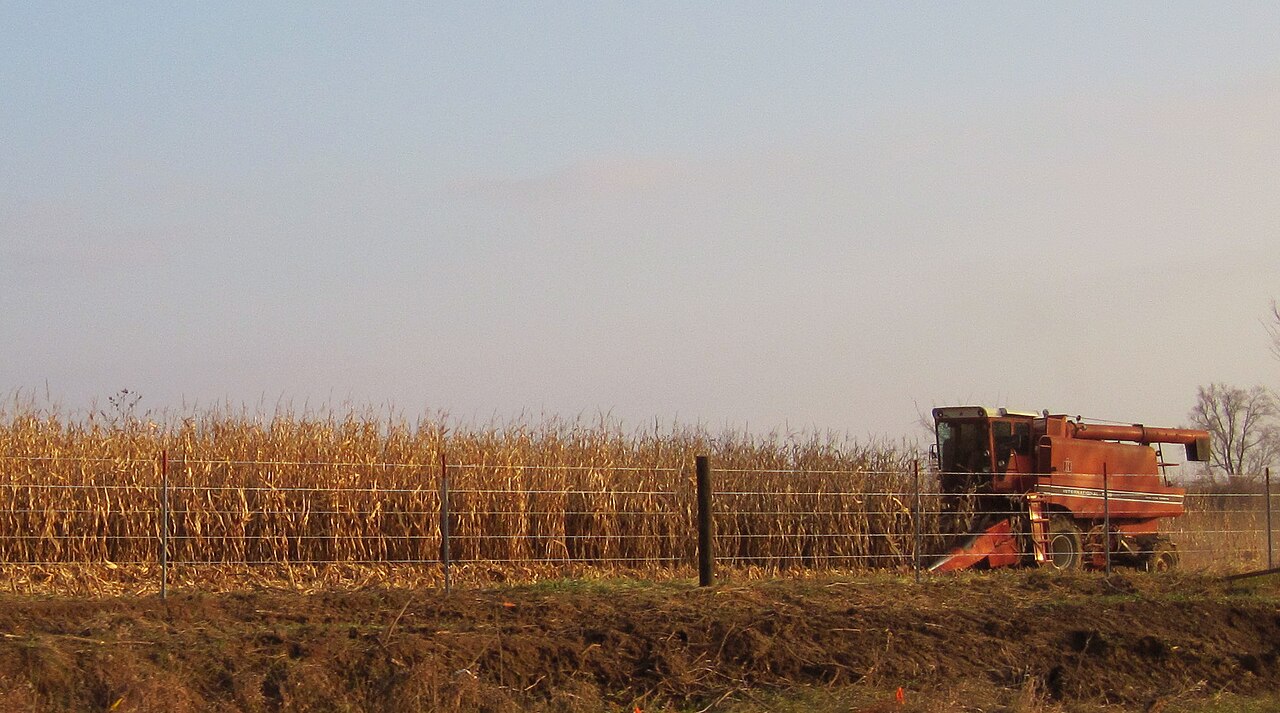
The US Department of Agriculture lowered its forecast for the 2026/27 corn crop and raised its soybean outlook in the November World Agricultural Supply and Demand Estimates (WASDE), released on Tuesday, Global Agriculture reports.
Corn production was cut by 141 million bushels to 15.9 billion bushels, as the national average yield fell 1.6 bushels from October to 179.6 bushels an acre, below the 180.3 bushels the trade had expected. Ending stocks were put at 1.758 billion bushels, a stocks-to-use ratio just above 10%. USDA also lowered its corn export and feed-use projections and cut the season-average farm price by 10 cents to $4.60 a bushel.
Soybean production was raised by 12 million bushels to 4.6 billion bushels on stronger-than-expected yields in Minnesota, Iowa, South Dakota and Nebraska. The national yield rose two-tenths of a bushel to 53.3 bushels an acre, though still two-tenths below trade expectations. Ending stocks were cut by 15 million bushels to 300 million, reflecting a 25-million-bushel increase in the export forecast, and the season-average price was raised 10 cents to $12.10 a bushel, with continued Chinese buying cited as support.
For wheat, ending stocks were raised slightly to 743 million bushels, still 19% below the previous marketing year, and the season-average price was trimmed by 10 cents to $6.20 a bushel. Cotton production was revised down by 267,000 bales to 13.18 million bales.
The WASDE is one of twelve reports issued each year by USDA's World Agricultural Outlook Board, drawing on several federal agencies, and is the government's benchmark for supply and demand of the major field crops, livestock and dairy. Traders use it to gauge the balance of production, use, exports and carry-over stocks for the marketing year, which for most US row crops runs from September to August.
Photo: Bill Whittaker / Wikimedia Commons (CC BY-SA 3.0)
Source: Global Agriculture



Comments
(0)