
Protected production gives growers more control over conditions, but success still depends on healthy plants, sound management and a viable market, speakers told the Western Cape Undercover Farming Conference and Expo, held in Groot Drakenstein, South Africa, on 21 and 22 October, Farmers Weekly reports.
Tshogofatso Matlala, a water and sustainable agriculture graduate trainee at GreenCape, urged delegates to see the infrastructure "not merely as a defence and risk-mitigation measure, but as a high-return, bankable capital asset". She estimated undercover production as a potential R5.4 billion to R8.6 billion investment opportunity, from shade netting to more intensive tunnels.
Dr Miekie Human, science and policy manager at the South African National Seed Organization, said innovation begins with seed, and that tools such as high-throughput phenotyping, molecular markers and precision breeding can help breeders select useful traits faster. FNB senior agricultural economist Paul Makube warned against investing before securing an outlet: "You don't go into this environment without knowing where you're going to sell," he said, adding that small price and volume changes can erase cash quickly in capital-intensive businesses.
On the technology side, Joël van der Schyff, chief executive of the automation service provider Agrilogiq, said climate control should follow the crop rather than temperature alone, and that vapour pressure deficit, which links temperature and humidity to how readily a crop loses water, is the key data point his company uses. The biggest challenge, he said, is managing energy costs against output.
Nerine Koch of Vireo Agri cautioned that sophisticated fertigation cannot make up for damaged roots, explaining that root-zone acidification can restrict calcium uptake and weaken fruit development even when enough fertiliser is applied. Consultant Dr Ida Wilson said visible postharvest damage often begins earlier, in planting material, water quality, calcium uptake, flower-stage infection, spray accuracy, harvest maturity or cooling. "Don't diagnose damage in isolation. Look at the entire system," she said.
Delegates also visited Cultura Fresh, which grows hydroponic lettuce under protective structures, and Stellenbosch University's HortiDemoCentre, where greenhouse technologies are used for research, training and commercial-scale trials. The report was written by Clayton Swart.
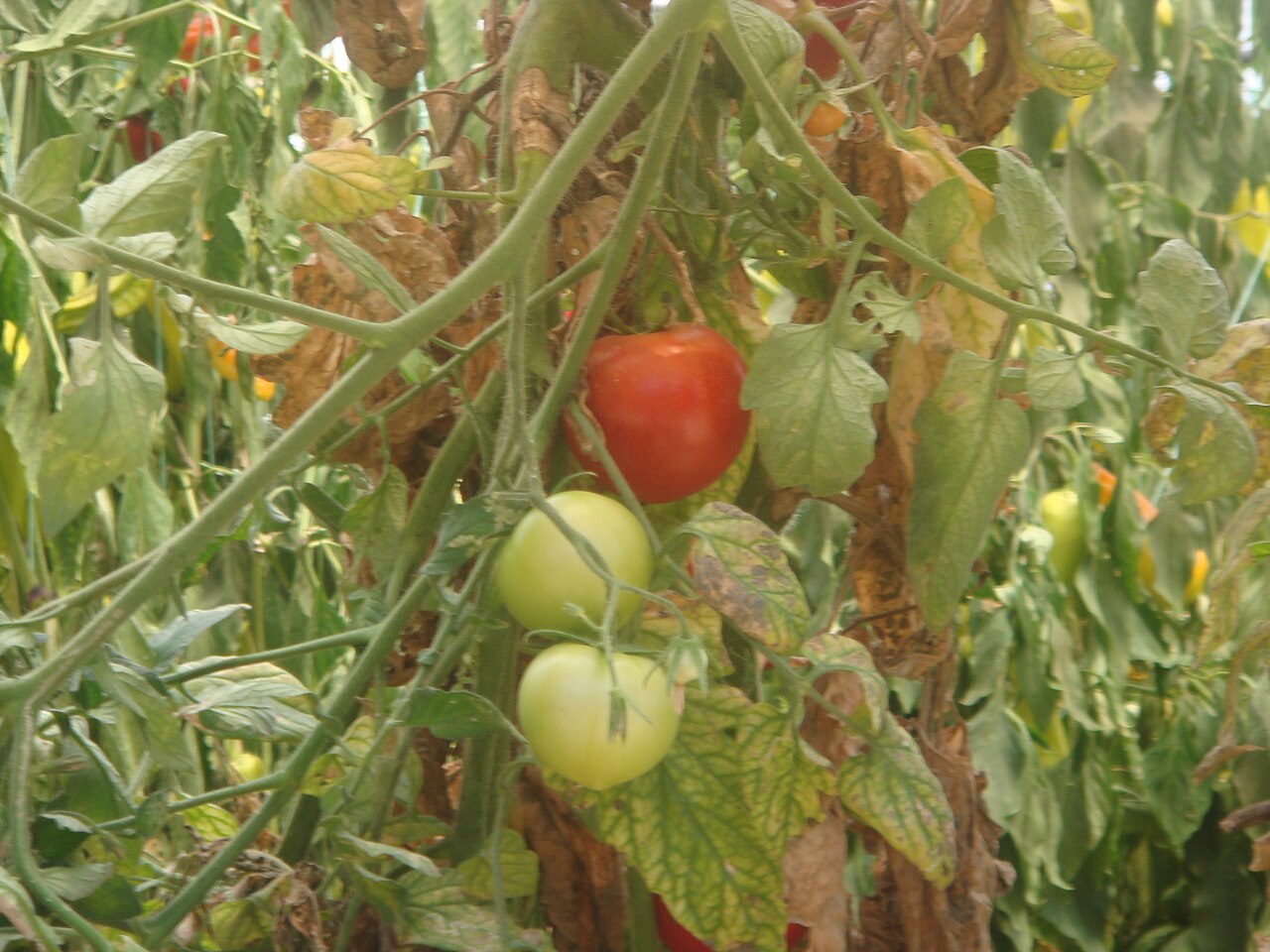
Photo: Lemur12 (tomatoes in a greenhouse) / Wikimedia Commons (CC BY-SA 3.0)
Source: Farmers Weekly South Africa

Comments
(0)