
Soybeans grown on headlands, the strips around field edges where machinery turns, yielded on average 14 percent less than the rest of the crop, a large study by Cornell University's Nutrient Management Spear Program has found, Farms.com reports. Across whole fields that worked out to an average yield loss of about 4 percent.
Researchers analysed yield data from nearly 1,500 soybean fields covering more than 65,000 acres on 18 farms. Headlands are more exposed than field centres to wildlife damage, pests, disease, weed competition and harsh weather, and they are compacted by repeated passes of machinery during planting, spraying and harvest.
To measure the effect accurately, the team cleaned the yield monitor data, correcting for changes in combine speed and for the delays in sensing that occur when a combine starts and stops. "Yield monitor data were corrected taking into account flow and moisture delays and start and end pass delays, which results in more accurate yield maps for a specific field," said assistant data analyst Abraham Hauser. The team then compared yield with and without the headlands.
The effect varied widely: some farms lost little at the edges, others much more, so the researchers advise deciding field by field rather than applying one approach everywhere. The results match earlier work that found similar losses on corn grain and corn silage headlands.
Possible responses include reducing compaction, improving weed control or adjusting nutrient management where losses are large, the report says, while in fields with small losses major changes may not pay. The study shows how corrected yield maps from commercial farms can point growers to the parts of a field that hold back production.
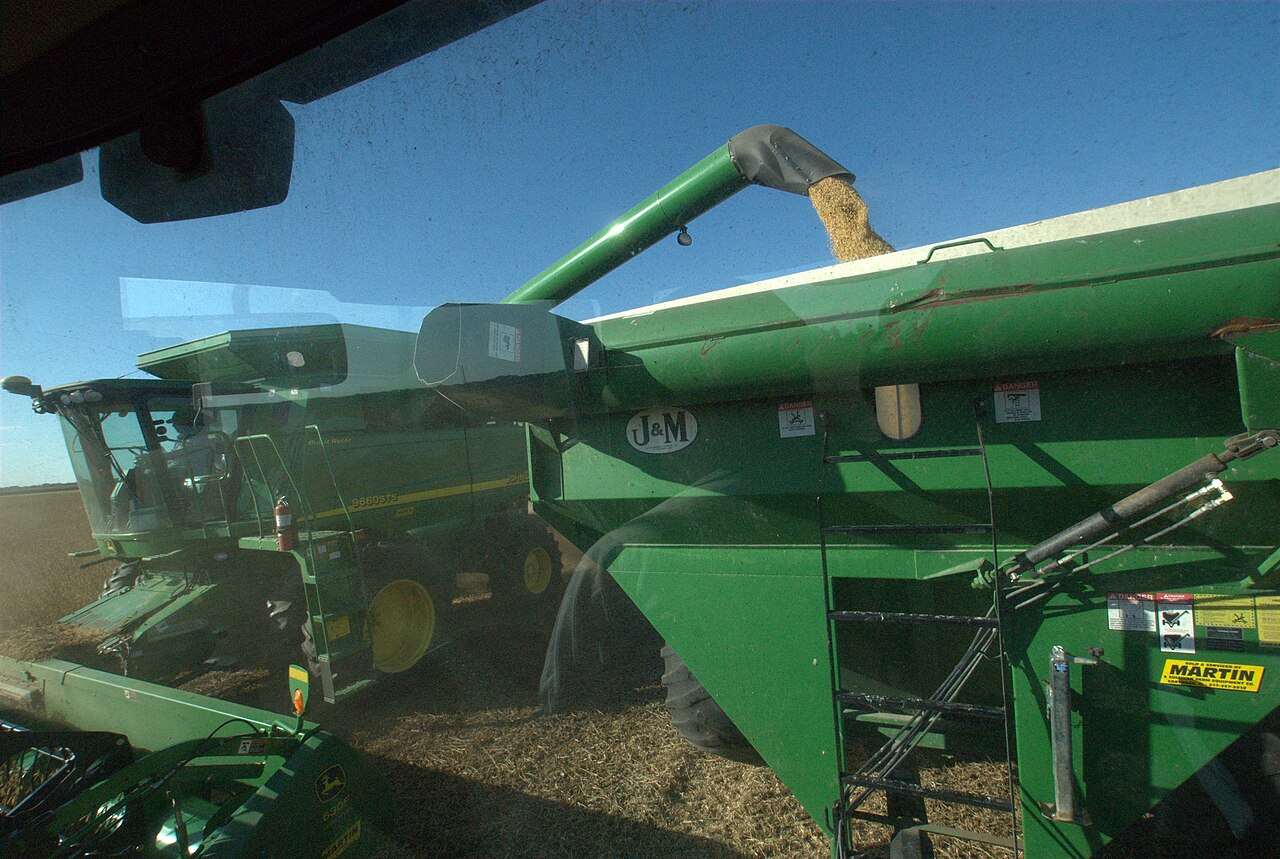
Photo: Judd McCullum (combine harvesting soybeans in Illinois) / Wikimedia Commons (CC BY-SA 2.0)
Source: Farms.com



Comments
(0)