
Conventional chemotherapy generally targets rapidly dividing cells. Precision therapy, or precision oncology, is a modern approach in which treatment is chosen for the individual patient by analysing not only the type of cancer but the tumour's genetic mutations, molecular profile and biomarkers. Dr Md Tousifur Rahman, a medical and radiation oncologist at TMSS Cancer Centre in Bogura, explains the approach in an article in Daily Bangladesh. The views are the writer's own.
As he explains it, precision therapy identifies a specific molecular target in the cancer and attacks it. In suitable patients it can make treatment more effective, avoid unnecessary or less effective treatment, and in some cancers improve disease control and survival. But it does not work for every patient: a targetable biomarker and an effective drug must both be available.
The main types are targeted therapy, which blocks a specific molecular target; immunotherapy, which turns the immune system against the cancer; hormonal therapy for hormone-dependent cancers; antibody-drug conjugates (ADCs), which deliver a drug to cancer cells by way of an antibody; and PARP inhibitors, which block a DNA repair pathway. Before targeted therapy starts, the tumour often has to be tested to see whether a suitable target is present.
The cancers he lists where this matters include lung cancer (EGFR, ALK, ROS1, KRAS G12C), breast cancer (ER, PR, HER2, PIK3CA, BRCA1/2), colorectal cancer (RAS, BRAF, MSI-H/dMMR), ovarian cancer (BRCA1/2 or HRD status) and prostate cancer (BRCA1/2 and other gene alterations). The tests include tissue biopsy and histopathology, immunohistochemistry (IHC), PCR, FISH and next-generation sequencing, liquid biopsy, and germline genetic testing where needed.
He also sets out the limits: not every cancer has a targetable mutation, drug prices and availability are a major obstacle, resistance can develop even to targeted therapy, a mutation does not always mean an effective drug exists, and side effects and other illnesses have to be weighed.
For Bangladesh he recommends making sure of correct histopathology and IHC before treatment starts, wider access to molecular profiling for lung cancer, ER, PR and HER2 testing for breast cancer, MMR/MSI and RAS/BRAF testing for colorectal cancer, genetic counselling for suitable patients, and molecular tumour boards for complex cases.
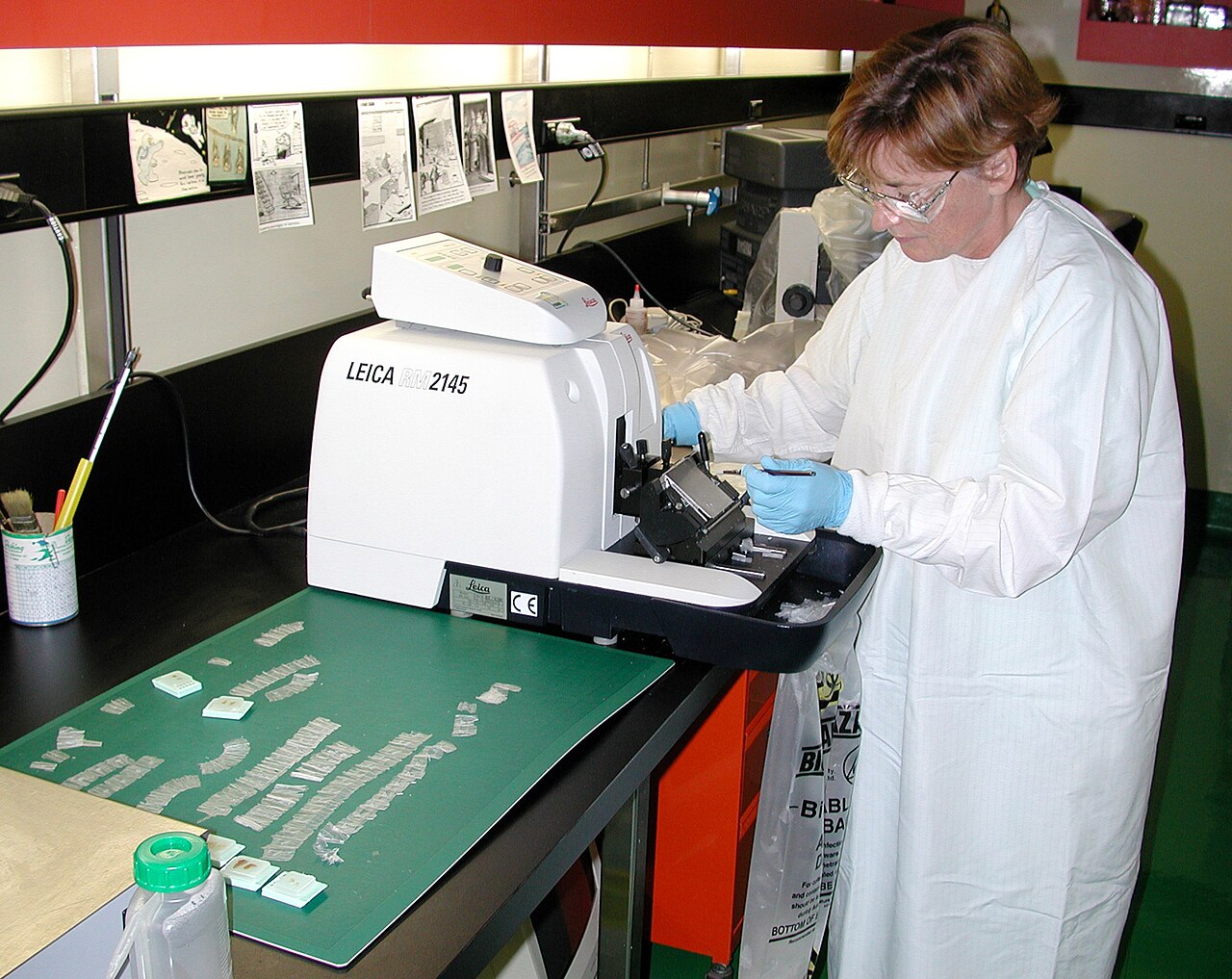
Photo: Livestock Industries, CSIRO / Wikimedia Commons (CC BY 3.0); an immunohistochemistry laboratory (illustrative).
Source: Daily Bangladesh




Comments
(0)