
A team at the University of Dhaka has built an automatic, internet-connected smart trap to detect the dengue-carrying Aedes mosquito early. Called MUST-CloudNet, the device attracts mosquitoes with sound, photographs them and uses artificial intelligence (AI) to identify the species and count them, so whether Aedes numbers are rising in an area can be known remotely.
The paper appeared on 8 October in IEEE Transactions on Instrumentation and Measurement. The device was developed jointly by the Microsystems and Nanoengineering Lab of the Department of Electrical and Electronic Engineering and the Muid Research Group of the Department of Zoology.
How it works: the trap plays a sound at 350 to 500 hertz that imitates the wingbeat of a flying female Aedes. Male Aedes drawn to it are sucked in by a fan and stuck to yellow sticky paper. Camera images go over the internet to a cloud server, where an AI model identifies the species and counts the insects, and the results appear on a web dashboard.
The researchers explain that males mature before females and stay close to breeding sites, so a rise in male Aedes in an area can give early warning of new breeding, which helps in assessing and preventing dengue risk.
In laboratory tests the trap with sound caught about five times as many Aedes on average as the same trap without it. It was then tested in the open on the campus for three days running, and kept working through heavy rain, gusty wind and city noise, catching 49 Aedes in three days.
Each trap cost about Tk 12,000 to build, against about Tk 25,000 for a CDC light trap used in mosquito surveys and about Tk 20,000 for a BG-Sentinel trap. One central server can analyse data from many traps at once, and on battery the trap runs for about four and a half hours during a power cut.
The researchers say more testing is needed before wider use. In June-July 2027 they plan to place 10 to 15 traps in residential areas of Dhaka South City Corporation to map where Aedes is increasing ahead of time. Later plans include solar power, a long-range LoRaWAN radio link to send data without Wi-Fi, and weatherproofing.
The team includes Professor Dr Sayeed Mahmud Ullah and Associate Professor Dr Md Ahsan Habib of Electrical and Electronic Engineering and Associate Professor Dr Khandaker Ashfaqul Muid of Zoology, among others. The work was funded by the University of Dhaka research fund. The report is by Desh Rupantor's Dhaka University correspondent.
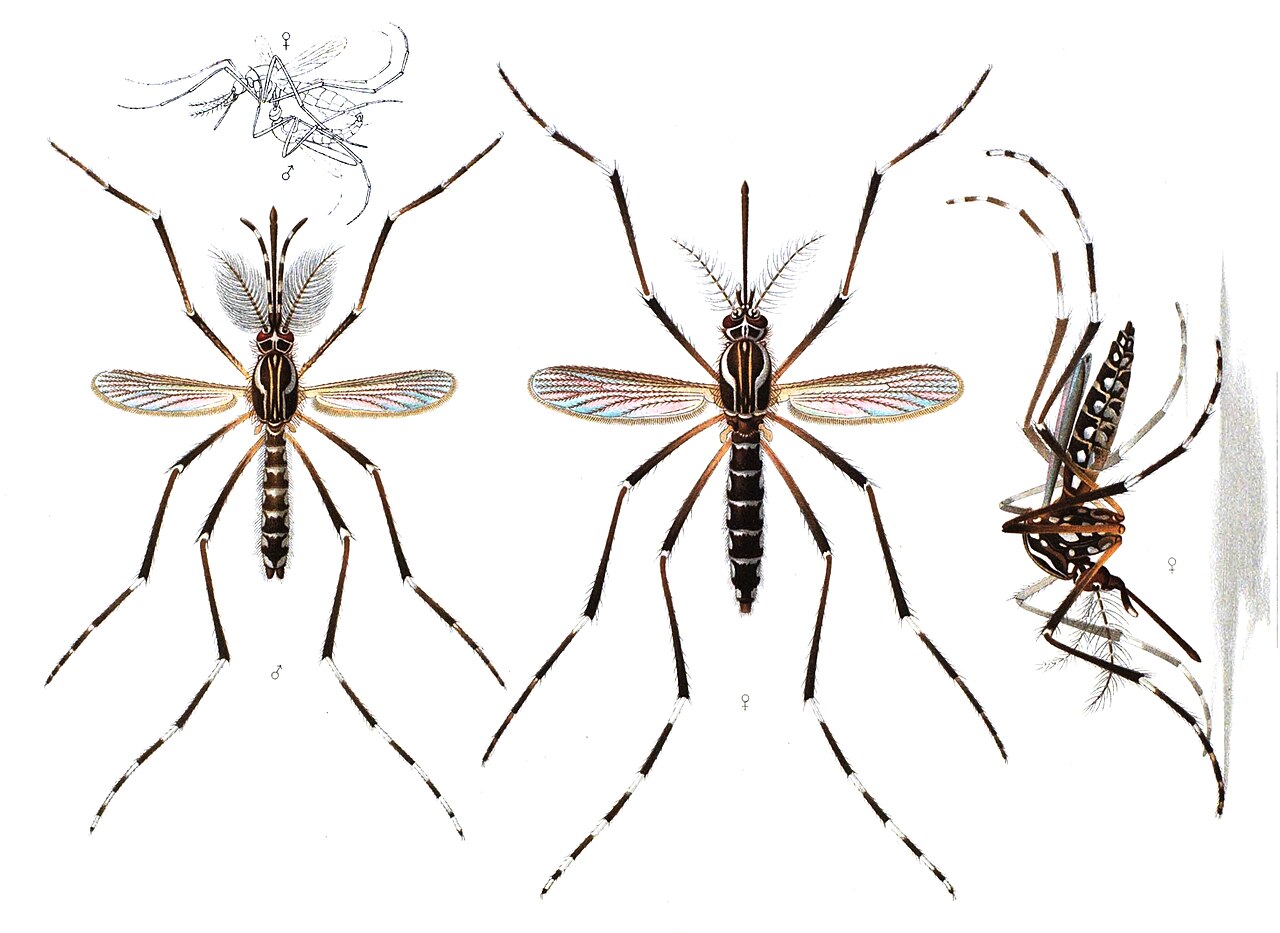
Photo: Emil August Goeldi / Wikimedia Commons (public domain); a 1905 colour plate of the Aedes aegypti mosquito.
Source: Desh Rupantor


Comments
(0)