
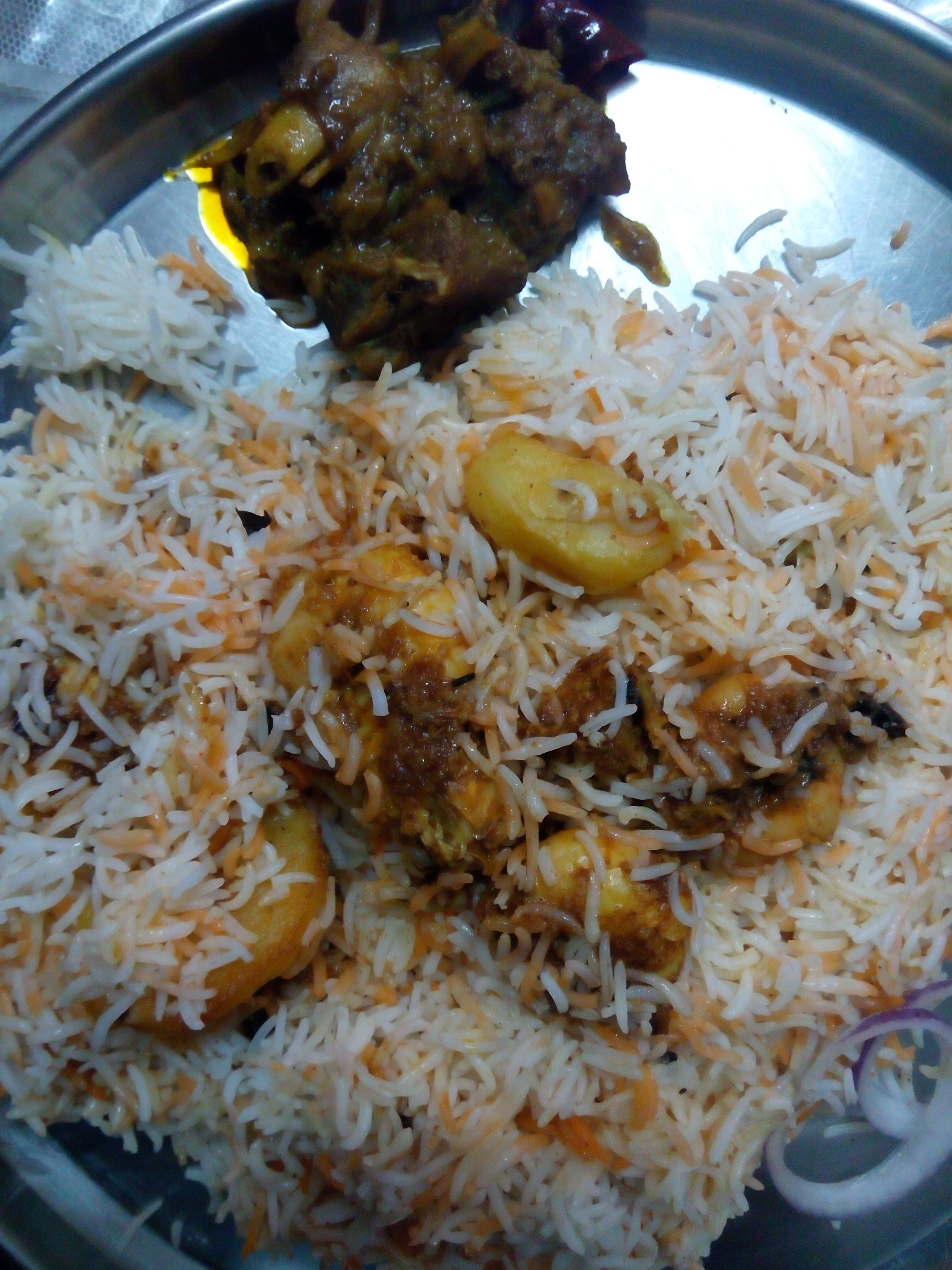
On 14 March 2026 the lifestyle desk of the Bangladeshi news site Jagonews24 published a recipe for chingri dudhe biryani, prawn milk biryani, as a dish to set the menu of a special day apart. The paper filed it among its recipe and Eid food pieces. As the desk described it, the aroma of a traditional biryani meets the creaminess of milk and the tenderness of prawns, held together by a careful balance of spices. The milk in this biryani is coconut milk: one cup of it goes into a pot of one kilogram of medium prawns and one kilogram of polao rice, and the dish is finished with fried onion and ghee. The ingredients and steps below are given exactly as the recipe published them. The sections after them explain what kind of dish this is, the prawns, rice and coconut milk it is built on, where Bangladesh's prawns come from, and what food-safety and health authorities say about handling and eating shellfish.
The ingredients as published
The recipe lists eighteen items. It does not say how many people the quantities serve, and it names the nut paste only as badam bata, nut paste, without saying which nut is meant. In the order given, the list is:
- Medium prawns: 1 kg
- Salt: a little
- Soybean oil: 1 tablespoon
- Chopped onion: 2 tablespoons
- Ginger paste: 2 tablespoons
- Garlic paste: 1 teaspoon
- Turmeric powder: 1 teaspoon
- Chilli powder: 1 teaspoon
- Sugar: 1 teaspoon
- Garam masala: a few
- Salt: to taste
- Polao rice: 1 kg
- Water: 5 cups
- Nut paste: 1 tablespoon
- Raisins: 1 tablespoon
- Coconut milk: 1 cup
- Fried onion (beresta): 2 tablespoons
- Ghee: 1 tablespoon
Salt appears twice: a little is rubbed on the prawns before they are fried, and more is added to taste when the spices are cooked. The garam masala is listed as koyekti, "a few", a count rather than a measure, and the recipe does not name the spices it means. Polao rice is the fine, aromatic rice that Bangladeshi kitchens use for polao and biryani; the recipe does not name a variety.
How the recipe cooks it
The method, step by step, as Jagonews24 gave it:
- Clean the prawns and drain off the water.
- Rub them with a little salt and fry them lightly in the soybean oil.
- In the same karai, fry the chopped onion.
- When the onion is fried, add the ginger paste, garlic paste, turmeric powder, chilli powder, sugar, salt and garam masala with a little water, and cook the spices well.
- When the spices are well cooked, add the rice and the fried prawns and stir for a while.
- Add the water, nut paste and raisins, cover the pan and cook on a medium flame.
- After 15 minutes, stir in the coconut milk and cook on a low flame.
- When the water has dried and the rice is cooked, add the fried onion and the ghee and turn off the stove.
The only time the recipe states is the 15 minutes on a medium flame before the coconut milk goes in; the rest is judged by eye, by when the water has gone and the rice is done. Everything happens in one karai. The prawns are fried first, the onion and the spice paste follow in the same pan, and the raw rice is stirred into the cooked spices together with the prawns before the water is added. The coconut milk comes late, once the rice has cooked for a while in the water, and the ghee and fried onion are added at the very end, as the stove is turned off.
Biryani, polao and Bengal's prawns in coconut milk
Biryani is a mixed rice dish traditionally made with spiced meat, seafood or vegetables. Encyclopedic accounts place it in Mughal-era India. The Ain-i-Akbari, written between 1589 and 1596 in the reign of the emperor Akbar, lists pilau and biryani among its rice dishes and gives quantities for each, and the Portuguese priest Sebastien Manrique wrote in 1641 of the "rich and aromatic" biryanis and Persian pilaos on sale in the tent city of the emperor Shah Jahan on the road to Lahore. The name is traced to the Persian biryan or beriyan, "fried" or "roasted". Historians still debate its origin: the food historian Lizzie Collingham holds that the modern dish took shape in the Mughal court kitchens, where the Persian pilau met the spicy rice dishes of Hindustan, while others, among them the historian of Islamic cuisine Salma Hussein, think it reached South Asia from Persia before the Mughals.
Meat, whether chicken, goat or beef, is the usual main ingredient, and seafood such as fish and prawns is sometimes used. Richer versions add cashews and sultanas, much as this recipe adds nut paste and raisins. Cooks distinguish two techniques. In a pakki biryani the ingredients are cooked, at least partly, apart and then arranged in layers; in a kacchi biryani raw layers are sealed in a pot and cooked slowly, dum style, so that the food steams in its own liquid. Pilau, or polao, is usually a one-pot dish. The cookery author Colleen Taylor Sen notes that the two are sometimes "almost impossible to tell apart", but that pilau is usually a side dish and biryani the centrepiece of a meal. The Jagonews24 method, in which the rice cooks in the same pot as the fried prawns and spices, follows the one-pot way.
In Bangladesh, Banglapedia, the national encyclopedia, lists polao, morog-polao, biriani and tehari as special dishes made from aromatic small-grained rice cooked with chicken, beef or mutton, ghee and spices. Mutton kacchi biryani has been described as the quintessential wedding dish of Old Dhaka, and some biryanis carry the name of the shop that sells them, as with Fakhruddin Biriyani in Dhaka. Across the subcontinent, Eid ul-Adha is marked with biryani made from the mutton of the goats slaughtered for the festival.
Prawns and coconut milk have their own long partnership in Bengali cooking. Chingri malai curry, or malai chingri, is a Bengali curry of tiger (bagda) and king prawns in coconut milk flavoured with spices; it is popular across Bengal and is served at weddings and celebrations or to guests. The prawn milk biryani carries that pairing over to the rice dish of special days.
Golda or bagda: the prawns in the pot
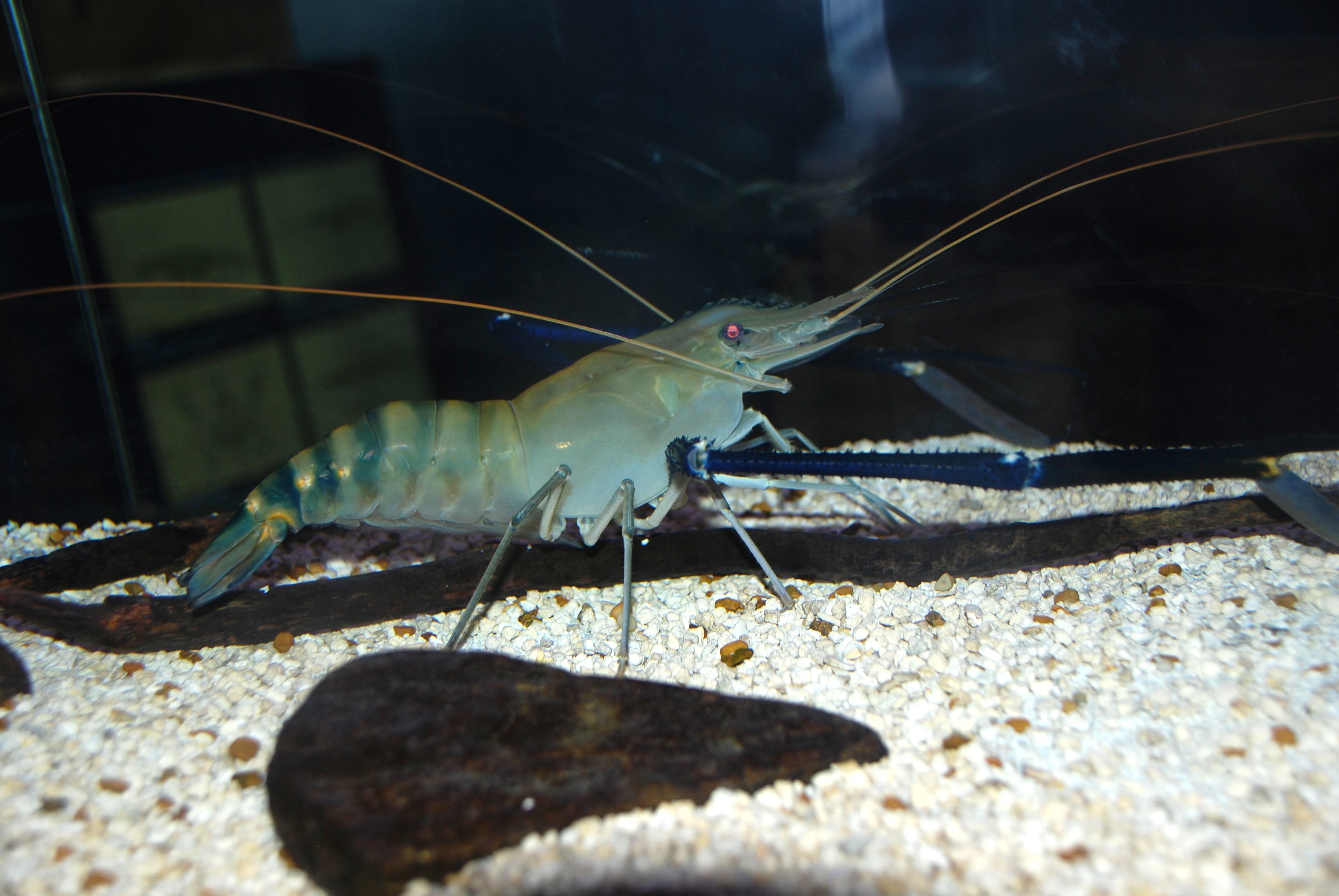
The recipe asks only for medium prawns. Chingri, as Banglapedia explains, are crustaceans related to crabs and lobsters, of the order Decapoda, and range from 2.5 to 30 centimetres in length. The body is divided into a cephalothorax and an abdomen and is covered by a chitinous shell, normally of 19 segments. Bangladesh has a rich stock in the Bay of Bengal, its estuaries and its fresh waters: 56 species have been reported, 37 of them from salt water, 12 from brackish water and seven from fresh water, and some move between more and less saline zones. The Department of Fisheries (DoF) groups galda, bagda, harina and chaka as the big shrimps and prawns.
Two species dominate both the farms and the markets. Golda (Macrobrachium rosenbergii), the giant river or giant freshwater prawn, is one of the biggest freshwater prawns in the world. Banglapedia gives an average size of 34 centimetres for males and 26.7 centimetres for females, living in rivers, tributaries, canals and river mouths and breeding from January to July. Its larvae need brackish water, but once past the planktonic stage the young prawn lives entirely in fresh water. Bagda (Penaeus monodon), the giant or black tiger shrimp, is a marine species of the Bay of Bengal and its estuaries, with an average size of 29.8 centimetres in males and 30 centimetres in females; its shell is banded across the body. Harina (Metapenaeus monoceros) and chaka (Fenneropenaeus indicus, the Indian white prawn) are smaller species that also reach the market. The recipe does not say which kind it used.
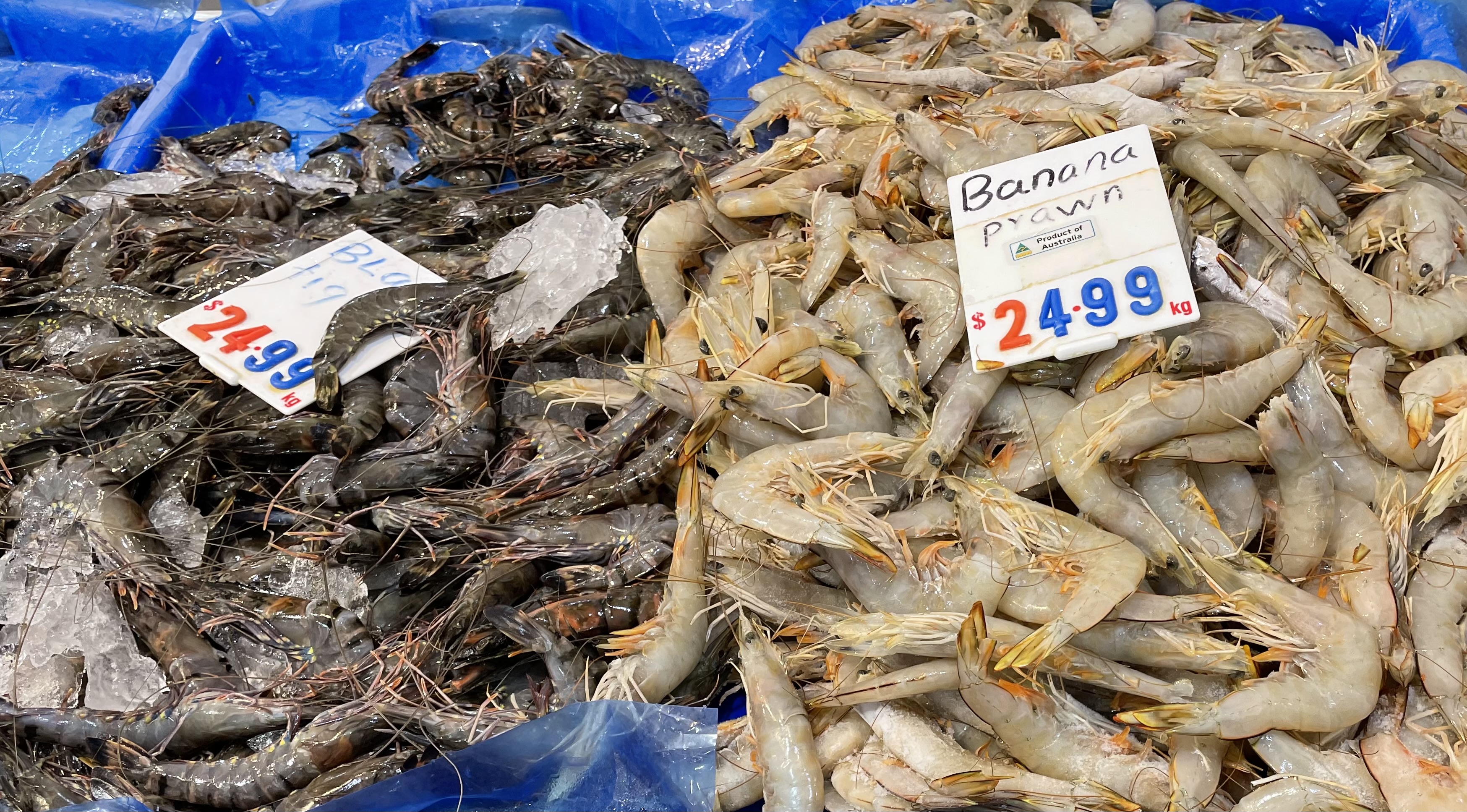
For buying, the US Food and Drug Administration (FDA) advises choosing seafood that is refrigerated or displayed on a thick bed of fresh ice. Shrimp flesh should be clear, with a pearl-like colour and little or no odour, and seafood should smell fresh and mild, not fishy, sour or ammonia-like. The colour of fish alone is not a sign of freshness, the FDA notes, because diet, environment and treatment can all affect it. For frozen seafood it warns against packages that show frost or ice crystals, which may mean the product was stored a long time or thawed and refrozen.
What the ingredients bring, by Bangladesh's food tables
The Food Composition Table for Bangladesh, published in June 2013 by the Institute of Nutrition and Food Science (INFS) of the University of Dhaka with the support of the Ministry of Food, the Food and Agriculture Organization of the United Nations (FAO) and USAID, gives values per 100 grams of the edible part of each food. For the two main kinds of prawn it lists:
- Golda (giant river prawn), raw: 102 kcal; 74.8 g water; 20.9 g protein; 2.0 g fat; no carbohydrate; 18 mg calcium, 0.7 mg iron, 22 mg magnesium, 166 mg phosphorus, 441 mg potassium, 116 mg sodium and 1.25 mg zinc.
- Bagda (giant tiger prawn), raw: 92 kcal; 78.8 g water; 16.5 g protein; 2.9 g fat; no carbohydrate; 17 mg calcium, 0.6 mg iron, 43 mg magnesium, 141 mg phosphorus, 423 mg potassium, 117 mg sodium and 1.73 mg zinc.
The same tables give the other main ingredients, again per 100 grams:
- Aromatic rice (atop, sugondhi, chikon dana), raw: 343 kcal; 6.7 g protein; 0.7 g fat; 76.1 g available carbohydrate; 3.1 g dietary fibre. Boiled without salt, aromatic rice gives 110 kcal per 100 g.
- Coconut milk (narikel dudh): 213 kcal; 72 g water; 2.1 g protein; 21.7 g fat; 1.2 g carbohydrate.
- Cow's ghee: 898 kcal and 99.8 g fat. Soybean oil: 900 kcal and 100 g fat.
- Cashew nuts, raw: 595 kcal and 46.9 g fat. Groundnuts (peanuts), raw: 585 kcal and 46.6 g fat.
These are values for raw ingredients; cooking changes the water content, and the tables give no figure for this finished dish. They do show where the dish's nourishment comes from: the prawns carry most of its protein, the rice most of its carbohydrate, and the coconut milk, ghee and oil most of its fat. Fish of every kind matter in Bangladeshi diets. The DoF says fish supply about 60 percent of the people's daily animal protein intake, with consumption of 67.80 grams per person a day in the 2023-24 fiscal year against a target of 60 grams.
Prawns in Bangladesh's fisheries
The DoF's Yearbook of Fisheries Statistics of Bangladesh 2023-24, volume 41, published in December 2024, puts the country's total fish production in the 2023-24 fiscal year at 50.18 lakh tonnes, 59.34 percent of it from aquaculture. Shrimp and prawns made up 260,486 tonnes, or 2.60 lakh tonnes, 3.99 percent less than the 271,302 tonnes of the year before. Shrimp and prawn farms produced 147,824 tonnes of it, other inland waters 86,393 tonnes and the sea 26,269 tonnes.
By species, the yearbook counts 77,624 tonnes of bagda, 67,716 tonnes of golda, 12,482 tonnes of harina, 5,422 tonnes of chaka and 97,242 tonnes of other shrimps and prawns. The shrimp and prawn farms covered 262,217 hectares, about 190,075 hectares of them under bagda and about 72,142 hectares under golda.
Prawns are also among the country's main exports. In 2023-24 Bangladesh earned Tk 4,531.86 crore from 77,407.94 tonnes of fish and fishery products, sold to more than 50 countries including the European Union, the United States, Japan, Russia and China; EU countries are the main buyers. Frozen shrimp and prawns accounted for 19,131.35 tonnes worth Tk 2,117.67 crore: 13,049.94 tonnes of bagda worth Tk 1,397.36 crore, 4,042.50 tonnes of golda worth Tk 555.16 crore and 2,038.91 tonnes of other species worth Tk 165.15 crore. The tiger shrimp holds a Geographical Indication certificate under the name Bangladesh Tiger Shrimp.
Banglapedia describes where the two main species are grown. Bagda is farmed in ghers and ponds on coastal and tidal land in Satkhira, Khulna, Bagerhat and Cox's Bazar, including Chakaria and Teknaf, sometimes in rotation with rice in the Khulna area and with salt in Chakaria. Golda is raised in ponds and paddy fields mainly in Bagerhat, Khulna, Jashore, Patuakhali, Barishal, Chattogram, Lakshmipur, Feni, Gopalganj, Madaripur, Faridpur, Kishoreganj, Rajbari and Dhaka, in low-density cycles of five to eight months, often together with fish or rice. Seed, the post-larvae stocked in ponds, is now produced in hatcheries; in the 1980s and 1990s most fry were collected from coastal and tidal waters. The encyclopedia also records the costs of the trade: the spread of coastal shrimp farming cleared much of the Chakaria Sundarbans mangrove forest, and diseases such as white spot syndrome virus and vibriosis have caused mass deaths in ponds.
Polao rice and coconut milk
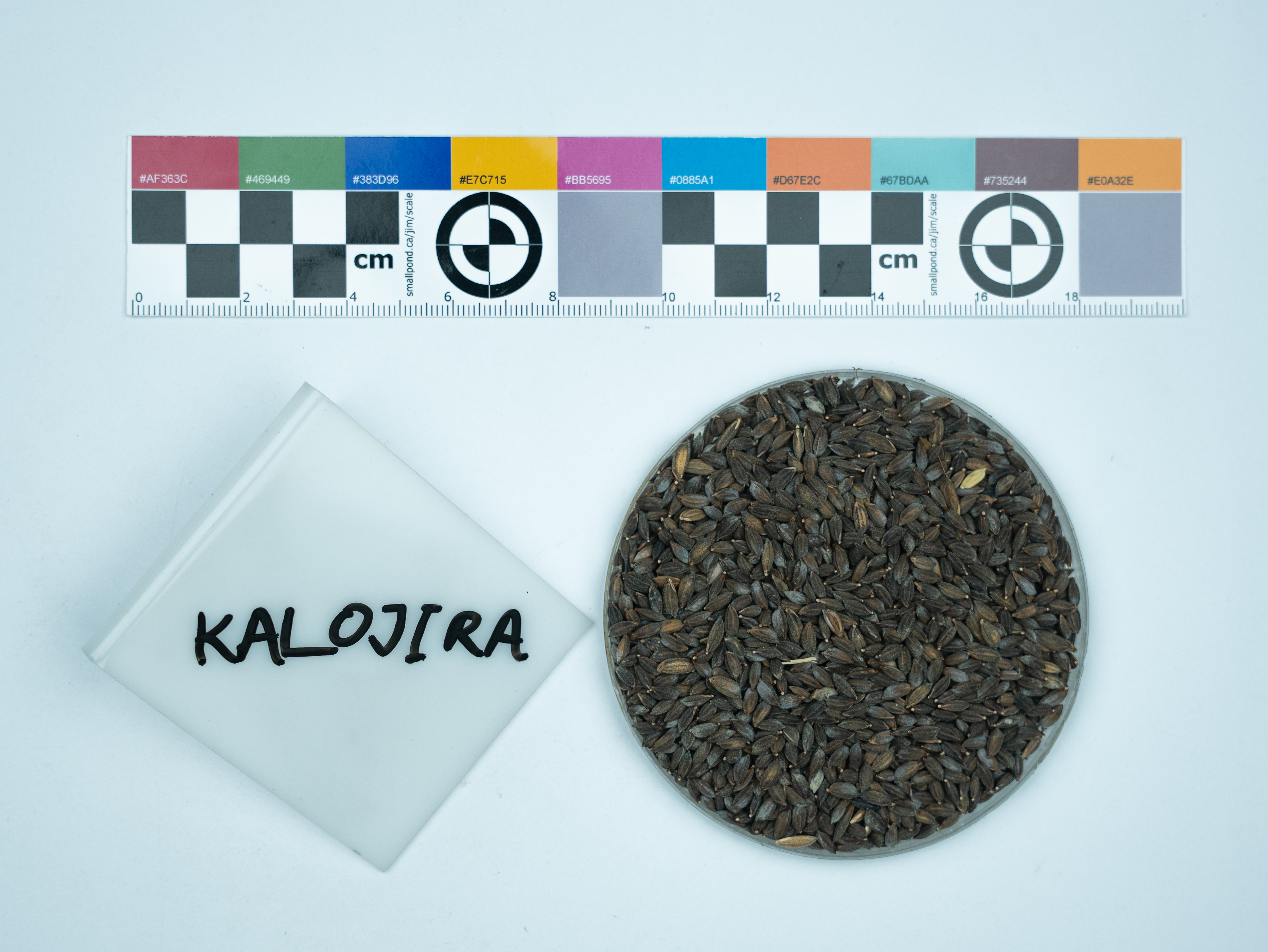
The rice in the recipe is polao chal, the fine aromatic rice that Bangladeshi households keep for festive dishes. Kalijira, one of the best known, is a small, slender-grained aromatic rice produced mainly in Bangladesh. It takes its name from its black husk, which before milling resembles kalo jeera, black cumin. It is grown mainly in the northern districts, particularly Dinajpur and Rangpur, is slightly sticky when cooked, unlike basmati, and goes into khichuri, biryani, pulao, jorda and kheer. Other fine-grained rices traditionally served to guests in rural Bangladesh include Kasibinni, Begunbichi, Jamai Bhog and Dadkhani.
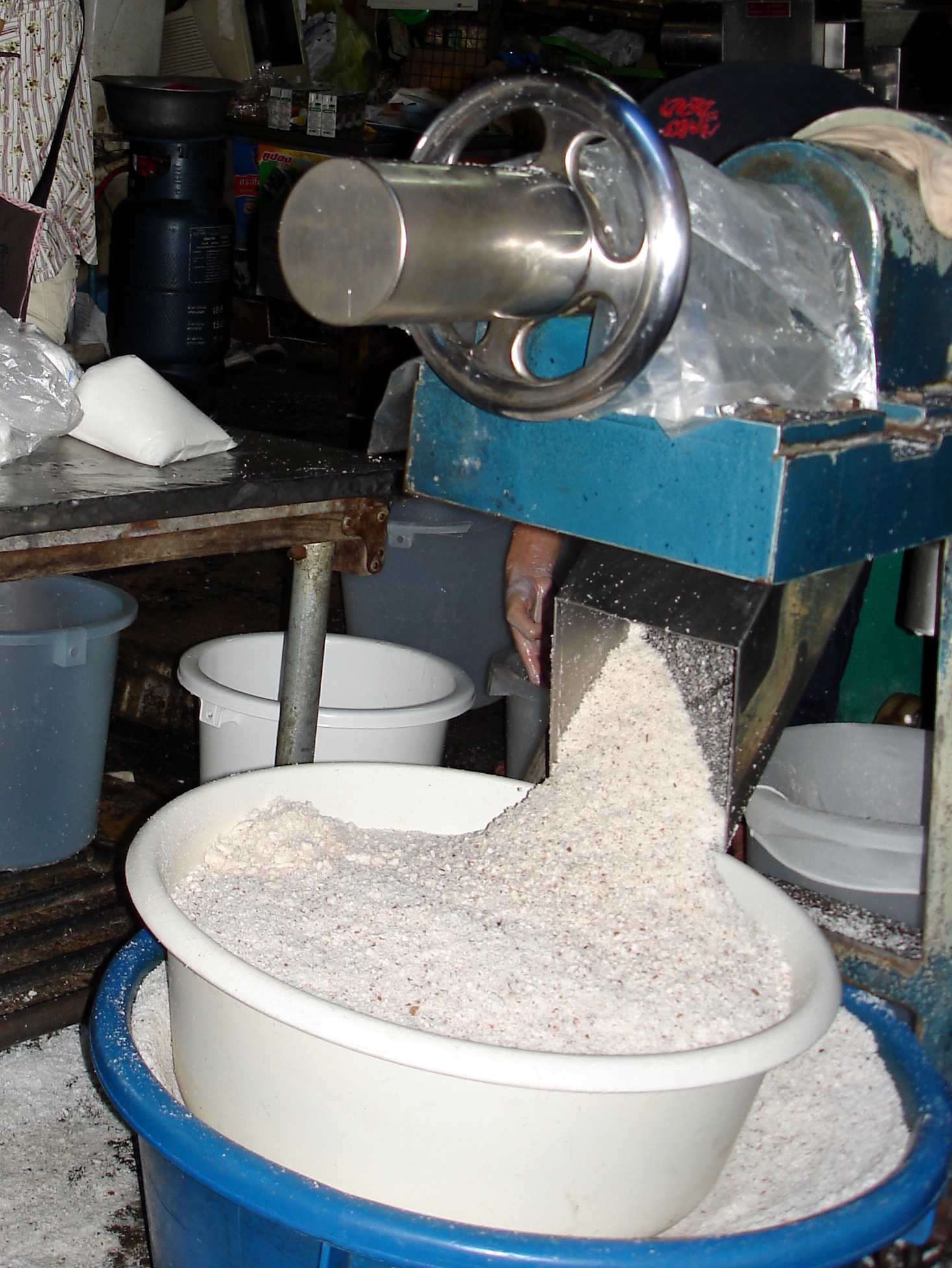
Coconut milk is a plant milk extracted from the grated flesh of mature coconuts; it is not the clear water inside the nut. Its milky colour and rich taste come from a high oil content, most of it saturated fat. Traditionally the grated flesh is squeezed, with or without a little hot water: the first pressing gives coconut cream, or thick coconut milk, with around 20 to 50 percent fat, and later pressings, after the pulp has been soaked in hot water, give thin coconut milk with 5 to 20 percent fat. Freshly extracted coconut milk spoils easily. At room temperatures of 28 to 30 degrees Celsius it turns rancid within a few hours, so milk squeezed at home is best used at once.
The coconut palm, Cocos nucifera, grows to between 8 and 30 metres and is cultivated in Bangladesh mainly as a homestead tree and along roads. Banglapedia notes that a well-tended palm may yield 200 or more nuts a year, and that the white kernel is eaten raw or used in many foods and sweets.
Handling prawns safely in the kitchen
Raw seafood can carry harmful bacteria, and health authorities give simple rules that apply directly to a recipe like this one. The FDA's advice on fresh and frozen seafood includes:
- Put seafood on ice or in the refrigerator or freezer soon after buying it. If it will be used within two days, keep it in a clean refrigerator at 40°F or below; otherwise wrap it tightly in plastic, foil or moisture-proof paper and freeze it.
- Thaw frozen seafood gradually in the refrigerator overnight. To thaw it quickly, seal it in a plastic bag and immerse it in cold water, or use a microwave's defrost setting only if it will be cooked immediately afterwards.
- Wash hands for at least 20 seconds with soap and warm water after handling raw seafood, and wash cutting boards, dishes, utensils and counter tops with soap and hot water between raw seafood and cooked or ready-to-eat food.
- Cook most seafood to an internal temperature of 145°F. Without a thermometer, shrimp is done when its flesh becomes firm, pearly and opaque.
- Do not eat raw or cooked seafood that smells sour, rancid or fishy, or cooked seafood with any smell of ammonia.
- Do not leave seafood or other perishable food out of the refrigerator for more than two hours, or for more than one hour when the temperature is above 90°F.
The World Health Organization's Five Keys to Safer Food, its guidance for safe food handling, sets out the same principles. Keep clean, washing hands before and during food preparation. Separate raw meat, poultry and seafood from other foods, with separate knives and cutting boards. Cook food thoroughly, especially meat, poultry, eggs and seafood, since cooking to 70°C helps make it safe, and reheat cooked food thoroughly. Keep food at safe temperatures: do not leave cooked food at room temperature for more than two hours, refrigerate cooked and perishable food promptly, preferably below 5°C, and keep cooked food piping hot, above 60°C, until it is served. Use safe water and raw materials. In this recipe the prawns are fried at the start and then cook on with the rice until the water has dried; what is left over should go into the refrigerator promptly.
Allergies, salt and who should take care
Under United States law the FDA recognises nine major food allergens: milk, eggs, fish, crustacean shellfish, tree nuts, peanuts, wheat, soybeans and sesame. When the first eight were named in 2004, they accounted for 90 percent of food allergies and serious allergic reactions in the United States. This recipe contains crustacean shellfish in the prawns, a nut paste that is a tree nut or a peanut depending on the nut used, and ghee, which is made from milk.
According to the FDA, symptoms of a food allergy usually appear within a few minutes to a few hours of eating the food. They can include hives, flushed skin or a rash, a tingling or itchy mouth, swelling of the face, tongue or lips, vomiting or diarrhoea, abdominal cramps, coughing or wheezing, dizziness or light-headedness, swelling of the throat and vocal cords, difficulty breathing and loss of consciousness. A severe, life-threatening reaction is called anaphylaxis. A person with a known food allergy who develops such symptoms should stop eating the food immediately, consider whether emergency medication such as epinephrine is needed, and seek medical attention. Food allergies cannot at present be cured, the FDA says, so knowing which foods to avoid is the main protection.
Salt appears twice in the recipe. The WHO's guideline on sodium intake, issued in 2012, recommends that adults take less than 2,000 milligrams of sodium a day, which is less than 5 grams of salt, about one teaspoon; the main harm of a high-sodium diet is raised blood pressure, which increases the risk of cardiovascular disease. With coconut milk, ghee and oil, this is also a rich dish. People with heart or kidney disease, high blood pressure, diabetes or a shellfish allergy should ask their doctor whether and how much of it they can eat.
Photo: Sukla Dhar / Wikimedia Commons (CC BY-SA 4.0)
Sources: Jagonews24, Department of Fisheries Bangladesh (Yearbook of Fisheries Statistics of Bangladesh 2023-24), Institute of Nutrition and Food Science, University of Dhaka (Food Composition Table for Bangladesh, 2013), Banglapedia, US Food and Drug Administration, World Health Organization, Wikipedia


Comments
(0)