
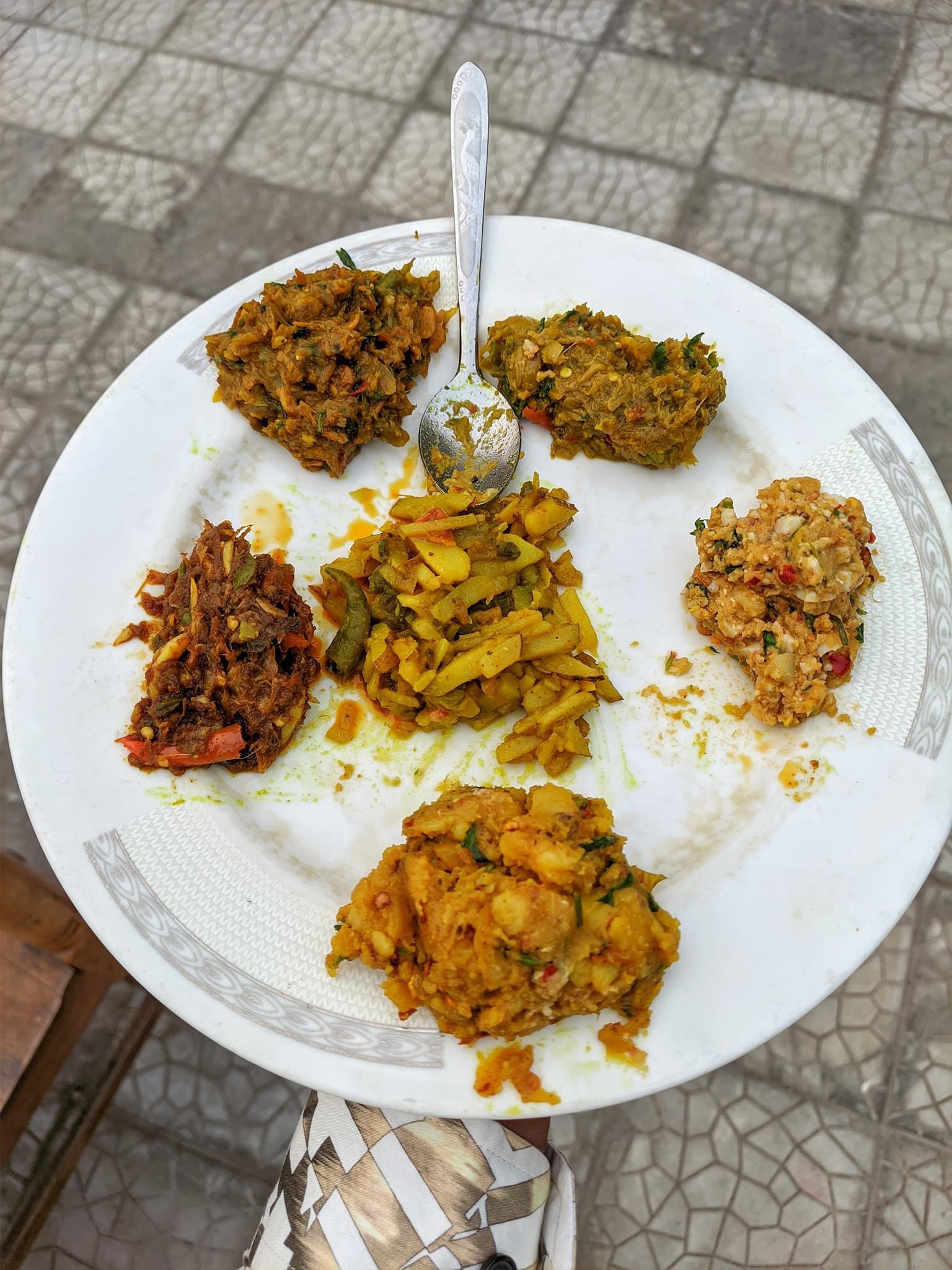
On 13 April 2026, a day before Pohela Boishakh, the first day of the Bengali year, the lifestyle desk of the Dhaka news portal Jagonews24 published three bhorta recipes for the festival table: hilsa mustard bhorta, loitta shutki bhorta and a fish bhorta made with rui. All three are flaked or mashed fish dishes, seasoned with onion, chilli and mustard oil, made from simple home ingredients and meant to be eaten with panta bhat or hot rice.
The desk introduced them with a few lines on the season. Pohela Boishakh, it wrote, means the start of a new year, joy and festivity and the familiar food of Bengal, and on that day the many bhortas eaten with panta bhat are an essential taste of tradition. Made with the bite of chilli, the aroma of mustard oil and a mix of local spices, bhortas do not just fill the stomach; they bring back childhood memories and the feel of rural Bengal, which is why bhortas made from simple ingredients at home become the heart of the festival.
Pohela Boishakh and the New Year table
Banglapedia, the national encyclopedia of Bangladesh, describes Pohela Boishakh as the first day of the Bangla calendar, celebrated in a festive manner in both Bangladesh and West Bengal. In Bangladesh it is a national holiday and falls on 14 or 15 April. In 2026 the day fell on 14 April: Dhaka Tribune reported on 12 April that the government had made extensive preparations to celebrate Bangla New Year 1433 with processions, cultural performances and fairs across the country, and that Chhayanaut and other cultural organisations would hold their traditional programmes at Ramna Batamul in Dhaka on the morning of 14 April.
The calendar itself grew out of farming. Under the Mughals, Banglapedia explains, land taxes were collected according to the Hijri calendar, but because it is a lunar calendar the fiscal year did not match the agricultural year, and farmers were hard-pressed to pay taxes out of season. To streamline the land tax, Emperor Akbar ordered a reform of the calendar, and the scholar and astronomer Fatehullah Shirazi formulated the Bangla year on the basis of the lunar Hijri and the Bangla solar calendars. The new Fasli San, or crop year, was introduced on 10 or 11 March 1584 but dated from Akbar's accession to the throne in 1556.
Food has been part of the day from the start. It was customary to clear all dues on the last day of Chaitra, and on the first day of the new year landlords entertained their tenants with sweets. The main event became the halkhata, the opening of a new account book: traders closed their old books and opened new ones on Pohela Boishakh, inviting customers to share sweets, a custom Banglapedia says is still kept, especially by jewellers and grocers. Households clean and bathe early, people put on their best clothes and visit relatives and neighbours, special foods are prepared to entertain guests, and Baishakhi fairs sell agricultural products, handicrafts, toys, foods and sweets. Though agricultural in origin, the encyclopedia notes, the festivities are now more marked in towns and cities than in villages.
The 2026 plans reflected that. According to the Dhaka Tribune report, hotels and clubs were expected to host special programmes and serve traditional Bengali cuisine for the occasion, special arrangements were made to distribute traditional food in prisons, hospitals and children's homes, and the Bangla Academy, with the Bangladesh Small and Cottage Industries Corporation (BSCIC), planned a seven-day New Year fair on its premises from 14 to 20 April.
Panta bhat, bhorta and mustard oil
Panta bhat is cooked rice, usually left over from the night before, soaked in water overnight. It is traditionally eaten in the morning with salt, onion and chilli, and it is often served with shutki (dried fish), fish curry and bhortas, mashed dishes such as potato or aubergine bhorta. Panta bhat is a popular dish on Pohela Boishakh, when it is often eaten with fried hilsa.
Mustard oil runs through all three of the recipes. Banglapedia describes mustard (sarisa) as herbs that give oil from their seeds, such as Brassica napus (rape) and Brassica nigra (black mustard). Only a few decades ago, it says, mustard oil was the exclusive cooking oil in Bangladesh. In many places the oil was pressed from the seeds in a traditional mill called a ghani, turned by a bull for long hours of the day and even through the night; the trader was called a kolu, and the phrase "kolu's bull" came to describe someone doing monotonous work without asking why. Today the oil is extracted in electric mills.
Mustard is a rabi, or winter, crop. Banglapedia says it is grown in almost all districts, with comparatively larger areas in Chittagong, Sylhet, Dhaka, Tangail, Jessore, Bogra, Sirajganj and Pabna. Local mustard oil meets only a fraction of the country's cooking oil needs, so large quantities of soybean and sunflower oil are imported, and cheaper imported soybean oil has been reducing the area under mustard. The same plant gives the mustard seed that is ground into the paste used in the first recipe.
Hilsa mustard bhorta
The first recipe starts with hilsa that has already been fried crisp, so the fish only needs to be flaked and mixed. Jagonews24 listed these ingredients:
- A few pieces of hilsa, rubbed with a little ground cumin and salt and fried in oil until very crisp
- 2 tablespoons of white mustard paste
- Salt to taste
- Mustard oil
- Chopped onion
And this method:
- Remove the bones from the fried hilsa and flake the flesh.
- Add the white mustard paste, salt to taste, mustard oil and chopped onion to the flaked hilsa and mix very well.
- Serve the hilsa mustard bhorta with panta bhat or hot rice.
The recipe gives no fixed amount of oil or onion, so these are added to taste.
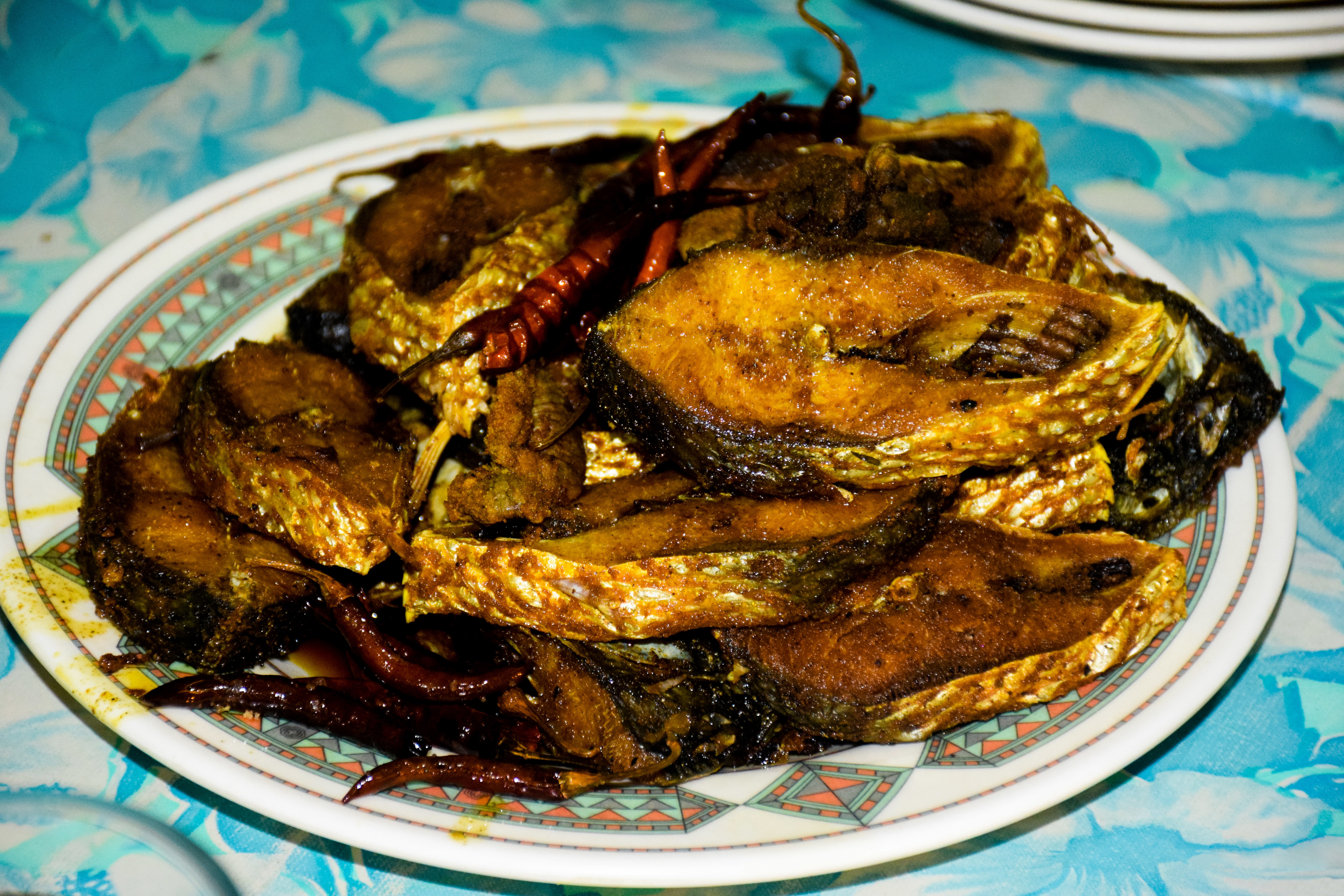
Hilsa, or ilish, is the national fish of Bangladesh. Banglapedia describes a strongly compressed fish with a metallic silver body that may reach 60 cm, although most specimens measure 35 to 40 cm; a large hilsa weighs about 2.5 kg, females grow faster and are usually larger than males, and the fish matures in one to two years. It is anadromous: adults breed upstream in fresh water, the young grow in the river channels and then go down to the sea to feed, and return to the rivers as mature breeding adults. A large female may produce up to 2 million eggs. Hilsa spawn more or less throughout the year, with a minor season in February and March and a major season in September and October. Young hilsa of 6 to 10 cm, known as jatka, are caught in large numbers during their migration to the sea in some of the major rivers.
FishBase, the global database of fish species, lists the hilsa shad, Tenualosa ilisha, across the Indo-West Pacific from the Persian Gulf east to Vietnam. It schools in coastal waters and moves up rivers, sometimes as far as 1,200 km but usually 50 to 100 km, breeding mainly in rivers during the southwest monsoon, and it is sold fresh or dried and salted.
Hilsa prices and the jatka ban before the 2026 festival
The recipes came out as hilsa prices were climbing ahead of the festival. Dhaka Post reported on 8 April 2026, after visits to Karwan Bazar, Mohakhali, Shyambazar and Aftabnagar markets in Dhaka, that hilsa of 1.2 kg were selling at Tk 3,000 to 3,200 a kilogram, against Tk 2,500 to 2,800 a week earlier. A 1 kg hilsa sold for Tk 2,600 to 2,800, fish of 800 to 900 grams for Tk 2,400 to 2,500 a kilogram, fish of 500 to 600 grams for Tk 1,800 to 2,000, and in places Tk 2,200, while hilsa of 300 to 400 grams cost Tk 1,400 to 1,600 a kilogram, against Tk 1,200 a week before. Traders told the paper that supply was much lower than in previous years because fishers were catching few fish.
Two days later, on 10 April, Sarabangla found 1.2 kg hilsa at Tk 3,100 to 3,300 a kilogram in the capital's markets and reported that some buyers were now buying other fish instead of hilsa to eat with their panta.
The scarcity had an official background. At a press conference at the Secretariat on 6 April for Jatka Conservation Week 2026, the fisheries and livestock minister said that increasing hilsa production was a big challenge because of the filling up of rivers, climate change, river pollution and continuous pressure on fish resources, The Daily Observer reported. Citing Department of Fisheries figures, the paper said the country produced about 5 lakh tonnes of hilsa in the 2024-25 fiscal year, the lowest since 2016-17, after 529,000 tonnes in 2023-24, 571,000 tonnes in 2022-23 and 566,000 tonnes in 2021-22. The minister said hilsa contributed about 9.79 percent of the country's total fish production and about 1 percent of GDP, that more than 80 percent of the world's hilsa came from Bangladesh, and that about 600,000 people were directly involved in catching it.
The same press conference set out the rules in force. Jatka Conservation Week was to be observed from 7 to 13 April in 20 hilsa-rich districts, under the slogan "If we stop catching jatka, the sea and rivers will fill with hilsa", Jugantor reported, and the minister asked the public not to catch, buy, sell or stock jatka. Catching, transporting and selling jatka is banned from 1 November to 30 June; there is a 22-day ban on hilsa fishing in the breeding season; six hilsa sanctuaries are closed to fishing at set times; and all fishing in the Bay of Bengal was to stop for 58 days, from 15 April to 11 June. Bangladesh Sangbad Sangstha (BSS) reported on 1 March that the two-month ban in the sanctuaries had begun that morning and would run to 30 April, covering a 190 km stretch of the Meghna and Tentulia rivers in Bhola, where 90,213 fishers were to receive 40 kg of government rice a month.
For a cook shopping for the festival this has a plain meaning: small hilsa offered in April may be jatka, whose catch, transport and sale were banned at the time, and fried pieces of a larger fish, or another fish altogether, serve the bhorta equally well.
Loitta shutki bhorta
The second recipe is a blended bhorta of loitta shutki, the dried form of a sea fish. Jagonews24 listed:
- Half a cup of loitta shutki
- 3 onions
- 7 to 8 cloves of garlic
- 7 to 8 chillies (more or fewer, as you like)
- Chopped coriander leaves
- Salt to taste
- A little mustard oil
The method:
- Clean the shutki well and wash it.
- Dry-fry it on a tawa until crisp.
- On a tawa, fry the onion, garlic and chilli over low heat.
- Put the fried onion, garlic and chilli, the fried shutki, the chopped coriander leaves, salt and a little oil into a chopper or blender and blend.
- Serve this bhorta with hot rice.
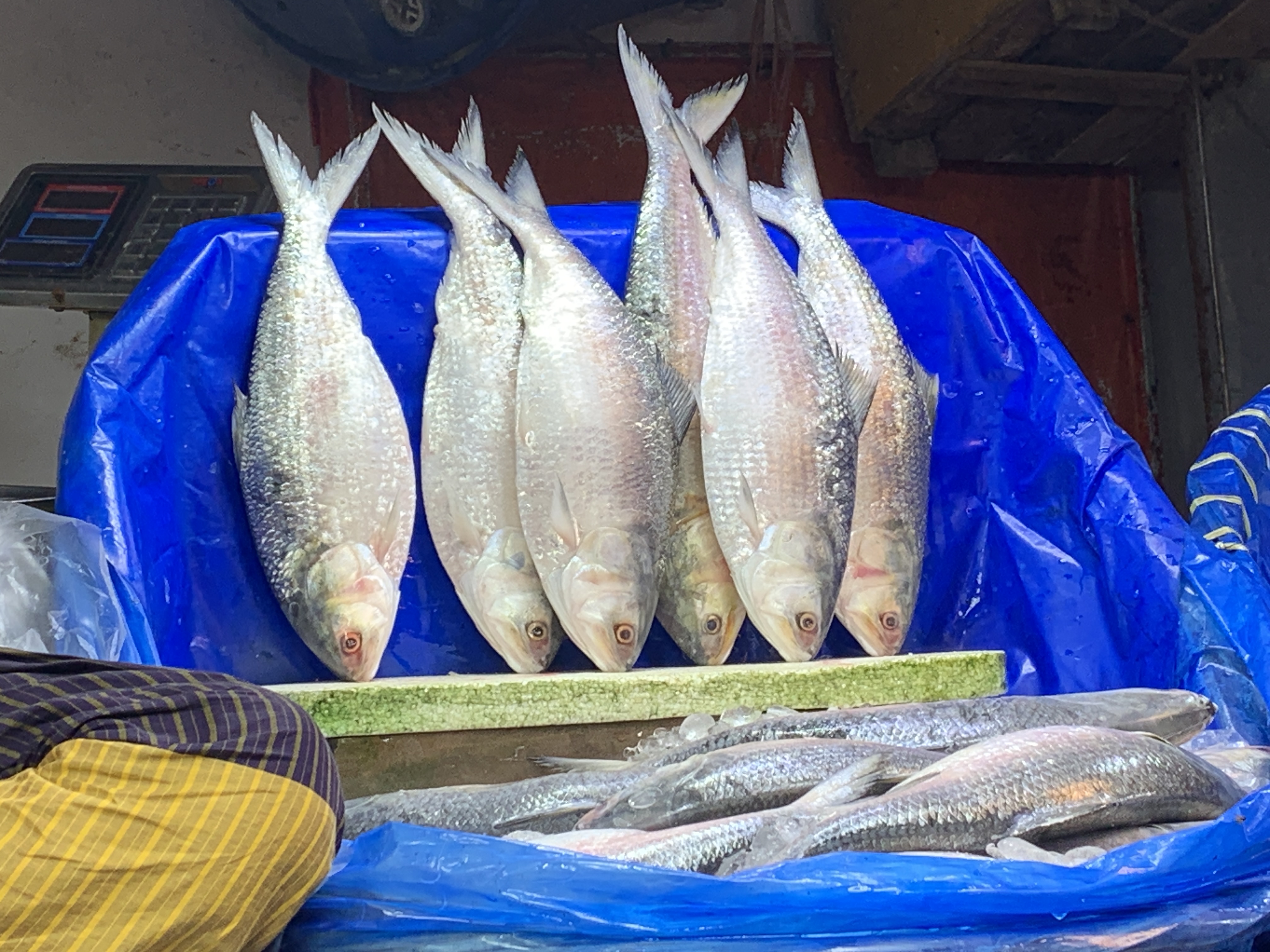
Loitta, also written loitya, is the Bombay duck, Harpadon nehereus, which Banglapedia lists among the most important marine species dried in Bangladesh, along with chhuri (ribbonfish), punti, chapila, lakhua, rupchanda (pomfret) and shrimp. Despite its English name it is a fish, a member of the lizardfish family Synodontidae. FishBase describes it as a marine and brackish-water fish of the Indo-West Pacific, from Somalia to Papua New Guinea, growing to about 61 cm. It lives in deep offshore water over sandy mud for most of the year and gathers in large shoals near river deltas to feed during the monsoon. It is an aggressive predator and very phosphorescent, is fished commercially on a large scale, and is sold fresh, dried or salted.
Where shutki comes from and what to look for
Drying is one of the oldest ways of keeping fish in this region, and Banglapedia notes that dried fish is considered a delicacy by many people in Bangladesh. The principle is to draw the water out of the fish, traditionally in the sun, so that the activity of the muscle enzymes and microorganisms is reduced to a minimum. Drying is done on selected coasts and inland depressions, among them Dublar Char in the Sundarbans, St Martin's Island, Rangabali, Sonadia Island, Moheshkhali and Cox's Bazar, and Ibrahimpur in Sunamganj and Joshomantapur in Jamalganj. The fish come mainly from estuarine and marine set bag nets (behundi); hired labourers sort them by species and spread them on mats or hang them from raised racks for two to eight days, depending on size and species.
The encyclopedia also records the problems. In cloudy and rainy weather the drying fish are often infested by blow flies and their maggots, and in storage by beetles and mites, and to protect their products merchants often use harmful insecticides and fungicides. The Institute of Food and Radiation Biology of the Bangladesh Atomic Energy Commission has been researching the storage of dried fish using radiation.
Cox's Bazar is the best known source of sea-fish shutki. Prothom Alo reported in November 2024 that the Nazirartek coast, in ward 1 of the Cox's Bazar municipality, had about 800 drying yards producing 120 tonnes of shutki a day, most of it loitta, chhuri, popa, maitta, kamila, faissa and rupchanda. In the new Fishery Para beside the Bakkhali river, it said, fish were dried on bamboo racks in the open salt air without chemicals, which the fisheries department had confirmed.
A Fishery Para trader told the paper how buyers can tell good, poison-free shutki: it is hard and does not break when pressed, it does not shine, it carries no coating of white powder, and it has a normal smell. The district fisheries officer said that when tourist numbers rise, some dishonest traders bring in imported shutki and sell it, and that such shutki contains poison or pesticide harmful to health.
Fish bhorta with rui
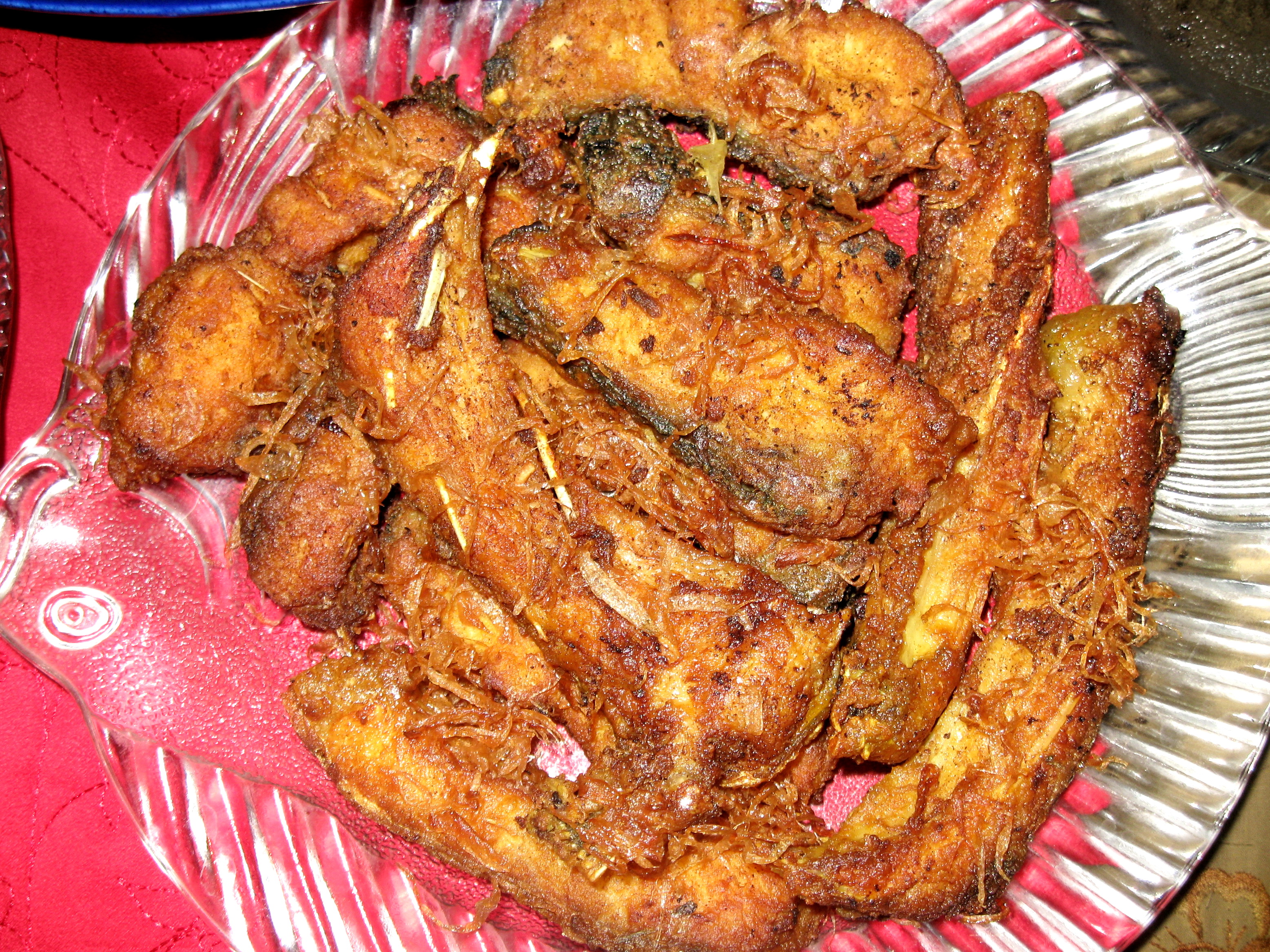
The third recipe is the simplest and works with almost any fish. Jagonews24 used rui and listed:
- 3 to 4 pieces of rui (any fish you prefer can be used)
- Chopped onion
- Roasted dried chilli
- Mustard oil
The method:
- Fry the pieces of fish well.
- Pick out the bones, then mix the fish well with the chopped onion, roasted dried chilli and mustard oil.
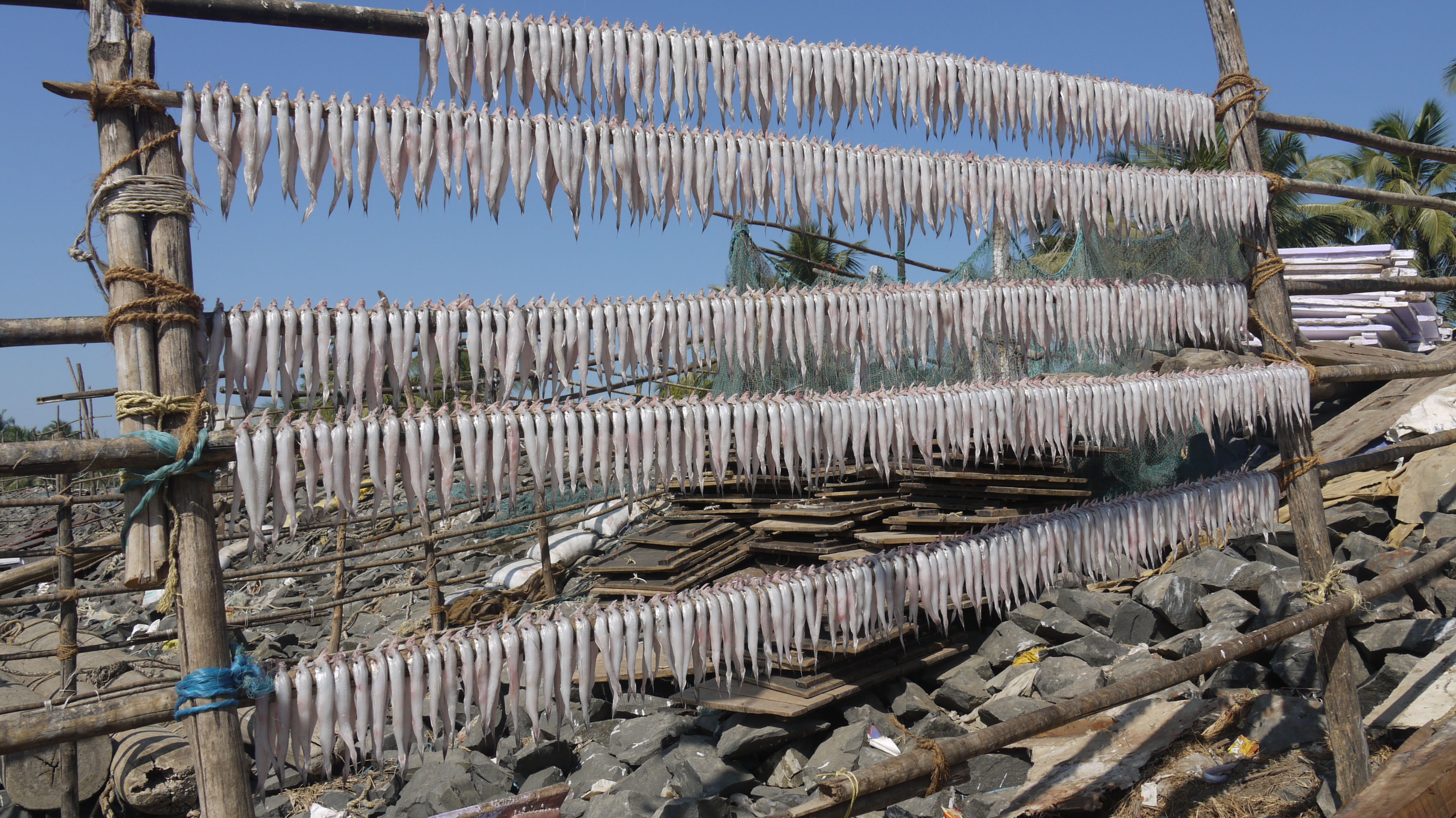
Rui is the rohu, Labeo rohita, one of the carps of the family Cyprinidae. Banglapedia lists it among the carps common in the fresh waters of Bangladesh, known locally as rui, rohit or rou and found throughout the country. In mixed fish farming in ponds, lakes and ditches, the common practice is to culture the Indian major carps, catla, rui and mrigal, together with small indigenous fish such as mola and punti, and the spawn and fry of the major carps are collected from more than 50 spawning grounds in the Padma, Brahmaputra and Jamuna rivers to be reared in nurseries.
FishBase lists rohu as native to Pakistan, India, Bangladesh, Myanmar and Nepal. Adults live in rivers and feed on plants, and spawning generally coincides with the southwest monsoon, in flooded rivers and on shallow flood-fed flats. It is a highly commercial fish in both capture fisheries and aquaculture and has been widely introduced outside its native range for stocking reservoirs and for farming.
Fresh fish, safe handling and salt
All three bhortas are made from fish that is cooked first and then mixed by hand with raw onion, oil and seasonings, so ordinary kitchen hygiene matters. The World Health Organization's Five Keys to Safer Food, published in 2006, sum it up in five rules: keep clean; separate raw and cooked; cook thoroughly; keep food at safe temperatures; and use safe water and raw materials.
The US Food and Drug Administration (FDA) gives practical checks for fresh fish. It should smell fresh and mild, not fishy, sour or like ammonia; the eyes should be clear and shiny; whole fish should have firm flesh and red gills, and the flesh should spring back when pressed. Seafood to be used within two days should be kept in a clean refrigerator at 40°F or below, and otherwise wrapped tightly and frozen. Hands should be washed for at least 20 seconds with soap and warm water after handling raw seafood, and cutting boards and utensils washed with soap and hot water between raw seafood and ready-to-eat foods.
Most seafood, the FDA says, should be cooked to an internal temperature of 145°F; without a thermometer, fish is done when the flesh is opaque and separates easily with a fork. Perishable food should not be left out of the refrigerator for more than two hours, or more than one hour when the temperature is above 90°F, a point worth keeping in mind for bhortas prepared early for a festival breakfast.
Each recipe asks for salt to taste. WHO recommends that adults eat less than 5 grams of salt a day, about one teaspoon, and estimated in March 2023 that the global average intake was 10.8 grams a day, more than double that. Too much sodium, it says, increases the risk of heart disease, stroke and premature death, and high intake has also been linked to gastric cancer, obesity, osteoporosis and kidney disease. Anyone with high blood pressure or kidney disease, or on a diet set by a doctor, should ask their doctor how much salt suits them.
Photo: রিজওয়ান আহমেদ / Wikimedia Commons (CC BY-SA 4.0)
Sources: Jagonews24, Banglapedia (Pahela Baishakh; Hilsa; Dried Fish; Carp; Fish; Mustard), Dhaka Tribune, Dhaka Post, Sarabangla, The Daily Observer, Jugantor, Bangladesh Sangbad Sangstha (BSS), Prothom Alo, FishBase, Wikipedia (Panta bhat), World Health Organization (WHO), US Food and Drug Administration (FDA)

Comments
(0)