
Scientists from the Philippine Department of Agriculture's Bureau of Plant Industry (DA-BPI) have completed a week-long programme in genome editing at the International Rice Research Institute (IRRI) in Los Baños, IRRI said in a release dated 23 October and published on 9 November. The training, at IRRI's Genome Engineering and Transformation Laboratory (GETL), introduced staff of BPI's Biotechnology Core Team for Plant Breeding Innovations to genome-editing techniques, laboratory methods and biosafety practice.
The point is speed without losing what farmers already like. Conventional breeding can take 7 to 10 years to bring a new trait into a preferred variety and can drag unwanted genes along with it, known as linkage drag, which takes more breeding cycles to remove. Genome editing makes targeted changes to DNA and could shorten product development to 2 to 3 years, improving traits such as yield potential, climate resilience and nutritional quality while keeping a variety's good characteristics.
IRRI scientist Yvonne Ludwig and researchers Dianne Gene De la Rosa and Gela Myan Mota explained how CRISPR-Cas9 works: a short RNA molecule guides an enzyme, a molecular scissor, to a precise spot in the DNA, where it cuts both strands; as the cell repairs the cut, a gene can be switched off or, with a DNA template, a specific change introduced. Participants also covered prime editing, guide RNA design, bioinformatics, plant transformation, vector design and how to choose a platform with intellectual property and licensing in mind early on.
Validation was a central topic. Before an edited crop moves on, researchers must confirm the intended change, look for unintended effects and check whether any foreign DNA remains; depending on the result and the rules, a product may qualify for a Certificate of Non-Coverage. "Biosafety is not something we compromise on," said IRRI biosafety officer Rizza Eve Mendoza.
"Biotechnology gives us an opportunity to improve rice varieties and develop crops that can better withstand challenges such as El Niño and climate change," said Dr Martina Castellion, research manager of IRRI's Seed Health Unit. For the regulator, the gain is judgement: Geronima Eusebio, head of BPI's team, said stronger technical capacity will help its scientists evaluate the new tools and research results while keeping biosafety and regulatory requirements central. IRRI joined Excellence Through Stewardship in 2016 and Plant Breeding Innovation in 2025.
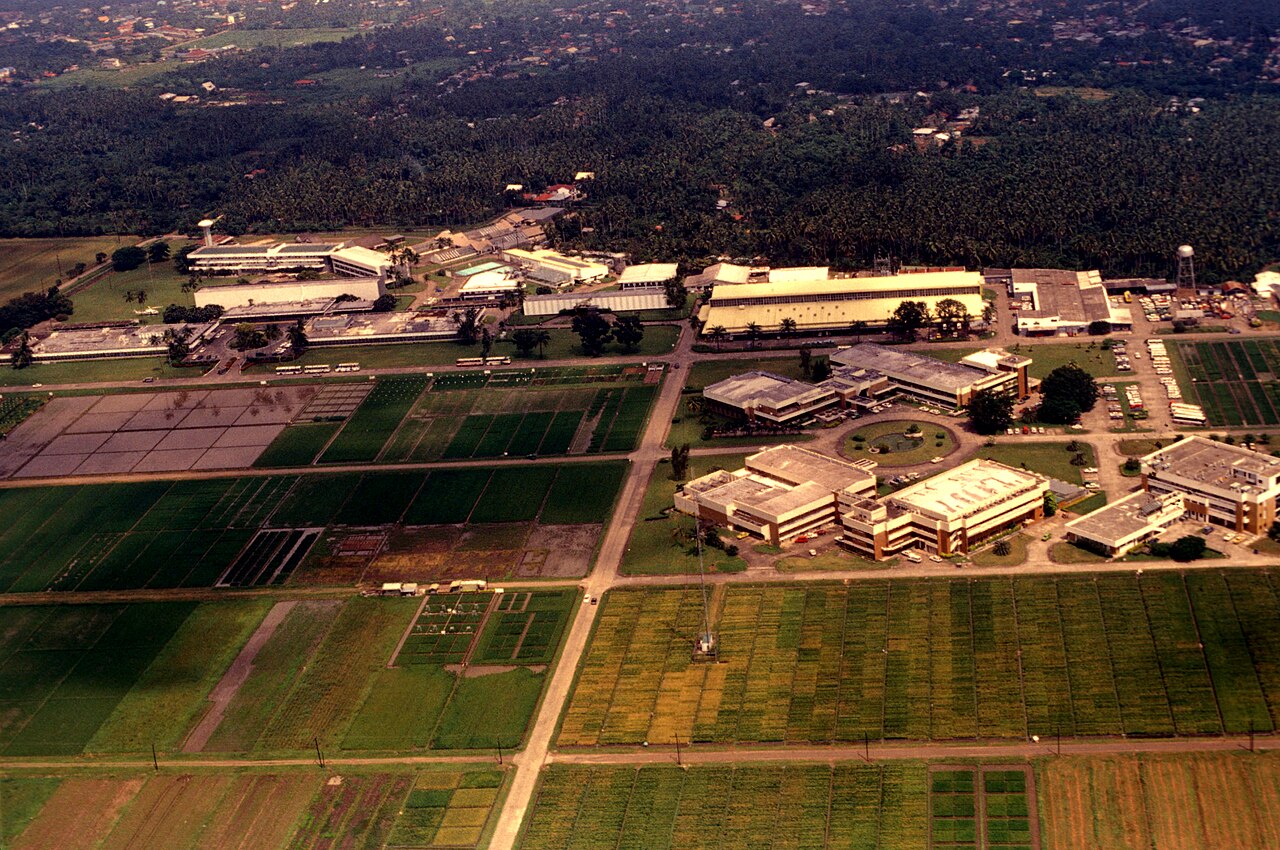
Photo: IRRI Images / Wikimedia Commons (CC BY 2.0). An aerial view of IRRI's headquarters in Los Baños, Philippines.
Source: IRRI
Comments
(0)