
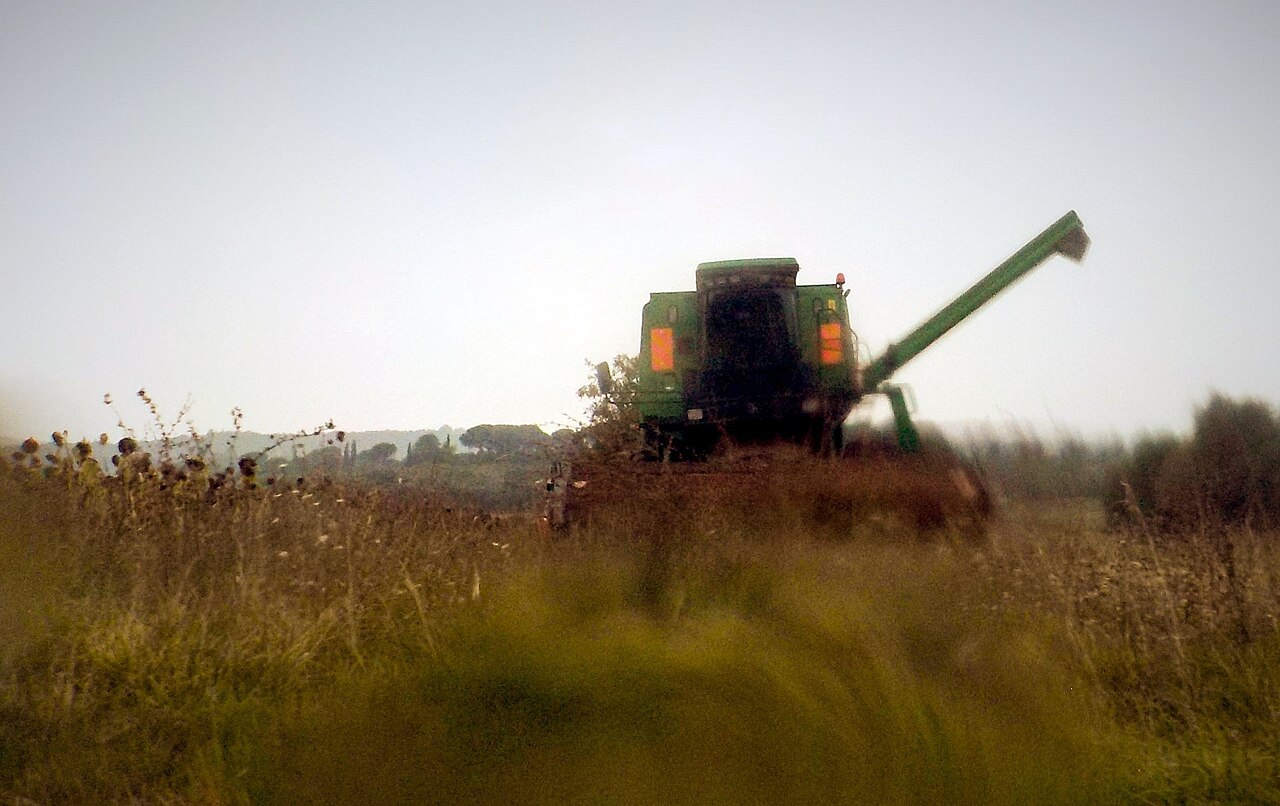
A single combine harvester fire in 2025 cost the insurer Santam more than R7 million, and photographs taken afterwards showed a machine thick with debris that caught fire late in the afternoon, Food For Mzansi reported. A midday clean with a leaf blower or a broom could have significantly reduced the risk or stopped the fire before it became a total loss, said Thabo Twalo, Santam's chief underwriting officer.
Harvest fires are different from ordinary veld fires: they are often started by the working machine itself, in a dry, crop-dense field. Twalo said combine fires make up a significant share of agricultural insurance claims in the harvest season, and that they are usually linked to debris building up and checks missed during the day, rather than to machines never being serviced. The risk is highest with oil-rich crops such as sunflower, canola and soya. "These crops are highly flammable, and when straw and dust accumulate in hot zones on the machine, the ignition risk increases dramatically," he said.
Mechanical neglect adds to it. A skipped service can leave a bearing to seize and overheat, igniting the dust and straw around it, and small cracks in cast-iron parts or early signs of wear should be fixed before they cause wider damage. Lightning striking tractors in the field is another risk.
Santam's advice is to break maintenance into small jobs through the day: clear straw, dust and crop residue from the hot zones at midday with a broom or leaf blower; keep fire extinguishers within reach, train operators to notice smoke or a burning smell, and put a second person on watch over machines and fields in high-risk periods. Insurance policies require farmers to take reasonable precautions, Twalo noted, and proactive maintenance counts when a claim is assessed and helps keep premiums sustainable.
Farmers' experience varies. Simemo Nkosi, a crop farmer in Mpumalanga, said tractors can start fires through birds' nests built inside the machine, electrical shorts igniting dry grass, failed bearings or dry linkages, and he services his tractor regularly and keeps firebreaks around risky areas. Aphola Mbotshwa, who farms in the Eastern Cape and has had his tractor for about a year, has never heard of a machine fire locally and checks the radiator water, oil and diesel each morning before work.
Technology can help after a fire, too. More than 40,000 fires are reported in South Africa each year, causing nearly R4 billion in direct losses, and nearly 260,000 hectares burn in the Free State alone, according to a project description from Esri Southern Africa. M.A.P Scientific Services (MAPSS) and the Free State Umbrella Fire Protection Agency (FSUFPA) have built a platform that uses high-resolution satellite images to detect fires in near real time, map burnt areas on each farm every five days and give landowners and fire protection agencies data to assess damage and support insurance claims and court cases.
The story was reported by Lisakanya Venna for Food For Mzansi.
Photo: Albarubescens / Wikimedia Commons (CC BY-SA 4.0). A combine harvester gathering sunflower seed, one of the oil-rich crops insurers name as the highest fire risk.
Source: Food for Mzansi

Comments
(0)