
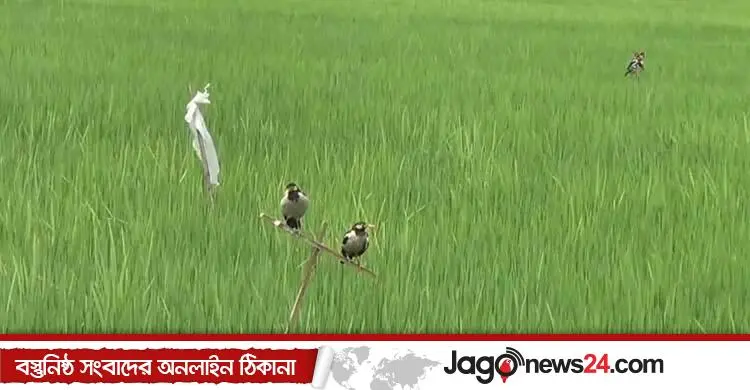
In Joypurhat, the perching method is replacing pesticides for controlling pests in Aman rice. Farmers set tree branches, poles, bamboo sticks and dhaincha stems in the paddy fields, and birds of various species perch on them and eat harmful insects. This way of protecting crops from pests is called perching.
The method is very low-cost and environmentally friendly, and because it cuts production costs and pesticide use it is becoming popular with farmers in the district. Many are avoiding pesticides in Aman fields in favour of this simple, profitable approach.
How it works
There are two kinds of perching: dead perching, using dead branches, and live perching, using living dhaincha stems. Farmers set about 6 to 8 bamboo tops, sticks, branches or dhaincha stems per bigha. Myna, bulbul, drongo and other insect-eating birds sit on the perches and fly out to eat pests and their eggs, protecting the rice without pesticides.
Farmers including Nurul Islam of Hichmi Bazar, Labu Mia of Karai Madrasa village, Delwar Hossain of Dharki village and Atoar of Komorgram said their Aman seedlings are green and healthy this year. They used perching across their fields, setting five small branches or bamboo sticks and three live dhaincha stems per bigha of Aman, and drongos, mynas and bulbuls are catching the harmful insects. Anwar Hossain of Batoli village said production costs are lower and pesticide use has fallen sharply.
Official view
Agriculturist Sadiqul Islam, deputy director of the district Department of Agricultural Extension, said relying only on pesticides raises costs, and perching is reducing farmers' expenses somewhat. It keeps the environment free of pesticide pollution, and bird droppings add organic fertiliser, improving soil fertility.
The district's target for transplanted Aman rice this season is 72,165 hectares, and farmers are using perching on about 40,000 hectares.
Source: Jagonews24. First published in Bengali on The Agro News.



Comments
(0)