
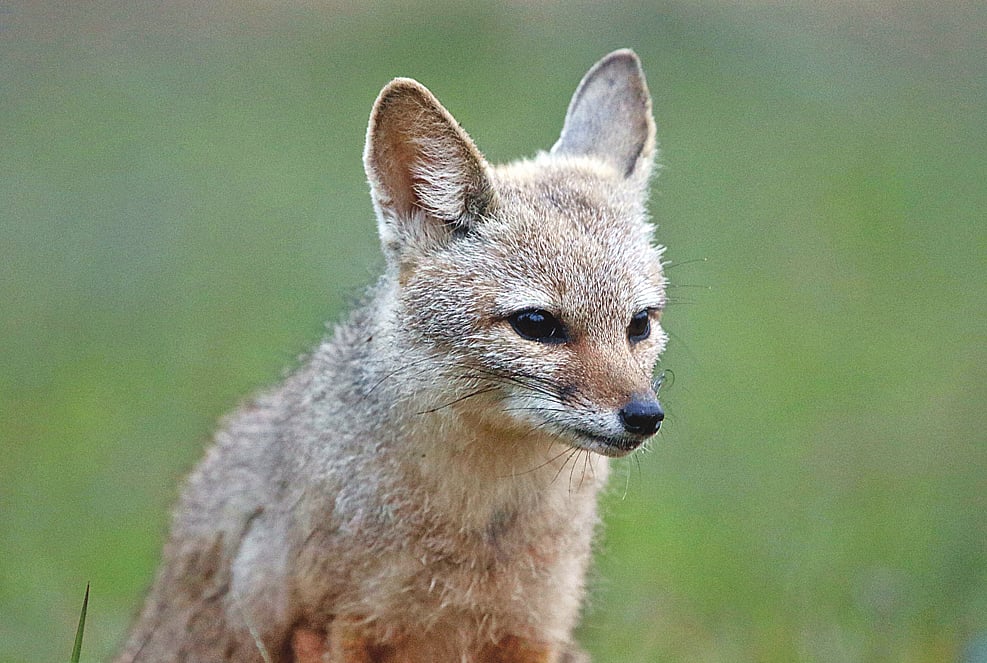
Rural Bangladesh knows the Bengal fox as the animal that steals chickens. A study in Panchagarh argues that this small carnivore plays an important part in keeping insects and rodents in check in the crop fields, and in coping with the effects of climate change — yet rapid urbanisation, forest loss and the habit of beating foxes to death for no reason are pushing the species towards extinction.
Muntasir Akash, assistant professor of zoology at Dhaka University, researchers Md Rokonuzzaman, Sultan Ahmed and Mohammad Samiul Alam, and Professor Maximilian Allen of the Prairie Research Institute at the University of Illinois set camera traps around a fox den in a graveyard in Atwari upazila of Panchagarh from March to May 2024. They analysed 12 hours 18 minutes of footage containing more than 4,500 clips. The paper, on den-site behaviour of the Bengal fox (Vulpes bengalensis), appeared in April in Ecology and Evolution, published by the British Ecological Society and Wiley.
The Bengal fox weighs only 1.8 to 3.6 kilograms and measures 31 inches. Once found across the country, it is now recorded mainly west of the Jamuna and Padma, and Bangladesh's IUCN Red List classes it as vulnerable. Rising temperatures and erratic rain are shrinking the grassland and dry open ground of the north that it prefers, and more frequent floods drown dens during the breeding season.
Foxes were seen eating in 540 clips. Of the food that could be identified, 19 per cent was insects, 18 per cent birds and 8 per cent rodents; 16 clips show cubs feasting on swarming termites. No evidence was found of foxes eating snakes, plant matter or human leftovers. Activity peaked between 4.30am and 6.30am and between 6pm and 8pm, and up to six foxes were seen at one den. Some 425 clips captured social behaviour — play, greeting, grooming and suckling.
Seven bird species, golden jackals six times, dogs five times and people 34 times passed the den. The most striking finding was the running conflict with the Bengal monitor lizard: the two appeared together in 447 clips, in 16 of which the foxes charged the lizard, in 31 stayed on alert, and in only two retreated. Monitors prey on cubs and try to occupy dens once the breeding season ends. A paved road ran just 20 metres from the den, but passing people did not disturb the animals.
The researchers say government action alone will not save the species; local awareness is essential, and protecting village woodlots, fallow land and termite mounds would go a long way. Warming has boosted rodent breeding, and with fewer small carnivores and snakes farmers are using more pesticide to protect crops — the fox is the natural control they are losing. Professor M A Aziz of Jahangirnagar University said the study proves that, given space and safety, the fox can live peacefully beside human settlements, and that losing one species breaks an important link in the ecosystem.
Deputy chief conservator of forests Rakibul Hasan Mukul acknowledged that the fox's habitat is shrinking and that the Forest Department currently has no specific programme for it; a proposed project, once approved, would begin awareness work with local communities. Wildlife photographer Adnan Azad observed that the fox lives undisturbed near homes and even busy roads so long as it faces no direct threat — coexistence is possible if people are tolerant.
Source: Prothom Alo
Comments
(0)