
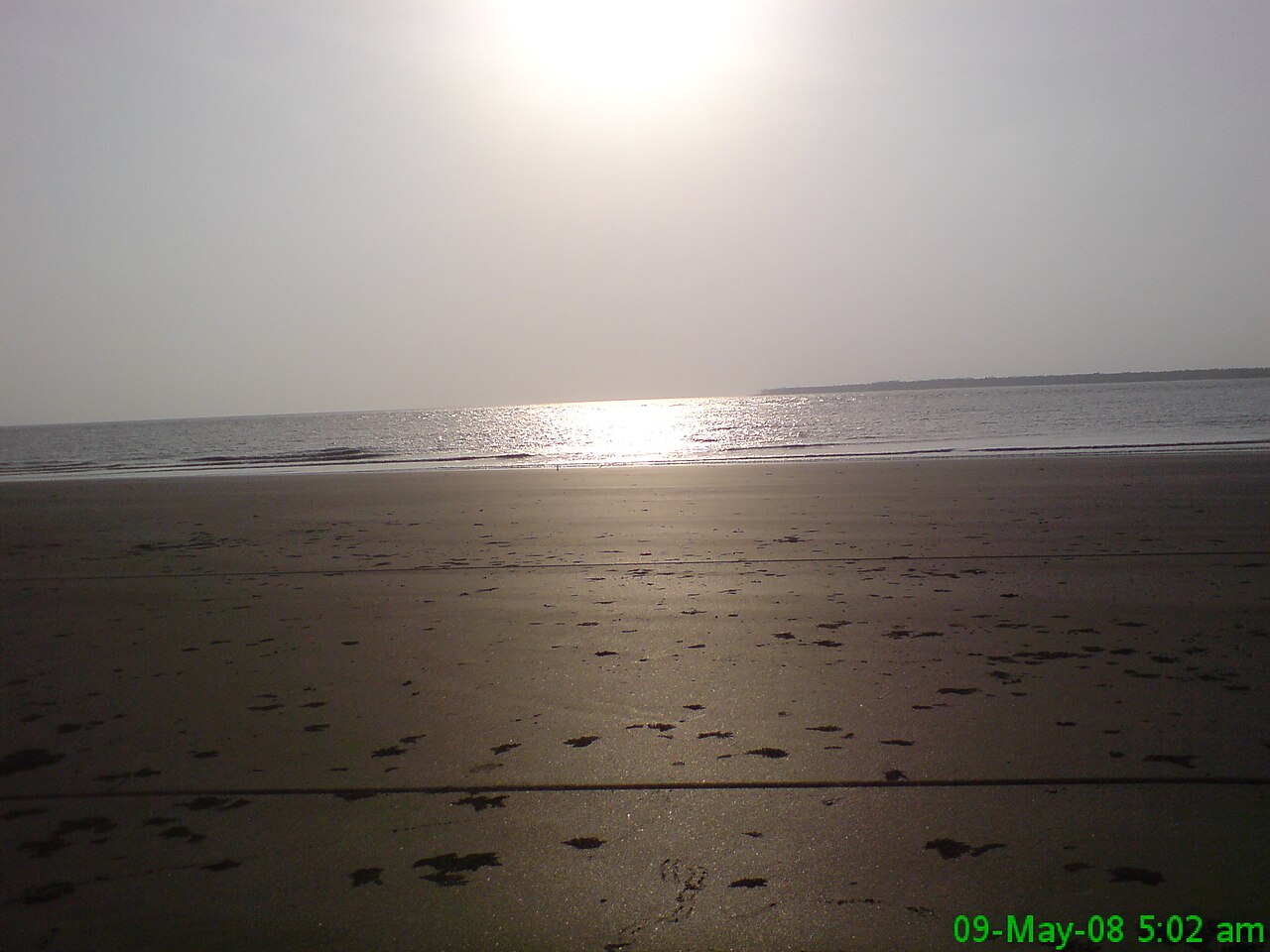
Sea erosion has swallowed more than 1,000 hectares of protected forest at Kuakata, including the national park, over the past 16 years, according to official sources. Now porous, eco-friendly barriers of bamboo, timber posts and branches are being built to slow it, Channel i Online's Enayetur Rahman reports.
Funded by the Japanese government, the trial covers 60 metres of Gangamati beach at Kuakata and 80 metres of Tengragiri beach in Barguna. Rows of bamboo posts are driven into the eroding shore with bamboo laid across them, leaving gaps. The aim is to slow waves and tidal water so silt settles inside, and then to plant mangroves and other local trees whose roots will hold the soil.
The work is part of a pilot project on enhancing coastal resilience through nature-based forest management, linked to the Japan International Cooperation Agency (JICA) and running from April 2025 to March 2029. Forest officials say that once trees grow, they will create habitat for fish, crabs and other aquatic life, and that the approach may cost less than permanent concrete structures.
According to the Coastal Forest Department in Patuakhali, a casuarina plantation was set up on about 1,000 acres near the beach in 2007-08 and Kuakata was declared a national park in 2010. Erosion worsened after Cyclone Sidr; trees and sandbanks along several kilometres, including the large coconut grove of the historic Foyez Coconut Farm, were lost to the sea. About 600 hectares of forest remain. Water Development Board projects have brought no significant improvement.
Md. Shah Alam, executive engineer at the Water Development Board's Kalapara office, says it is too early to say how well the experimental barriers work. Dr. Md. Zahidur Rahman, the divisional forest officer in Patuakhali, says the low-cost barriers built from local materials are already showing results.
If it succeeds, he says, the technique could protect coastal forest, reduce erosion, raise newly formed chars and safeguard lives and property, saving the government large sums in coastal protection. Forest is the coast's first shield for its farms and homes, so the results of these 60- and 80-metre trials could matter on a much larger scale.
Photo: Salahuddin66 / Wikimedia Commons (CC BY-SA 3.0)
Source: Channel i Online

Comments
(0)