
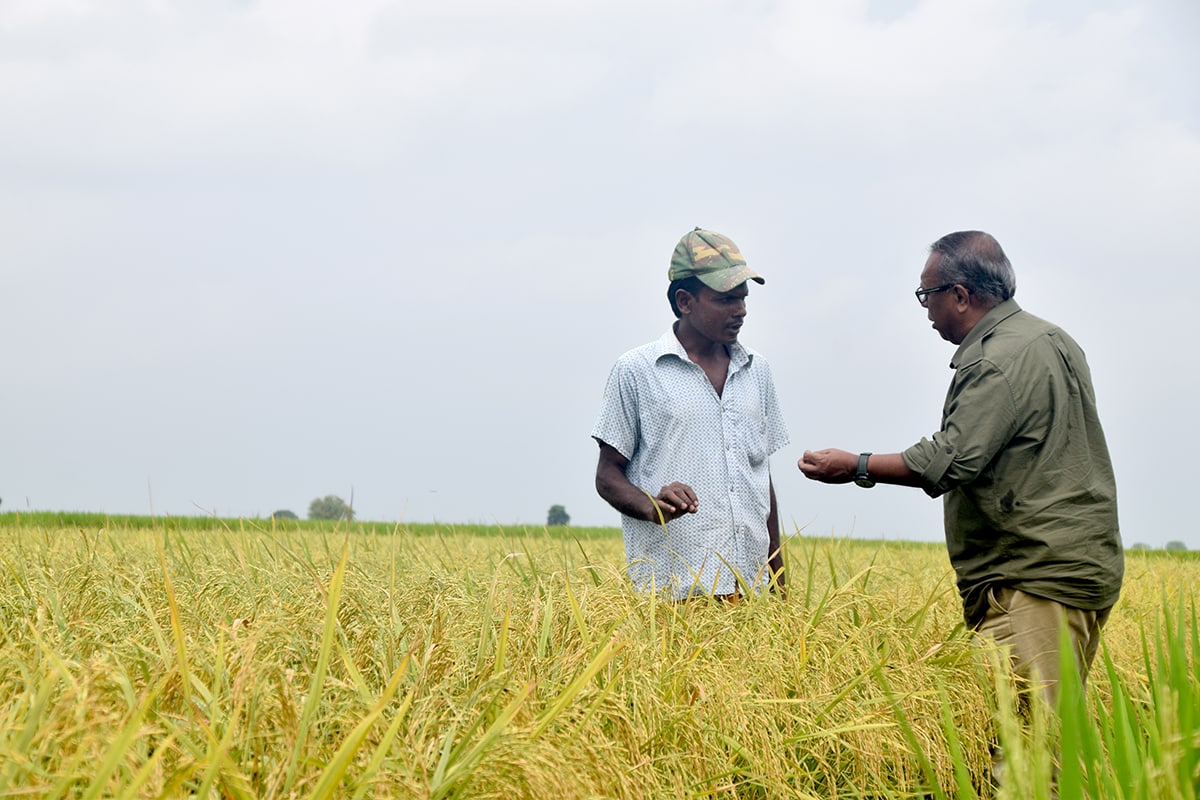
Thomas More's "Utopia" imagined a land where citizens were happy and content, and every citizen spent part of each year farming, going to the villages at sowing or harvest time, while anyone who wanted could farm with honour for life.
Citizens helping farmers
Seraj was reminded of Utopia in recent days. Students cut the paddy of Abdul Malek Sikder, the Kalihati, Tangail, farmer who set fire to his ripe crop. In Sirajganj, Agrani Bank officers harvested the paddy of a farmer facing losses from labour shortages and low prices. In Fulpur, Mymensingh, volunteer groups helped farmers bring in their paddy. These people standing by desperate farmers signalled a new Utopia for Bangladesh.
Every citizen of a country that grew from a farm economy needs a sound understanding of agriculture. Farm education is compulsory in textbooks up to a certain class, but not hands-on. Through his annual "Returning to Roots" programme, Seraj introduces city students to farming so that, whatever they become, they keep agriculture in mind.
Imports and stockpiles
Seraj argues the media also bear responsibility for the price fall. In 2017, flash floods in the haor were covered as though a food deficit was inevitable. The government estimated a shortfall of 1 million tonnes of rice. Farmers, traders and mill owners stockpiled rice hoping for profit, and the government imported for emergency security, cutting import duty from 28 to 2 per cent. In 2017-18, 6 million tonnes of rice were imported, while floods in the haor and north destroyed about 1.5 million tonnes of grain. Boro yields elsewhere were good, so there was no real shortage, yet imports continued as many letters of credit were opened before duty was restored. Aman and the 2018 crops were also bumper.
Mill owners and traders still hold old rice and are not buying. Only about 1,000 of the country's 16,000 rice mills are running this Boro season, and banks, facing liquidity shortages, are not lending to buy paddy. Some traders also buy low-quality rice India releases every three years when clearing its stocks, re-mill it and sell it at market prices.
More public storage
According to the Directorate of Food, government storage capacity is 2.1 million tonnes, with about 1.3 million tonnes in stock, and the government plans to buy 1.2 million tonnes of rice this season, less than 5 per cent of production. Seraj has long argued that storage should be at least 5 million tonnes; with only 2 million tonnes of capacity in a 30-million-tonne grain market, the government cannot compete with open-market traders. He urges more public procurement, even with subsidy.
Farmers complain that the government does not buy directly from them; one reason is that paddy in state stores must have at most 14 per cent moisture, which many farmers cannot measure, so officials buy from mills. Seraj also urges the government to check whether any syndicate is at work in the paddy market.
Source: Shykh Seraj. First published in Bengali on The Agro News.
Comments
(0)