
The Bangladesh Food Security Network (KHANI) has voiced concern at the decision to cut rice and flour targets and the subsidy for the open market sale (OMS) programme in the 2026-27 financial year. In a statement on Sunday (18 October), it urged the government to reconsider for the sake of food security among low-income city dwellers.
According to media reports, figures put to the parliamentary standing committee on the food ministry on 15 October set this year's OMS targets at 240,000 tonnes of rice and 350,000 tonnes of flour, against sales last year of 304,000 tonnes of rice and 449,000 tonnes of flour. That is a cut of about 21 percent for rice and 22 percent for flour, some 163,000 tonnes in all. The OMS subsidy has been cut from Tk 4,096 crore to Tk 3,411 crore, about 17 percent, and the total food subsidy from Tk 8,504 crore to Tk 7,973 crore.
By KHANI's figures, OMS rice sells at Tk 30 a kg, while coarse rice costs Tk 50 to 55 in the market and medium rice Tk 56 to 65, so a family without OMS may pay at least Tk 20 to 25 more per kg. The 64,000-tonne cut in rice alone could add an estimated Tk 128 crore to Tk 160 crore to beneficiaries' combined spending, more once flour is counted. Coarse and medium rice have risen by Tk 1 to 2 a kg in Dhaka in the past week, it said.
KHANI cited the Household Income and Expenditure Survey 2022 and related research: the urban poor rose from 7.4 million in 2010 to 7.9 million in 2022, and the vulnerable from 13.3 million to 15.3 million, while about 64 percent of extremely poor urban households get no social protection. Under the BBS Living Standards Survey 2025, 40.19 percent of urban households borrowed in the past year to meet basic costs. Overall inflation was 8.34 percent in September.
The network fears that higher food costs will force low-income families to eat less or less nutritious food, hitting children, pregnant women and the elderly hardest, and push them to cut spending on education and health or borrow more. OMS also helps steady rice prices, it says.
The food ministry has said the cut is not final and that funds exist for extra allocation if needed. Welcoming that, KHANI said the need for more has already arisen at current prices. Its four recommendations: keep targets and subsidy at least at last year's level, adjusted for inflation; open more OMS outlets in city corporations, municipalities and industrial areas, especially slums and workers' districts; strengthen transparency, digital monitoring and complaint handling at dealer level; and draw up an urban social protection strategy for the city poor, informal workers and people displaced by climate change.
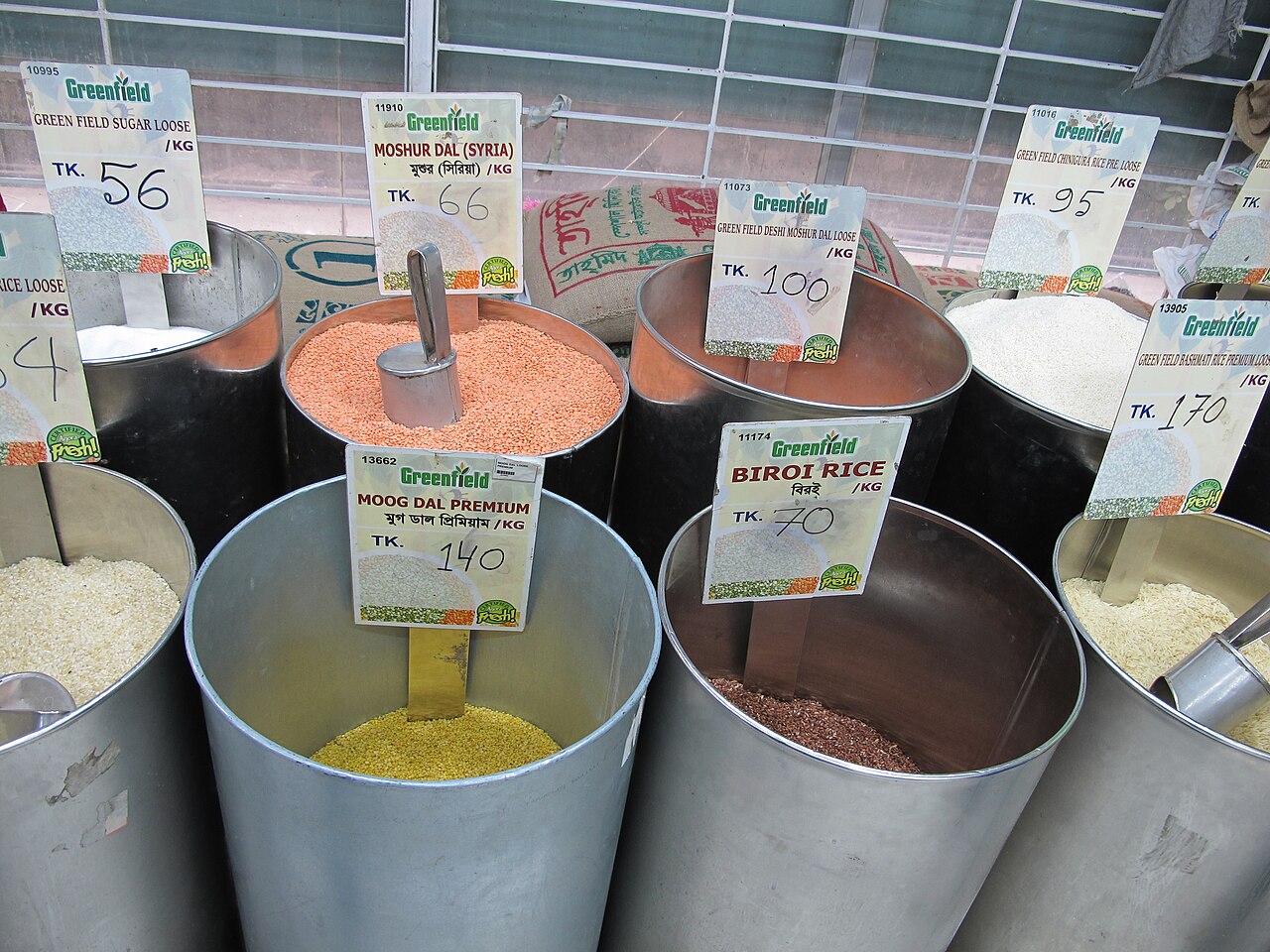
Photo: Kritzolina / Wikimedia Commons (CC BY-SA 4.0); rice and lentils in a Dhaka shop, representative picture
Source: Channel i Online

Comments
(0)