
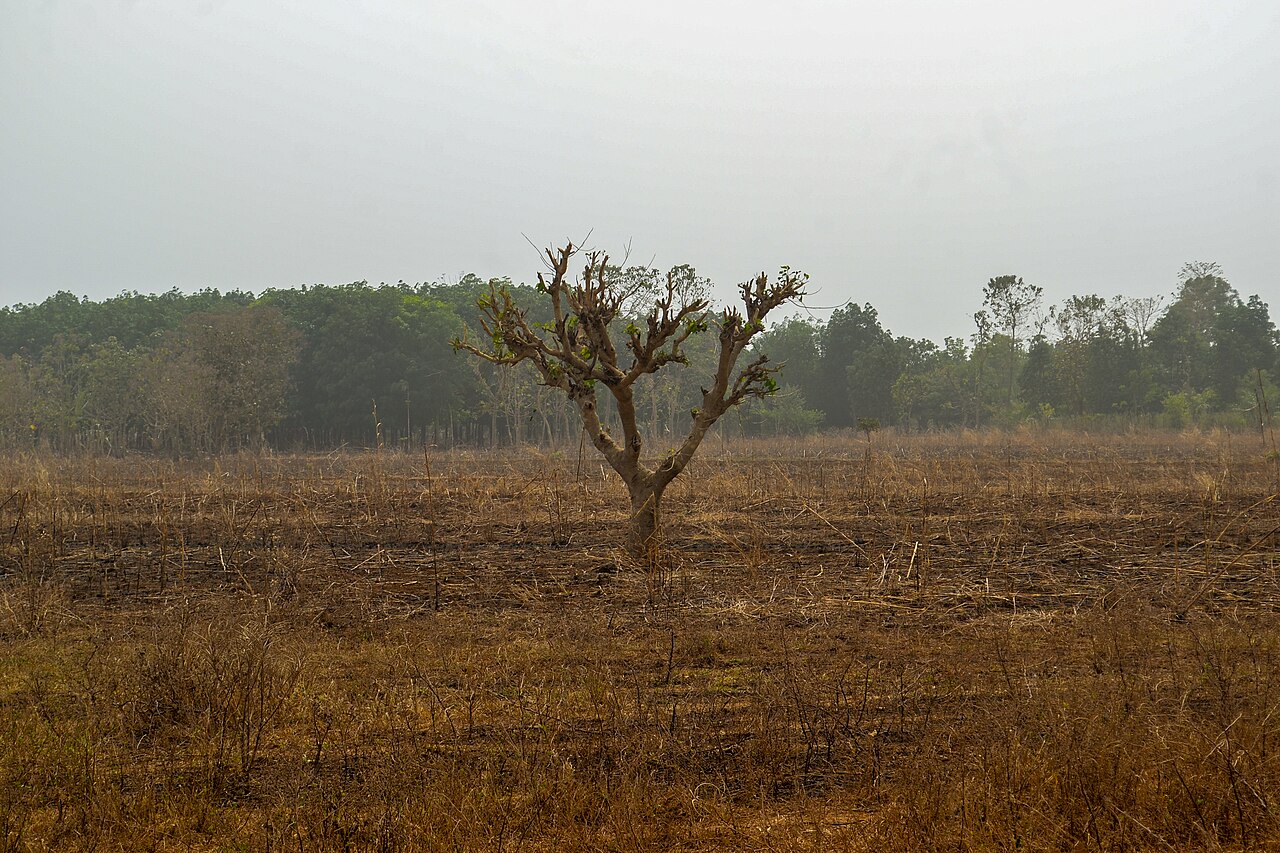
The rains ended early this year in parts of Nigeria's Federal Capital Territory, according to farmers there, and crops that were still developing are paying for it. In the territory, rain is generally expected to continue until the end of October. Several households say it last fell in the second week of the month.
Laraba Jonathan farms with her husband, Jonathan Ishaya, at Giri in Gwagwalada Area Council and walks more than six kilometres to reach their land. On the way she sees other farmers' fields. Beans planted late, towards the end of September and in the first week of October, were not growing well, she said, and she did not expect those farmers to harvest anything.
Her husband said rice fields across the area were drying up, particularly where the plants had not yet formed grain. He planted rice in July, and a dry spell slowed its growth and forced his wife to replant. He expected the upland rice to mature in three months, by the end of October, but much of it has not. He expects yields to drop sharply, and said the dryness brought caterpillars and grasshoppers as well.
Bulus Joseph, who farms at Pai in Kwali Area Council, gave the same date for the last rain and said his guinea corn was nearing the heading stage. He was not sure how it would fare. At Anagada, in Gwagwalada, Habiba Kasuwa said her guinea corn had begun to show signs of drying and that she expects a lower yield.
These are the farmers' own observations, not a measured rainfall record, and the report does not attribute this year's early end directly to El Nino with data. It notes that El Nino can influence rainfall patterns and add to moisture stress through temperature and higher evaporation.
The report calls for better access to timely climate information and practical measures such as early-maturing varieties and sound water management, which it says some farmers still lack. It also points to emissions from burning waste car tyres to singe the hide of animals at the Anagada livestock market, put at more than 1.5 million kilograms of carbon dioxide equivalent a year in a study of the market.
Photo: Kambai Akau / Wikimedia Commons (CC BY-SA 4.0)
Source: Global Agriculture

Comments
(0)