
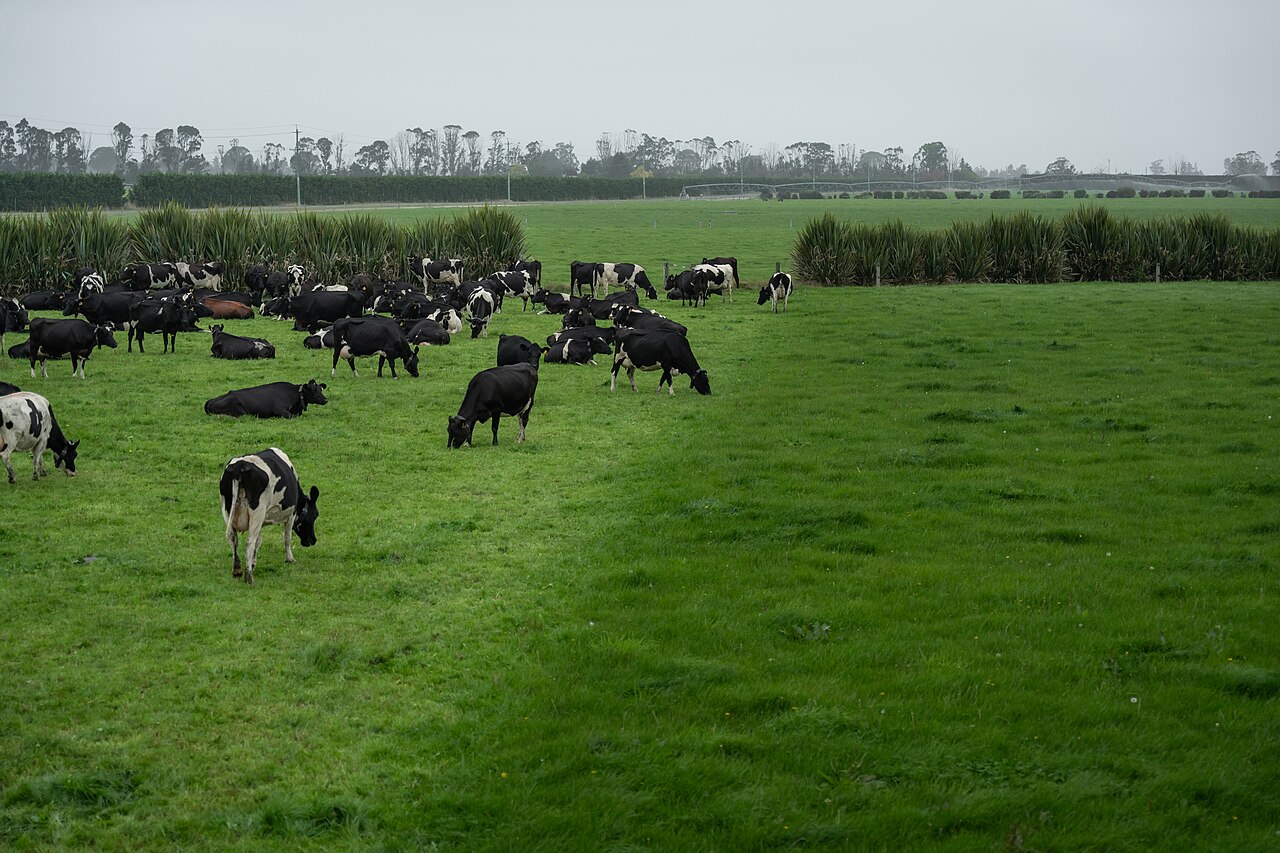
New Zealand's dairy farms produced 21.76 billion litres of milk in the 2025/26 season and passed two billion kilograms of milksolids for the first time, even though the number of herds kept falling, according to the New Zealand Dairy Statistics 2025/26 report from DairyNZ and Livestock Improvement Corporation (LIC), AgNavigator reported.
Output per cow drove the record. Average production reached 428kg of milksolids per cow, up from 414kg the season before, while the number of herds fell to 10,268 and cow numbers rose by just 1% to 4.72 million.
The report links the gains to breeding and recording tools that more farmers are using. Herd testing reached its highest participation since the early 2000s: 3.94 million cows, 83.3% of the national herd, were herd tested in 2025/26. Artificial breeding climbed to a 30-year high, with 84.8% of cows mated by artificial insemination. Herd-tested cows produced a record 4,999 litres of milk and 452kg of milksolids each, well above the national average.
"Record participation in herd testing and artificial breeding gives farmers more information and more options to accelerate genetic gain," said LIC chief executive David Chin. DairyNZ chief executive Campbell Parker said the milestone reflected the skill, investment and daily management of farmers alongside long-term gains in genetics, reproduction, animal health and farm systems.
Fertility and milk quality improved too. Farmers recorded a record 1.41 inseminations per cow, and the six-week in-calf rate across seasonal and split-calving herds rose to 70.2%, up from 63.5% in 2008. Average somatic cell counts fell to a record low of 149,000 cells per millilitre, a sign of better udder health.
The milk itself is richer. Milksolids now make up 9.27% of milk volume, against 8.48% in 2000/01, so each litre carries more fat and protein and is cheaper to transport and process. Chin said better information helps farmers breed cows suited to New Zealand's pasture-based systems.
The story was reported by Amanda Lim for AgNavigator.
Photo: Halter / Wikimedia Commons (CC BY-SA 4.0). Dairy cows grazing and resting on pasture.
Source: AgNavigator

Comments
(0)