
New Zealand's average annual temperature has risen by 1.36°C since records began in 1909, and seven of the ten warmest years have come in the last decade, according to Our Atmosphere and Climate 2026, a government report released on 7 October and summarised by Down To Earth. The Ministry for Cities, Environment, Regions and Transport said it gives an independent picture of how the climate is changing and what that means for people, places and ecosystems.
The report says human emissions and land-use change keep raising greenhouse gas concentrations. Between 1972 and 2025 average winter temperatures very likely rose at all 30 sites measured. Air temperatures are projected to warm by 0.75°C to 1.2°C above the 1995-2014 average by mid-century and 0.8°C to 3.2°C by 2100, most strongly in summer and at higher elevations, with more frequent, longer and more intense heatwaves, especially in the northern North Island.
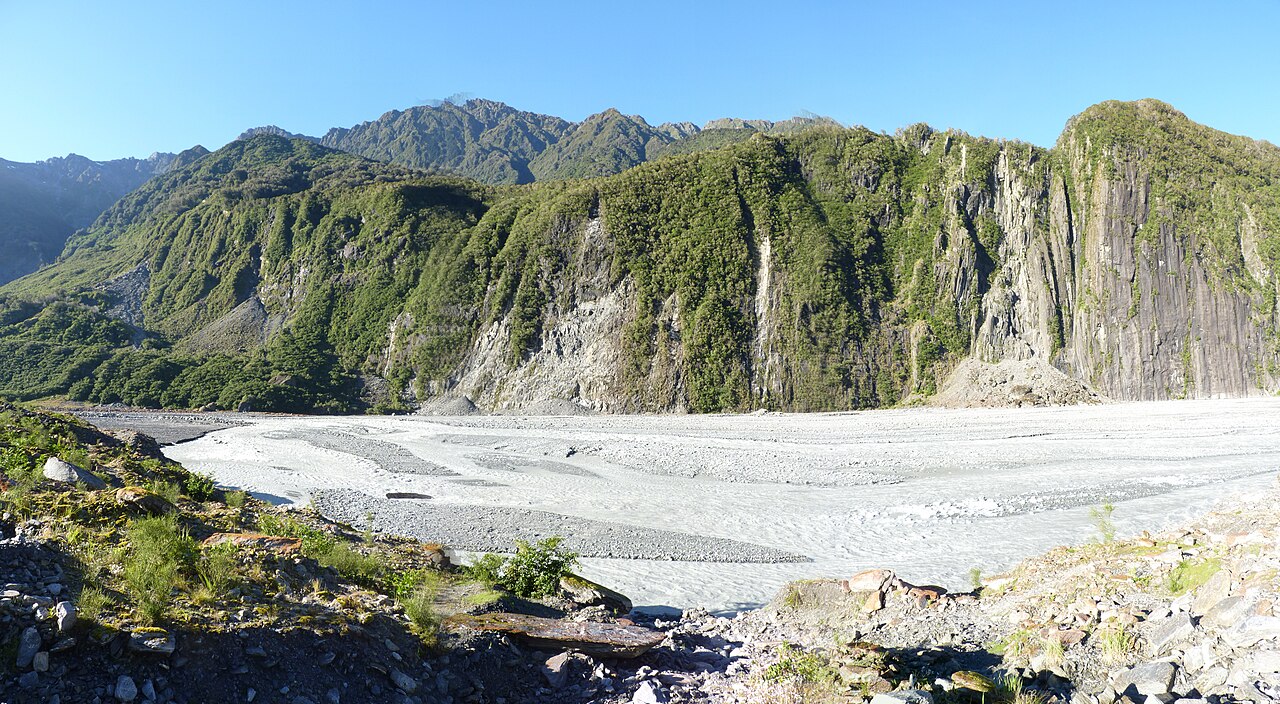
Ice is going fast. Glacier volume peaked at 56 cubic kilometres in 1997 and was down to 30 in 2023, and models project the glaciers will lose 14% to 86% of their 2015 volume by 2100 under a low scenario and 69% to 100% under a high one. Sea level is projected to rise more than 20 cm above the 1995-2014 average between 2045 and 2050, and surrounding sea surfaces to warm by 1°C to 1.5°C by mid-century.
Rain will be heavier when it comes. By 2090 annual rainfall is projected to fall across much of the North Island and the north and east of the South Island and rise in the west and south of the South Island, with fewer wet days but heavier falls. Maximum one-day rainfall could rise 8% to 28% by 2100 under a high scenario, and 40% to 50% of locations could see 1-in-10-year events twice as often. Rain from storms that begin as tropical cyclones may be 15% to 55% heavier.
Farmland is in the line of fire. By 2050 about 38,000 to 55,000 square kilometres of productive land is projected to face a potential evapotranspiration deficit at least 50 mm larger, rising to about 95,000 square kilometres by 2090 under a high scenario, or about 31,000 under a low one. Wildfire weather is projected to become more severe across many parts of the country, with longer fire seasons.
Photo: Michal Klajban / Wikimedia Commons (CC BY-SA 4.0)
Source: Down To Earth

Comments
(0)