
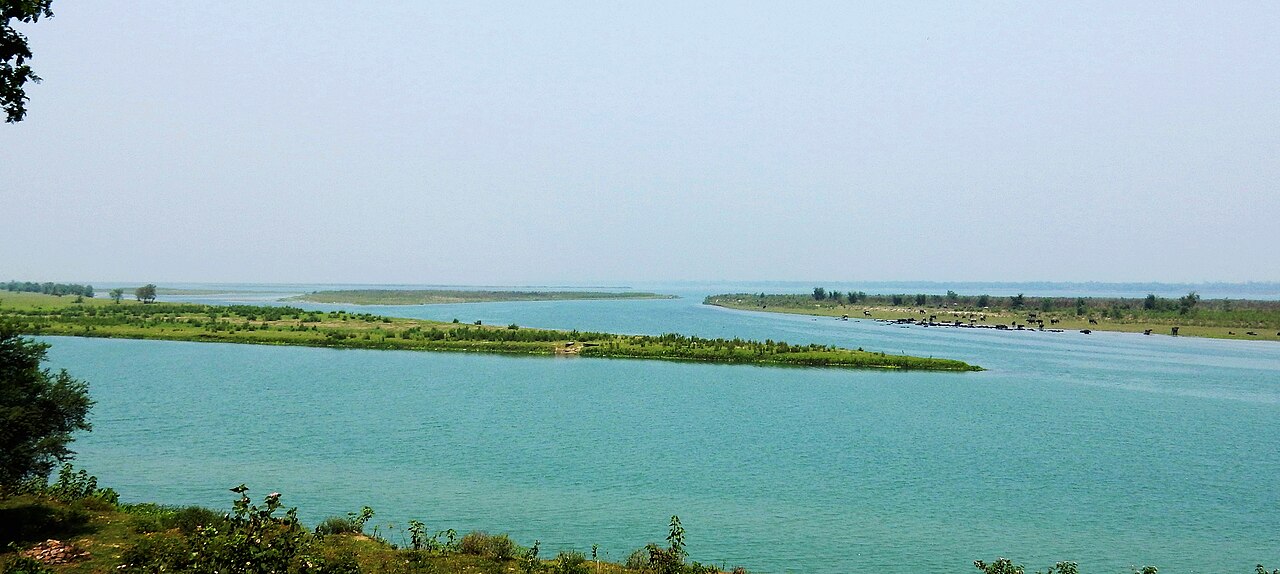
The 30-year term of the Ganges Water Sharing Treaty, signed by Bangladesh and India on 12 December 1996, runs out this December. In a column in Bangla Tribune, Khayer Mahmud, associate professor of law at Jagannath University and a PhD researcher at the University of Leicester, argues that Bangladesh should not simply renew the old treaty but work for a fairer, science-based and more effective one. The views are the writer's own.
The treaty divides the dry-season flow at Farakka from 1 January to 31 May in 10-day periods. At 70,000 cusecs or less the two countries share equally; between 70,000 and 75,000 cusecs Bangladesh gets 35,000; at 75,000 or more India gets 40,000 and Bangladesh the rest. Between 1 March and 10 May each country is guaranteed 35,000 cusecs in three set 10-day periods by turn. Under Article 12, renewal needs both countries' consent; it is not automatic.
While crediting the treaty, the writer points to weaknesses. It guarantees Bangladesh no continuous minimum flow through the whole dry season; if flow at Farakka falls below 50,000 cusecs, it only calls for urgent consultations. The schedule rests on average flows from 1949 to 1988, though upstream use, irrigation demand and the climate have all changed since. A new treaty, he says, should be built on flows across the whole basin, upstream withdrawals and the combined effect of dams and barrages.
He stresses farming and the environment: without enough freshwater in the south-west, salinity rises, farmland and drinking-water sources suffer and the Sundarbans comes under strain. Yet the treaty sets no binding standard for environmental flows, Sundarbans freshwater, reviving the Gorai, controlling salinity or protecting fisheries. Article 8 called for a long-term solution to raise dry-season flow, but three decades on that remains unresolved.
For transparency he proposes a joint real-time database, independent technical verification and regular public reporting, and for disputes a fixed timetable with independent experts or arbitration if needed. He warns that Article 11's safeguard, releasing at least 90 per cent of Bangladesh's share during disagreements, applies only while the treaty is in force; without a deal by December, a legal and operational vacuum could open.
His call is that Bangladesh is not asking for favours on the Ganges. It wants, as a downstream partner on an international river, a fair, minimum and effectively protected share, one that also recognises the life of the river and the rights of people downstream.
Photo: Debmalyap / Wikimedia Commons (CC BY-SA 4.0)
Source: Bangla Tribune

Comments
(0)