
Plant breeders' rights and patents are not rivals, and Europe's seed sector needs both, argues Marcel Bruins, editorial director of Seed World Europe, in a column in the magazine's Seed Sector 2045 series. The views are the writer's own.
Bruins says the intellectual property debate is muddled because different tools are lumped together. Plant breeders' rights, including the EU's Community Plant Variety Rights (CPVR) run by the CPVO, protect a new variety that is new, distinct, uniform and stable, and they carry a breeder's exemption that lets anyone use a protected variety to breed another. Patents protect technical inventions such as certain traits or methods; plant varieties as such, and essentially biological processes, cannot be patented in Europe. Article 27(c) of the Unified Patent Court Agreement adds a limited breeder's exemption, but a new variety that still contains a patented trait needs a licence to be sold.
He leans on figures to argue that patents are not taking over. An ALTIUS-coordinated report found that only about 30% of the European applications it analysed with claims relevant to new genomic technique (NGT) plants had been granted, against the European Patent Office's estimate of about 60% across all fields. Varieties with patented traits made up an estimated 2.9% to 4.0% of registered varieties in the crops analysed in 2024, and 1.6% to 2.1% when weighted by production value.
Nor does CPVR cover everything, he writes. A joint EUIPO and CPVO study put the share of varieties under CPVR at 25% for arable crops, 12% for fruit, 19% for vegetables and 97% for ornamentals. The same study estimated that without breeding progress in CPVR-protected varieties between 1995 and 2019, EU production in 2020 would have been 6.4% lower for arable crops, and linked that progress to about €13 billion in GDP, almost 90,000 direct jobs and modelled savings of around 62 million tonnes of greenhouse gas a year. Small firms and individuals hold about 60% of CPVRs in force.
For Bruins, the real test is access. He points to the PINTO database, which links varieties to patent information, and to the licensing platforms ILP Vegetable and the Agricultural Crop Licensing Platform, and argues that concerns about freedom to operate and licence costs are better met with transparency and licensing than with broad restrictions. With the EU's NGT Regulation adopted, he says the sector should help shape the Union-level code of conduct, and that the current CPVR evaluation should stay on enforcement, farm-saved seed, essentially derived varieties and digitalisation rather than reopen patent policy.
He ends by arguing that without predictable IP rules more innovation stays hidden as trade secrets, and a balanced system is part of the infrastructure that breeding for climate adaptation and lower-input farming will need.
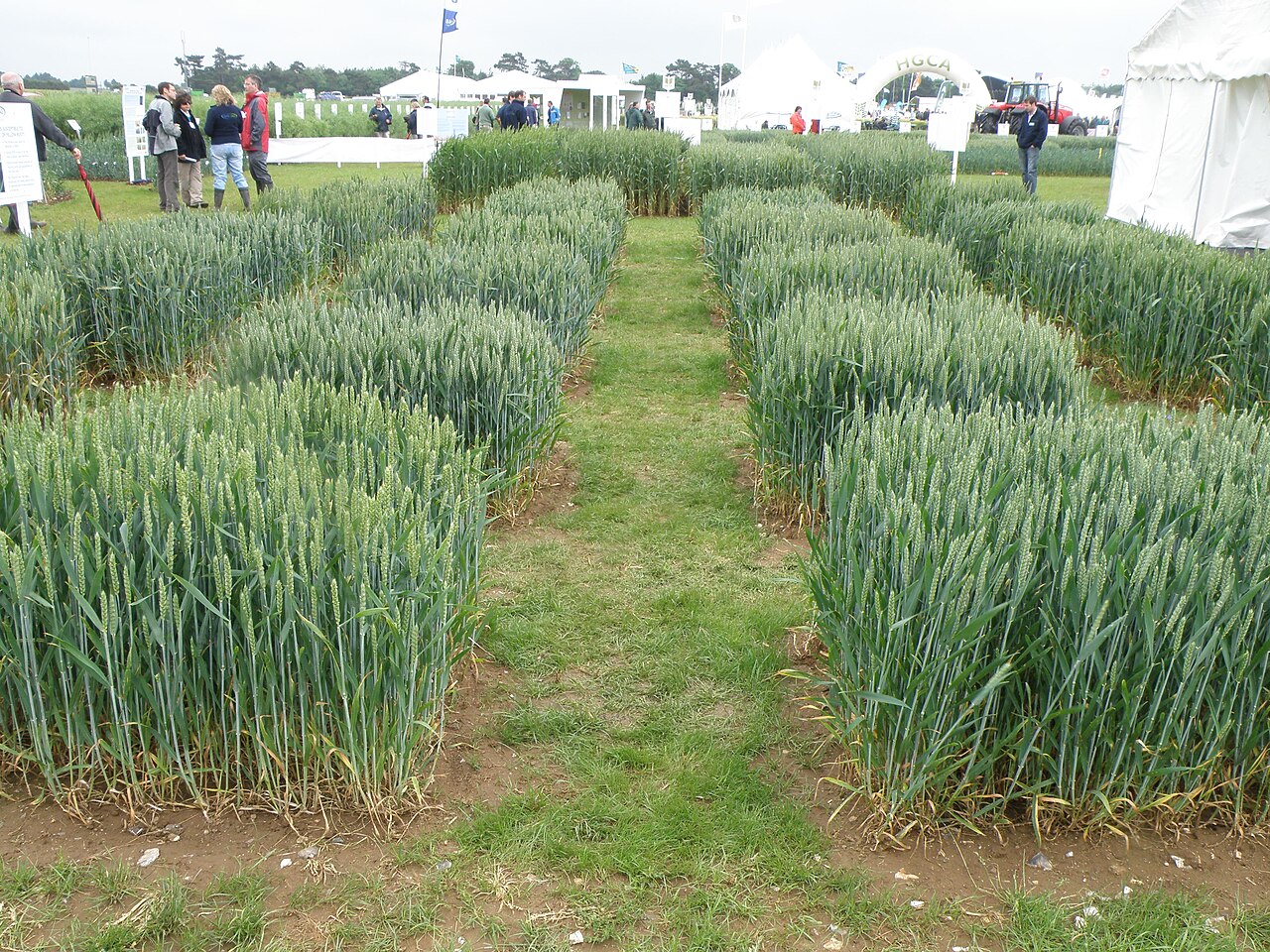
Photo: Michael Trolove / Wikimedia Commons (CC BY-SA 2.0)
Source: Seed World Europe




Comments
(0)