
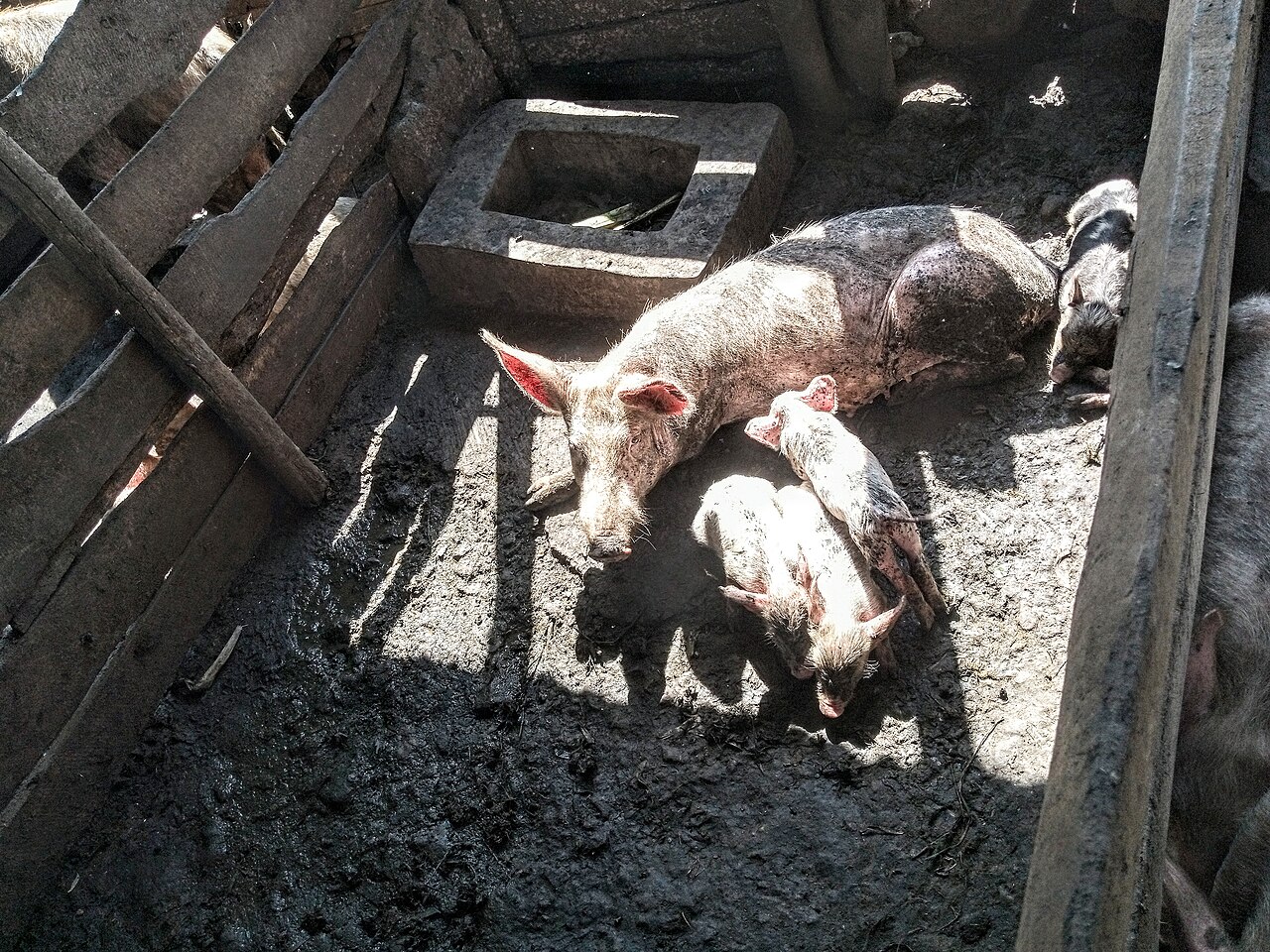
Pig vets in Britain are being asked to look out for a new disease syndrome associated with a novel parvovirus variant found on a number of pig farms in the Netherlands and on one breeding farm in Denmark.
The Animal and Plant Health Agency (APHA) said in an update on its Emerging and Endemic Disease Alert System that the key signs, seen in several pigs at once, are bulging eyes (bilateral exophthalmos), eyes pointing in different directions (strabismus), general skin reddening, wrinkled skin, hair loss and reduced growth, with respiratory signs in some. It called the first two signs "unusual and striking"; such cases are likely to qualify as suspects for which APHA has investigation funding.
Affected pigs are most likely to be sucking piglets or weaners aged 2 to 10 weeks. Up to 80 per cent of pigs in half the litters can be affected at the same time, but deaths from the syndrome are low and most pigs recover. On infected farms signs have persisted for three to six months, four on average, bringing peri-weaning diarrhoea or 'greasy pig disease' and uneven batches of poorer-quality finishers.
No risk factors have yet been identified, but the new variant has been found in high amounts in tissue from every affected pig tested in both countries and not in healthy pigs. It differs from known porcine parvoviruses and is most closely related to one detected in fox faeces and spleen samples in the Netherlands, Croatia and Denmark. A causal link has not yet been established, and how the virus reached pigs is unknown.
The syndrome has not been seen in Great Britain, and it is not known whether the virus is present there. Live pigs and semen can be imported from authorised EU countries under health certification, but little is known about transmission and risk pathways, APHA said. Commercial vaccines against endemic porcine parvovirus are not expected to protect against the variant. No human illness or food-safety concerns have been described.
APHA asks pig keepers and vets to report suspect cases to its Pig Expert Group or a local Veterinary Investigation Centre.
The report was written by Alistair Driver.
Photo: Puerta25 / Wikimedia Commons (CC BY-SA 4.0)
Source: Pig World
Comments
(0)