
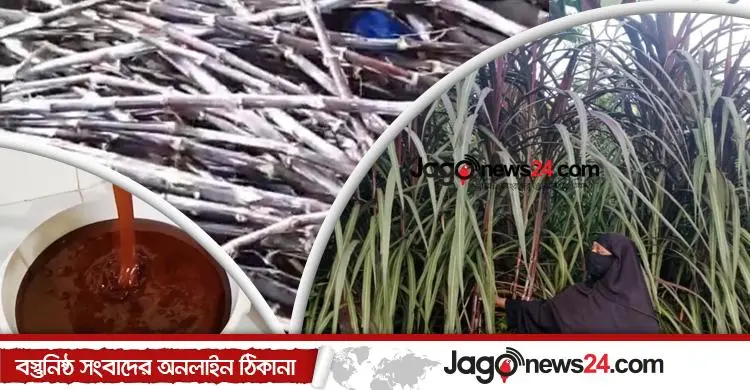
Khadija Begum of Alfadanga municipality in Faridpur refused to sit idle in a poor household and used her ingenuity and hard work to succeed. By making jaggery from grass, she has lifted her family out of hardship and set a new example.
From grass to jaggery
Khadija, wife of Mohammad Saiful Islam of Naora Mithapur village, grows a special grass on just 10 decimals and makes jaggery from it. With three children and her husband's limited income, she looked for another source of earnings, and on the advice of local agriculture officials she began growing red Napier grass and learned a process for making jaggery from it.
She first made jaggery from the grass juice as a trial and drew attention locally. She sells it at 400 taka a kilogram and earns about 1,300 taka a day on average from jaggery and grass sales. One kilogram of jaggery needs about 60 grass stems weighing some 15 kg; each stem is about 8 feet tall and a little thinner than sugarcane, and 60 stems give 6 to 7 kg of juice.
She also grows local and foreign fruits and vegetables on one acre, including apple, papaya, grapes and Saudi dates, earning about 1,500 taka a day.
Costs and taste
Her husband, who works in a junior post at the rural electricity board, said planting grass on 10 decimals costs about 3,000 taka and making jaggery another 3,000 taka, with jaggery worth 15,000 taka to be sold. It tastes like sugarcane jaggery, though slightly saltier. He has planted grass on more land and applied to the Bangladesh Standards and Testing Institution (BSTI) to check whether the jaggery is harmful.
Buyers Nuru Talukdar and Farzana Akter said the jaggery tastes good and they had noticed no harm.
Official views
Alfadanga upazila agriculture officer Tushar Saha said Khadija has received advice and technical support from the start and her success shows women can succeed in any field. Upazila health officer Md Niaz Mustafi Chowdhury said jaggery made properly from grass juice, without toxic pesticides or growth hormones, should not be harmful.
Md Kamal Hossain, BSTI deputy director (food and bacteriology), said only sugarcane jaggery is normally called jaggery and there is no policy to license grass jaggery. Whether it is harmful is not known, and it could be tested at the Science Laboratory in Dhaka, he said.
Source: Jagonews24. First published in Bengali on The Agro News.
Comments
(0)