
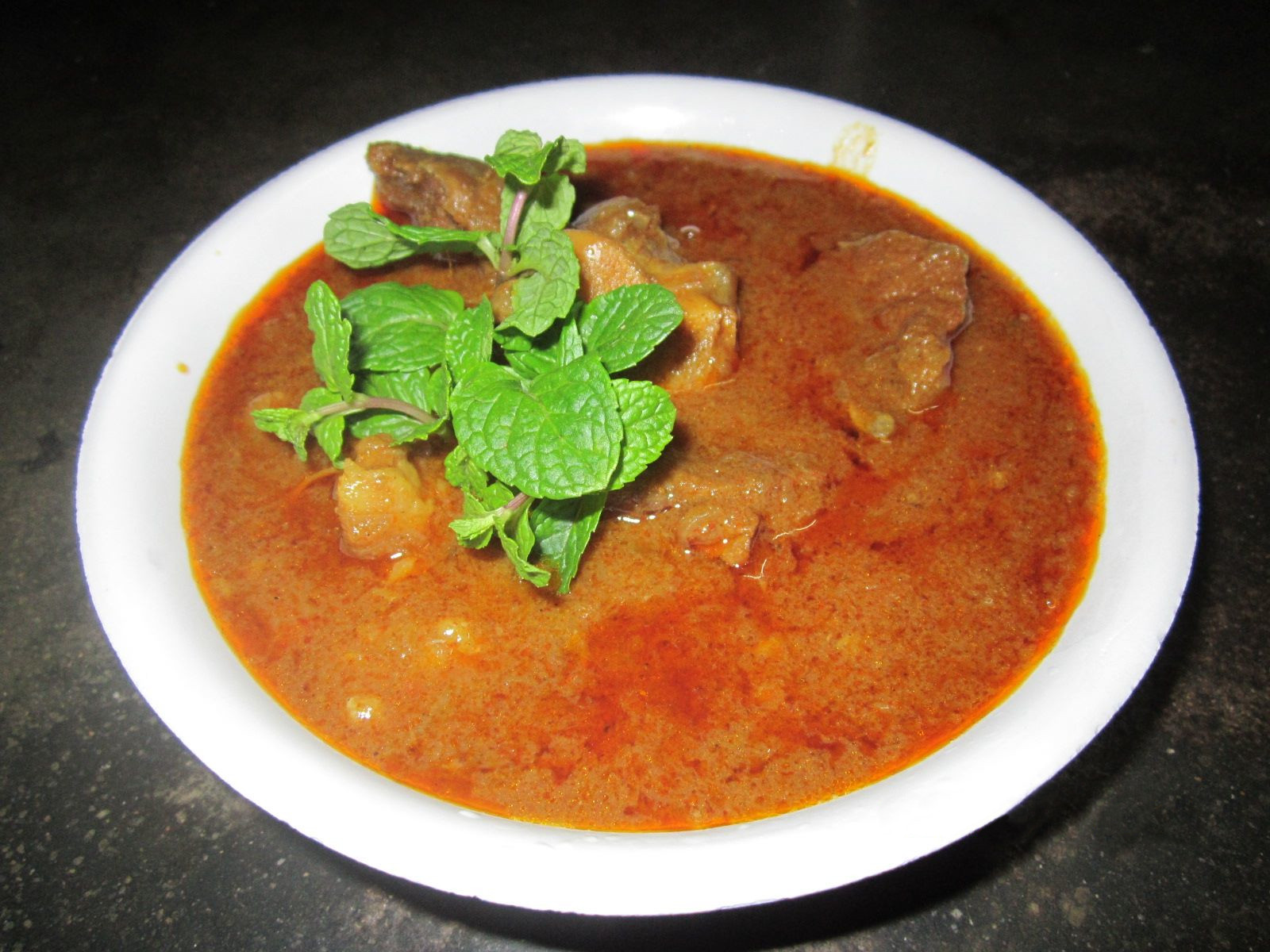
On 10 February 2026 the lifestyle desk of the Bangladeshi news site Jagonews24 published a recipe for khasir mangsho, goat meat curry, cooked in mustard oil. The recipe presented mustard oil as a simple way to bring out the flavour of goat meat: compared with ordinary oil and spices, it said, cooking in mustard oil gives the meat a distinct, mild sharpness and aroma, and the finished curry is enjoyable with rice or roti.
The dish starts with one kilogram of goat meat rubbed with lemon juice, salt and black pepper, then marinated for an hour with sour yoghurt, ginger and garlic pastes, ground spices, tomato and half a cup of mustard oil. The meat is browned with fried onion and whole garam masala, simmered in water until tender and finished with green chillies, garam masala powder and coriander leaves. The ingredients and steps below are as the original recipe gave them. The sections after them explain the oil and the meat at the heart of the dish: how mustard oil has been pressed and grown in Bangladesh, what gives it its pungency, what food regulators had said about its erucic acid, what the Black Bengal goat is, and what health and food-safety authorities advised, as of the recipe's date, about red meat, cooking fat and the handling of raw meat.
Ingredients for goat meat in mustard oil
The recipe lists these ingredients for one kilogram of goat meat:
- Goat meat: 1 kg
- Lemon juice: 2 teaspoons
- Salt: to taste
- Ground black pepper: half a teaspoon
- Sour yoghurt: half a cup
- Ginger paste: 1 tablespoon
- Garlic paste: 2 teaspoons
- Ground coriander: 1 teaspoon
- Ground cumin: 1 teaspoon
- Ground turmeric: 1 teaspoon
- Ground red chilli: 2 teaspoons
- Sliced tomato: 100 g
- Mustard oil: three-quarters of a cup
- Chopped onion: 200 g
- Whole garam masala (bay leaves, cardamom, cinnamon and cloves): 3 or 4 of each
- Water: as needed
- Sugar: 1 teaspoon
- Garam masala powder: 1 teaspoon
- Green chillies: 5 or 6
- Chopped coriander leaves: a little
Of the three-quarters of a cup of mustard oil, the recipe puts half a cup into the marinade with the meat; oil is used again at the start of cooking, to fry the onion and whole spices. The garam masala is used twice as well: the whole spices go into the hot oil first, and the ground powder is kept back until the last five minutes.
How to cook it, step by step
- Clean and wash the goat meat. Rub it with the lemon juice, salt and ground black pepper and leave it for 20 minutes.
- Wash the meat again. The recipe says this removes the gamey smell that goat meat can have.
- Mix the meat with all the ground spices except the garam masala powder, together with the sour yoghurt, the ginger and garlic pastes, the tomato and half a cup of mustard oil. Leave it to marinate for 1 hour.
- Put a pot on the stove with oil, the chopped onion and the whole garam masala, and fry until the onion turns light brown.
- Add the marinated meat, cover the pot and cook for 20 minutes.
- When the meat is well browned in its spices, add enough water, cover and cook for 40 minutes.
- When the meat is tender, add the sugar, green chillies, garam masala powder and coriander leaves, cover and cook on low heat for 5 minutes. The curry is then ready.
The original serves the curry with rice or roti. The second washing in step 2 is the recipe's own advice for reducing the smell of goat meat; the section on food safety below sets out what the UK National Health Service says about washing raw meat in general, and what the World Health Organization advises about keeping raw meat apart from other food, cooking it thoroughly and storing what is left.
Mustard oil in the Bengali kitchen
Banglapedia, the national encyclopaedia of Bangladesh, describes mustard, sarisa in Bengali, as herbs that give oil from their seeds, such as Brassica napus (rape) and Brassica nigra (black mustard), of the family Cruciferae. "Only a few decades ago," its entry says, "mustard oil was the exclusive cooking oil in Bangladesh."
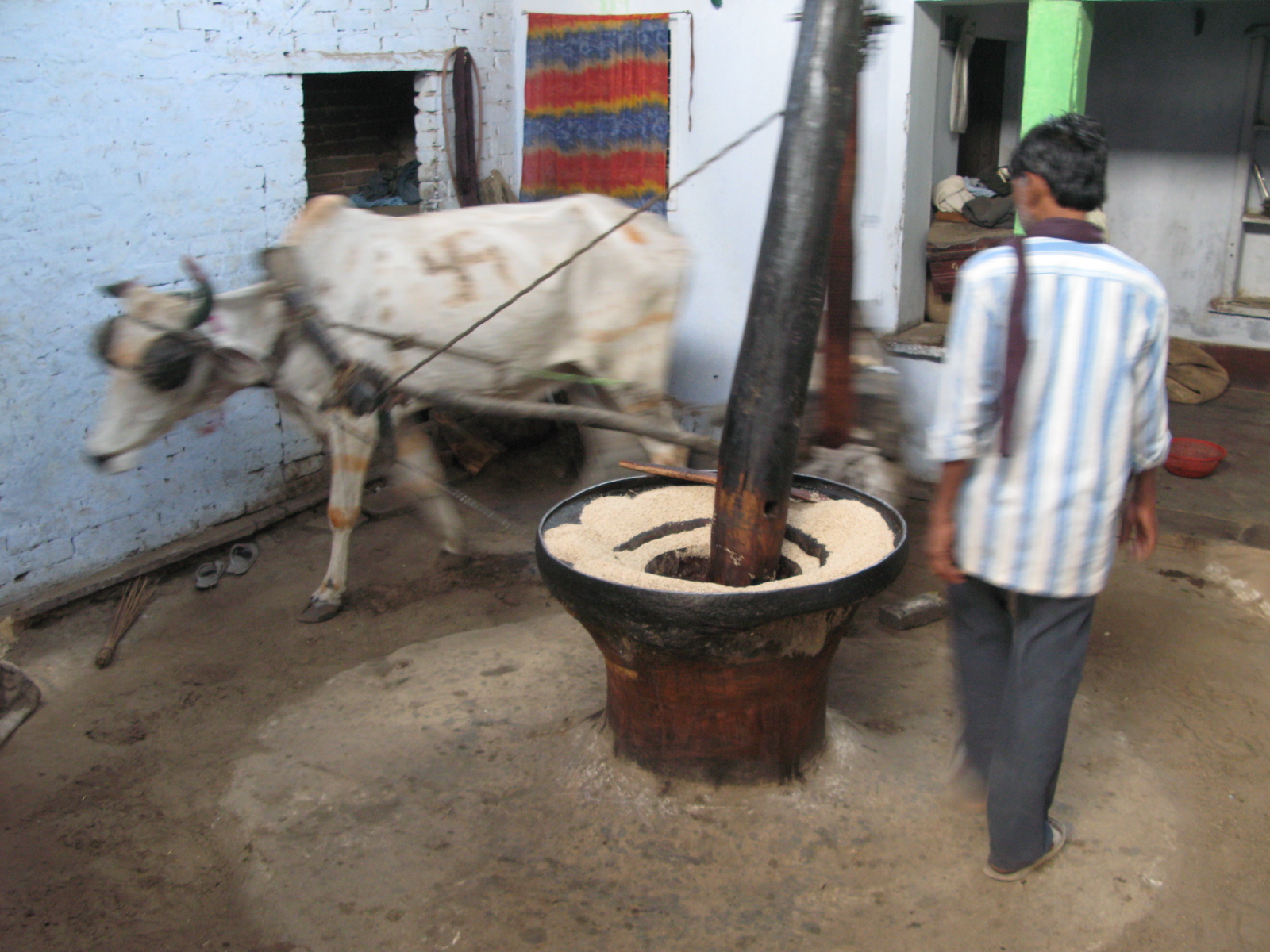
The entry describes how the oil has traditionally been pressed. In many places the seeds are still squeezed in a traditional mill called the ghani, which is pulled by a bull through long hours of the day and even through the night, and the tradesman who runs it is called a kolu. The bull's work was so monotonous, Banglapedia notes, that the phrase "kolu's bull" became a Bengali expression for someone who does routine work without asking why. Nowadays, it adds, mustard oil is extracted in electric mills.
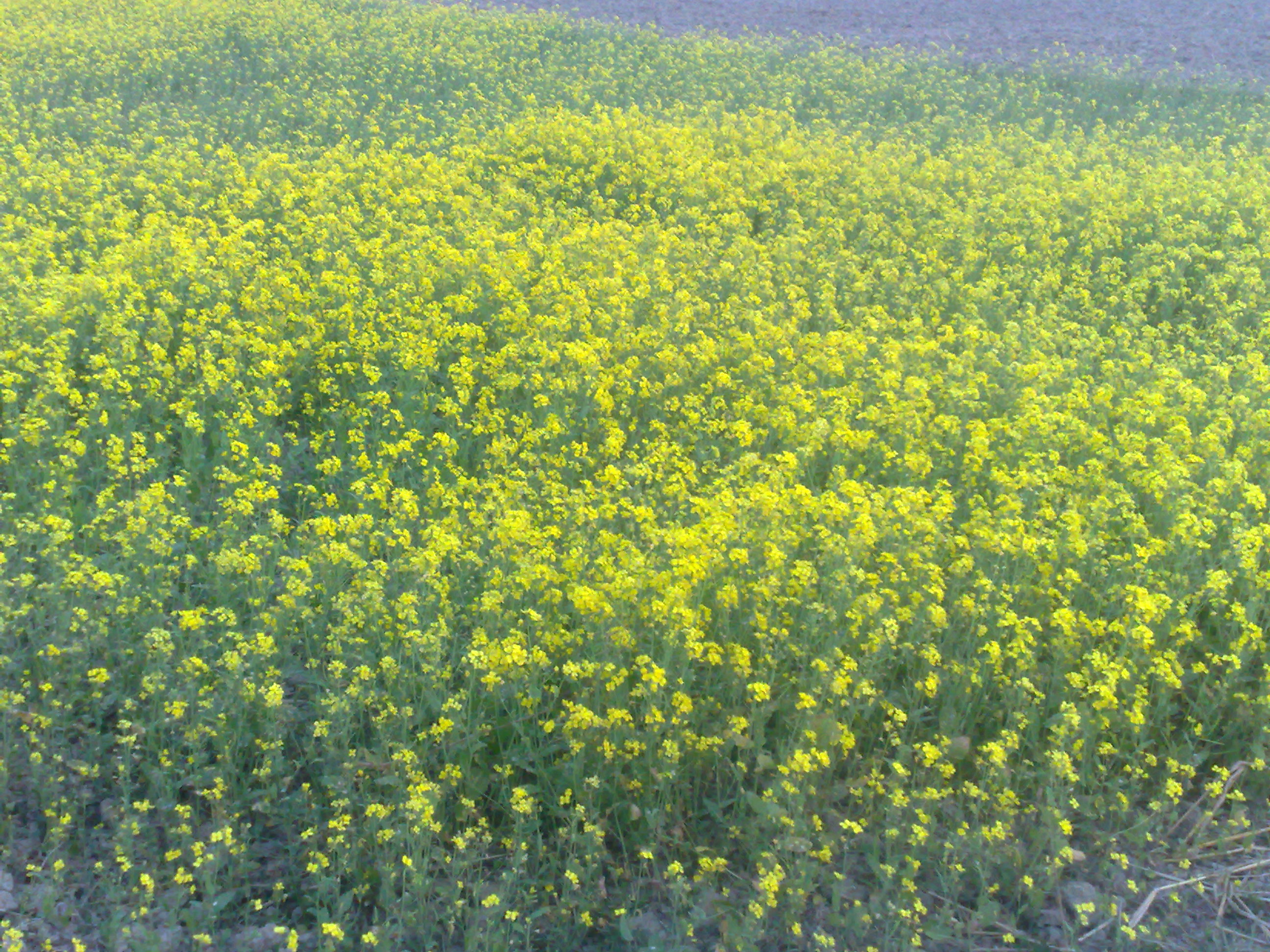
According to the same entry, which was last edited in June 2021 and gives no year for its figures, about 0.24 million hectares of land in Bangladesh were under mustard, yielding mustard oil in the order of 0.19 million tonnes a year. That, the encyclopaedia says, meets only a fraction of the country's cooking-oil needs, so large quantities of soybean and sunflower oil have to be imported. Imported soybean oil is cheaper than local mustard oil, which it says has further reduced the area under mustard. Mustard is grown in almost every district, and Chittagong, Sylhet, Dhaka, Tangail, Jessore, Bogra, Sirajganj and Pabna have comparatively larger areas under this Rabi, or winter-season, crop.
Mustard on Bangladesh's winter fields
Mustard is a Rabi, or winter-season, crop. Government efforts to grow more of it at home were in the news before this recipe appeared. On 10 January 2024 the news agency UNB reported from Jashore that, according to the district office of the Department of Agricultural Extension (DAE), the area under mustard there had passed the season's target of 29,900 hectares and reached 30,265 hectares. DAE sources told the agency that the increase was part of the government's initiative to reduce edible oil imports.
In Churamonkathi village of Jashore Sadar upazila, UNB found farmers growing the BARI-9 and BARI-14 mustard varieties, developed by the Bangladesh Agricultural Research Institute (BARI). The government, the report said, gave each farmer one kilogram of seed and 20 kilograms of fertiliser per bigha of land to encourage cultivation, and seeds and fertilisers reached 37,800 farmers across the district, including in Abhaynagar upazila, where mustard covered 2,110 hectares. A farmer from Jhikargacha upazila told UNB that, compared with crops such as paddy, mustard cultivation is less expensive and more profitable. The DAE deputy director in Jashore told the agency that the aim was to reduce edible oil imports by increasing the cultivation of Rabi crops such as mustard.
What gives mustard oil its sharpness
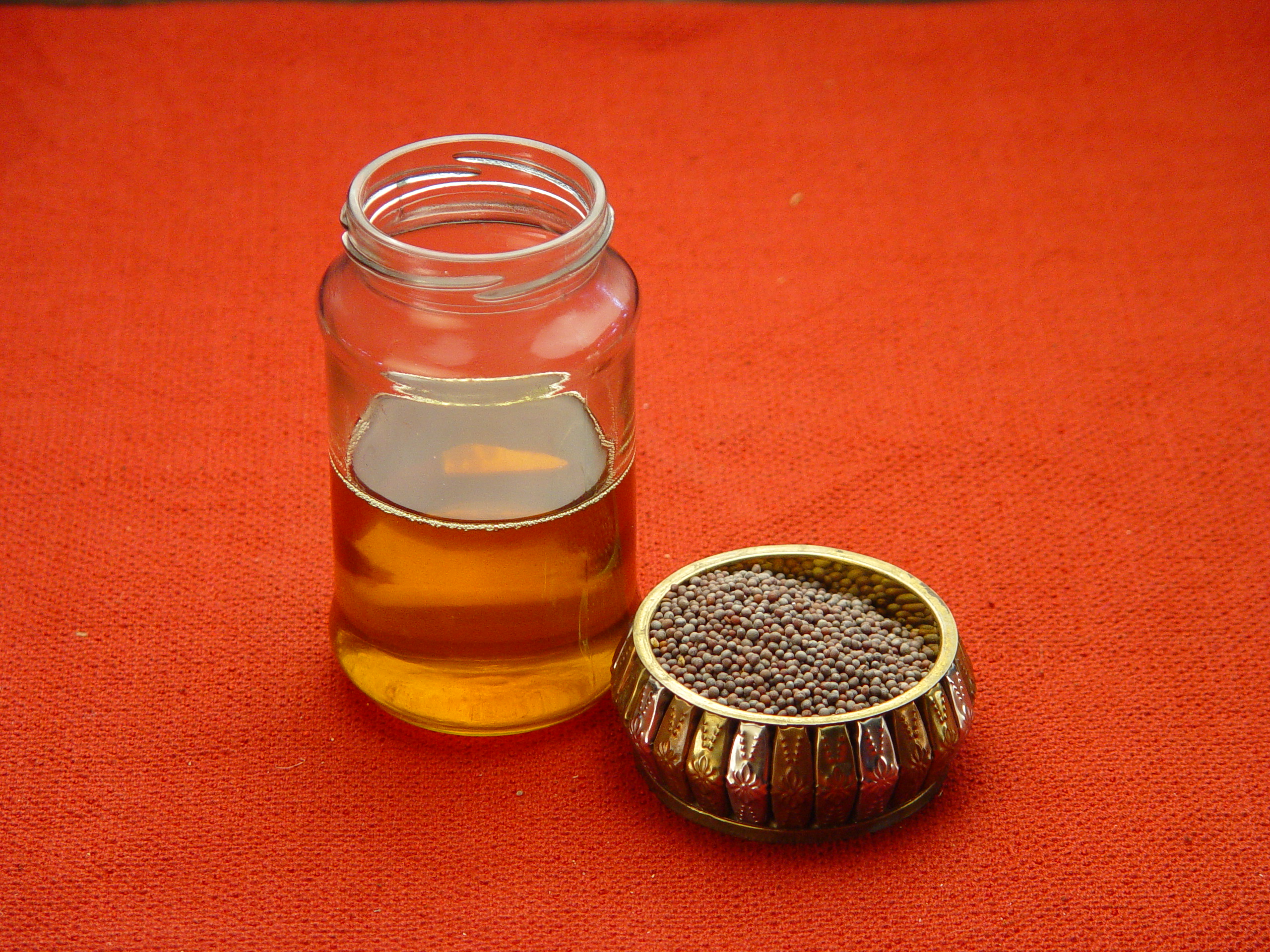
The sharpness the recipe prizes comes from the chemistry of the seed. A review of Brassicaceae mustards by researchers at Southern Cross University in Australia, published in the International Journal of Molecular Sciences in August 2024, describes mustard oil as a high-value oilseed product, popular in many Asian countries, that adds a typical hot and spicy flavour to food. Traditional mustard or rapeseed oil, the review says, is pressed from the seeds of Brassica napus, Brassica juncea, Brassica rapa var. campestris and Brassica tournefortii.
According to the review, mustard seeds are made up mostly of oil (28 to 42 percent), followed by protein (25 to 40 percent), carbohydrate (15 to 35 percent), fibre (10 to 15 percent), minerals (5 to 10 percent) and up to 10 percent plant secondary metabolites, among them glucosinolates, phenolic compounds and tannins. All mustards, it explains, have their typical pungent flavour because of these sulphur-containing glucosinolates. In the intact seed they are kept apart from an enzyme called myrosinase; when the tissue is crushed or damaged, the enzyme is released and breaks the glucosinolates down into compounds such as isothiocyanates. Sinigrin is among the most abundant glucosinolates, and allyl isothiocyanate is one of the breakdown products the review names.
The oil itself, the review says, consists mainly of triglycerides with about 7 to 12 percent saturated fatty acids, 15 to 65 percent monounsaturated fatty acids and about 8 to 40 percent polyunsaturated fatty acids, depending on the variety. The monounsaturated part is mainly erucic acid (40 to 50 percent) and oleic acid (5 to 12 percent); the polyunsaturated part is chiefly linoleic acid (10 to 15 percent), an omega-6 fatty acid, and linolenic acid (8 to 15 percent), an omega-3 fatty acid.
Erucic acid and what food regulators say
Erucic acid is the reason mustard oil is treated differently by some food regulators abroad. In the United States, the Food and Drug Administration's Import Alert 26-04, published on 18 November 2016 and still posted in January 2026, states that expressed mustard oil "is not permitted for use as a vegetable oil". It says the oil may contain 20 to 40 percent erucic acid, "which has been shown to cause nutritional deficiencies and cardiac lesions in test animals", and notes that expressed mustard oil is reportedly used by some cultures as a cooking oil. The alert lets FDA field offices detain shipments of expressed mustard oil without physical examination.
The same alert separates that pressed, fatty oil from a different product also called mustard oil: the essential or volatile oil of mustard, a flavouring made by steam distillation of black mustard flour or mustard cake. The FDA treats that essential oil as generally recognised as safe and lists it as an approved flavouring under 21 CFR 182.20.
In Europe, the European Food Safety Authority (EFSA) set a tolerable daily intake for erucic acid of 7 milligrams per kilogram of body weight per day in a 2016 opinion, as a 2023 review in the journal Molecules by researchers at the Jagiellonian University Medical College in Krakow records. Plant breeders have answered the concern with low-erucic varieties: the 2024 review notes that canola, bred from Brassica napus and Brassica rapa, has seed oil with less than 2 percent erucic acid, that low-erucic oils are defined as below 2 percent in the United States and 5 percent in the European Union by weight, and that the FDA approved canola as generally recognised as safe for human consumption in 1985. High-erucic mustard oil, the review adds, also has industrial uses in lubricants, detergents, plastics and biofuels.
The scientific picture is not one-sided. The 2023 Molecules review says the worry rests largely on animal studies, mostly published in the late 1970s, which linked high, prolonged intakes of erucic acid in rats with fat deposits in heart muscle, called myocardial lipidosis. Its authors stress that these cardiac effects have not been confirmed in humans, that the animal experiments, performed mostly about four decades ago, had limitations such as small numbers of animals and extremely high doses, and that the effect was reversible in most cases. They also recall that a mass poisoning in Spain in 1981, which affected more than 20,000 people and became known as toxic oil syndrome, was first blamed on erucic acid, but later analyses excluded it as the cause.
The human evidence the review cites points both ways. A study of ten patients in Sichuan province, China, who regularly consumed large amounts of mustard seed or rapeseed oil, about 500 millilitres a month, found no correlation between the high erucic acid intake and degenerative heart disease. Two large cohorts in the United States, the Cardiovascular Health Study and the Atherosclerosis Risk in Communities Study, found that higher erucic acid in the blood was linked to a higher risk of congestive heart failure, with hazard ratios of 1.34 to 1.92, although the authors of that work said the effect might come from other long-chain fatty acids circulating in the blood. The Molecules review's own conclusion is that, used in reasonable amounts, erucic acid is not as toxic as was once believed. Anyone with heart disease or on a medically supervised diet should ask a doctor about cooking fats.
Goat meat and the Black Bengal goat
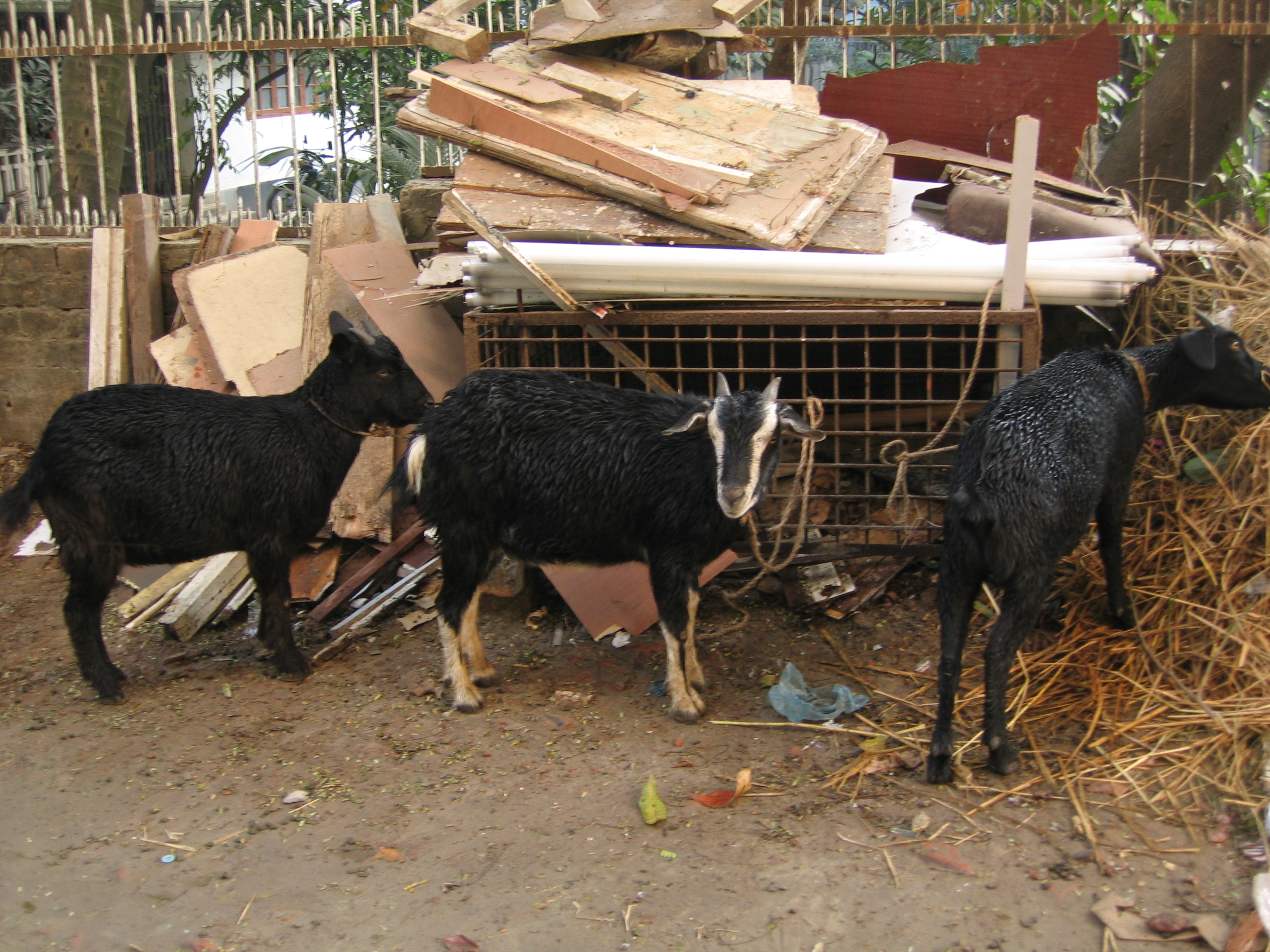
The meat in this recipe, khasir mangsho, is goat. Banglapedia's entry on the goat puts the number of goats in Bangladesh at about 30.33 million and says the Black Bengal goat makes up more than 90 percent of them, the rest being Jamunapari goats and their crosses. More than 90 percent of the country's goats are kept by rural people, most of them by women and children, which the encyclopaedia says keeps production costs low. It ranks the goat second among the country's livestock for meat, milk and skin, at about 28, 23 and 28 percent of the totals respectively.
The Black Bengal goat is found throughout Bangladesh and in north-eastern India, in Assam and West Bengal. Banglapedia describes a small animal, usually black but sometimes brown, grey or white, with short, soft, lustrous hair, short legs and horns in both sexes; an adult buck weighs 16 to 18 kilograms and a doe 12 to 14 kilograms. The breed matures early, with the first kidding at about 12 months, and does kid twice a year or three times in two years. It feeds on fallow land, field borders, roadsides and embankments and needs little supplementary feed. Its meat, the entry says, is famous for tenderness, flavour and leanness, and its skin is prized for leather both at home and abroad.
Red meat, fat and health
Health authorities count goat as red meat. On 26 October 2015 the International Agency for Research on Cancer (IARC), the World Health Organization's cancer agency, announced that a working group of 22 experts from 10 countries, after reviewing more than 800 studies, had classified the consumption of red meat as probably carcinogenic to humans (Group 2A). The association was seen mainly for colorectal cancer, with associations also seen for pancreatic and prostate cancer. Processed meat was classified as carcinogenic to humans (Group 1). IARC defined red meat as all types of mammalian muscle meat, such as beef, veal, pork, lamb, mutton, horse and goat. Its director, Christopher Wild, said the findings supported recommendations to limit meat intake, but added: "At the same time, red meat has nutritional value."
The UK National Health Service, in guidance last reviewed in May 2024, says red meat provides iron, zinc and B vitamins and that meat is one of the main sources of vitamin B12, and lists goat and mutton among red meats. It advises that anyone who eats more than 90 grams (cooked weight) of red or processed meat a day should cut down to 70 grams, and that someone who eats more on one day can eat less on the following days. It warns that some meats are high in saturated fat, which can raise blood cholesterol, and suggests cutting off visible fat before cooking, avoiding extra fat or oil, and replacing some of the meat in stews and curries with vegetables and pulses.
The World Health Organization's healthy-diet fact sheet, updated on 26 January 2026, advises adults to keep total fat to 30 percent of daily energy or less and saturated fat to no more than 10 percent, and trans fat below 1 percent. It prefers unsaturated fats, found in fish, nuts and oils such as sunflower, soybean, canola and olive oil, over the saturated fat in fatty meat, butter, ghee and lard, and notes that meat and dairy from ruminant animals such as goats contain natural trans fat. It suggests trimming visible fat from meat and steaming or boiling instead of frying, says adults should eat less than 5 grams of salt a day, and notes that for many adults a shift towards plant-based protein may bring health benefits, particularly away from red meat. People with heart disease, high blood pressure, high cholesterol, diabetes or kidney disease should ask their doctor how often a rich meat curry fits their diet.
Handling raw meat and leftovers safely
The NHS advises against washing raw meat before cooking: "Some people wash meat before they cook it, but this actually increases your risk of food poisoning, because the water droplets splash onto surfaces and can contaminate them with bacteria." Cooks who follow the recipe's washing steps can limit that risk by washing carefully, keeping the splash away from other food, and cleaning the sink, surfaces and hands straight afterwards, in line with the World Health Organization's Five Keys to Safer Food.
Those five keys are: keep clean; separate raw and cooked; cook thoroughly; keep food at safe temperatures; and use safe water and raw materials. For a dish such as this, the WHO poster's advice includes:
- Wash hands before handling food and often during preparation, and wash and sanitise all surfaces and equipment used.
- Keep raw meat apart from other foods and use separate knives and cutting boards for raw foods.
- Bring stews to boiling to make sure they reach 70°C; for meat, make sure the juices are clear, not pink.
- Do not leave cooked food at room temperature for more than 2 hours; refrigerate it promptly, preferably below 5°C, and keep food piping hot, above 60°C, before serving.
- Reheat cooked food thoroughly, and do not thaw frozen food at room temperature.
The NHS adds that raw meat should be stored in clean, sealed containers on the bottom shelf of the fridge so it cannot drip onto other food, that cooked meat not eaten straight away should be cooled quickly and refrigerated or frozen, and that cooked meat should be reheated only once.
Photo: Satwik Cuttack / Wikimedia Commons (CC BY-SA 4.0)
Sources: Jagonews24, Banglapedia (Asiatic Society of Bangladesh), United News of Bangladesh (UNB), U.S. Food and Drug Administration (Import Alert 26-04), International Journal of Molecular Sciences (Rahman et al., 2024), Molecules (Galanty et al., 2023), International Agency for Research on Cancer (WHO), UK National Health Service, World Health Organization


Comments
(0)