
Toronto-based startup Molagri has raised $5.8 million in pre-seed and seed funding to develop what it calls "precision biopesticides": products designed to kill a specific insect pest and to be updated as that pest evolves resistance, AgFunderNews reported.
The technology, developed by cofounders Zaky Hassan and Min Jin, uses engineered, non-infectious virus-like particles (VLPs). A pest swallows the particles, whose surface proteins are built to bind to particular receptors in its gut. Once inside the insect's cells, they deliver mRNA instructions that make the insect's own cells produce a toxin that kills it. Beneficial insects such as pollinators lack the receptor and are not affected, the company says, although it has yet to show that selectivity under commercial field conditions.
The platform is modular. If a pest develops a mutation that stops the toxin working, Molagri could swap the payload for one that acts in a different way; if it changes the receptor, the targeting protein could be redesigned. The company has already used cryo-electron microscopy to map a receptor in honeybees, to find differences it can exploit. "Farmers shouldn't have to worry about resistance, the same way you don't think about which flu strain is going around when you get a flu shot," Hassan said.
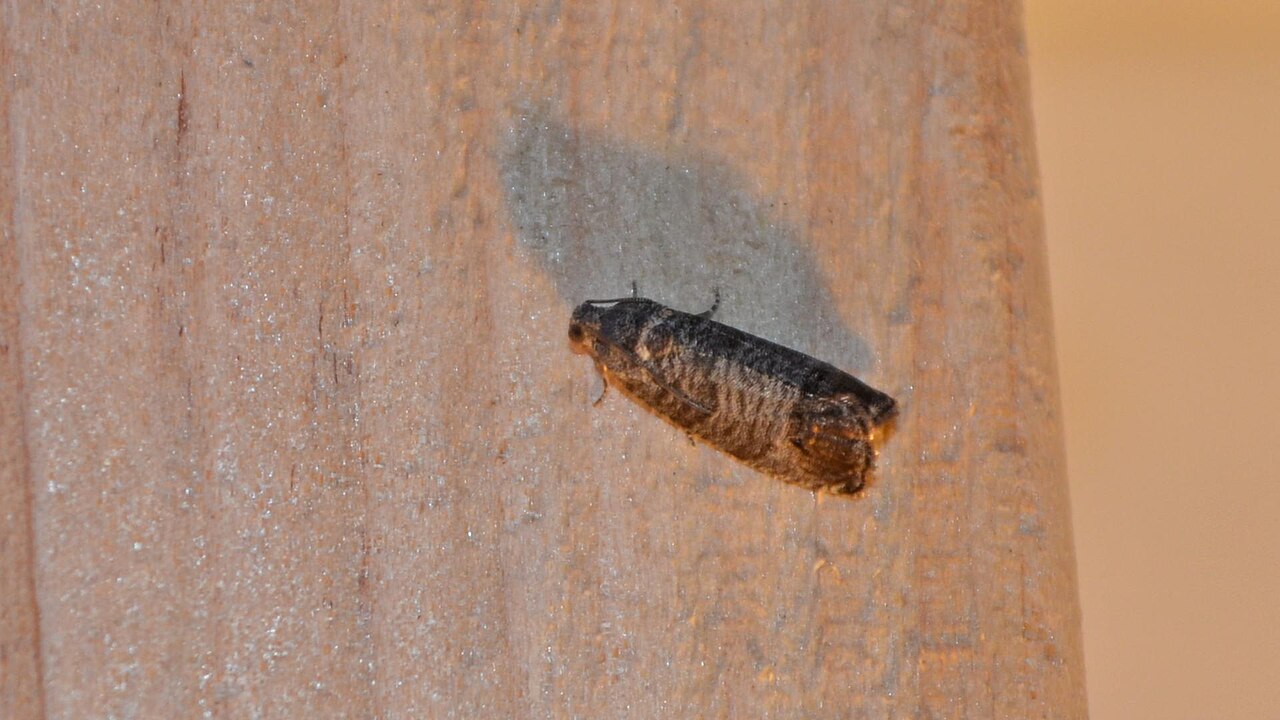
The first targets are expected to be navel orangeworm, a major pest of almonds and pistachios, and codling moth in apples, with corn and canola possible later. The particles would be made by yeast fermentation. The work is at an early stage: Molagri has determined the structures of relevant insect receptors, is developing its first particles for testing, has filed a provisional patent and holds a letter of intent from one grower. Field efficacy, manufacturing cost and formulation stability are still to be established.
Regulation will shape the business. If every updated version must go through a full new pesticide registration, much of the benefit of rapid redesign could be lost, and Molagri hopes to explore a route under which changes to an approved platform are reviewed more simply. The round was led by Convective Capital, with Superorganism, Y Combinator, Julian Capital and angel investors including Paul Graham. The story was reported by Elaine Watson.
Photo: Andy Reago & Chrissy McClarren / Wikimedia Commons (CC BY 2.0)
Source: AgFunderNews




Comments
(0)