
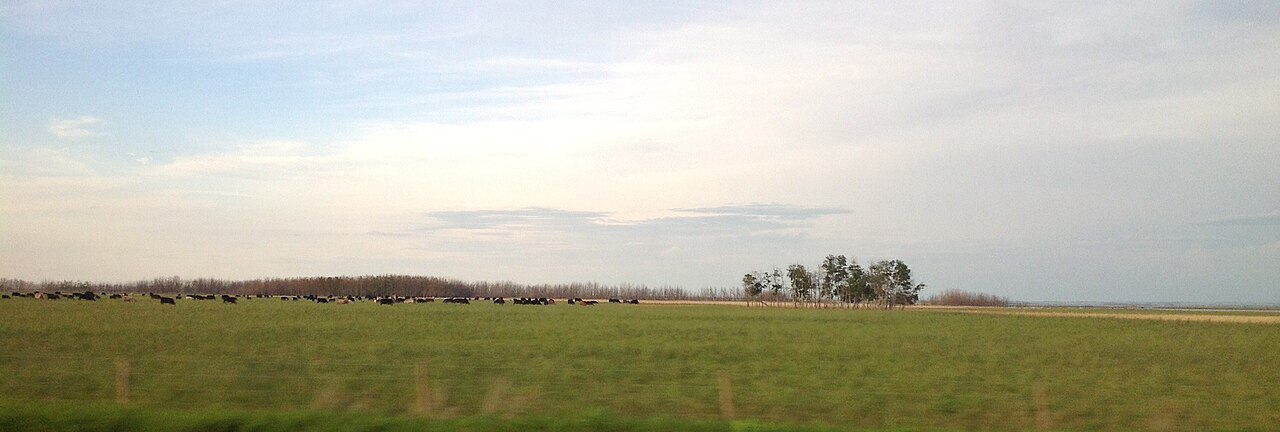
A climate modelling project that forecast tougher water conditions for Manitoba's grazing land is expanding from three Manitoba watersheds to eight across some of Canada's biggest beef-producing regions, Miranda Leybourne reports for the Manitoba Co-operator.
The Manitoba Forage and Grassland Association (MFGA) used its Aquanty hydrologic model with high-resolution projections for the Oak River, Swan Lake and Pembina Valley watersheds. It predicted warming of 2.5°C by 2050 and 5°C by 2100, less snowpack, changed runoff timing, less groundwater storage and more evapotranspiration, putting pasture and forage under stress. "The absolute main message that came out of our study in Manitoba was the fact that groundwater resources are going to be stressed," said executive director Duncan Morrison. The model also points to an earlier spring melt, possibly as early as February, and longer autumn grazing that adds stress to pastures from September to November.
The new one-year project, led by the MFGA with the Canadian Cattle Association and up to $237,350 from Agriculture and Agri-Food Canada's Canadian Agricultural Strategic Priorities Program, adds Alberta's Old Man and Battle rivers, British Columbia's Nicola River, Ontario's Saugeen River and Quebec's Chaudière River. It will measure drought, flood and water-stress risks and turn them into indicators and decision tools for producers.
"We seem to see too much water or not enough water," said MFGA chair Zack Koscielny, a mixed farmer from Strathclair, adding that looking at grasslands and grazing will help producers prepare. The Manitoba work also found wetlands and grasslands useful for buffering storm water and recharging groundwater in dry years.
Work began in mid-August with partners including the Centre for Land Conservation and Alberta's Food Water Wellness Foundation, and results will be posted on the MFGA's Aquanty portal in both official languages.
Photo: Intermedichbo / Wikimedia Commons (CC BY-SA 4.0)
Source: Manitoba Co-operator

Comments
(0)