
An advisory service that turns weather forecasts into planting, irrigation and harvesting advice reached an estimated 318,000 farmers in Viet Nam's Mekong River Delta in 2025, CGIAR reported on 9 November. What began in 2020 as a commune-level pilot of the Agro-Climatic Bulletin (ACB) by the Alliance of Bioversity International and CIAT and its government partners is now a public service, and the country has approved its first national workplan to take it further.
The problem it set out to solve is familiar to delta farmers. Decisions on when to plant, irrigate and harvest are made amid shifting rainfall, drought, flooding and salinity, yet weather forecasts were often too broad to guide them, and agricultural agencies had no shared process for turning a forecast into advice for a particular crop in a particular place.
The pilot combined weather forecasts, crop management expertise and local observations. To scale it, agencies first had to agree on who would produce, review and distribute the bulletins. Technical working groups brought together agricultural officers, hydrometeorological centres, irrigation agencies and water managers, who interpret forecasts together, assess the risks to crops, review the recommendations and coordinate delivery.
The service now comes in three forms: seasonal bulletins for crop planning, monthly updates to adjust crop calendars and 10-day advisories for immediate decisions in the field. Training helped government teams translate forecasts into advice farmers can act on, and farmer feedback and prototype testing reshaped the wording and layout of the 10-day bulletin. The bulletins are free and travel through Zalo messaging groups, community loudspeakers, printed sheets and local meetings, so that farmers with little internet access or few digital skills are reached too.
Official recognition followed the evidence. Pilot results, farmer feedback and joint monitoring helped provincial partners and the Alliance make their case, and the ministry recognised the development and dissemination of the bulletins as a Technical Advance, giving government staff a formal basis for using the approach. A regional workplan and budget then funded wider delivery. Coverage grew from seven to all 13 provinces of the delta's former administrative structure without additional funding from the Asian Mega-Deltas initiative, and the service was kept running when Viet Nam reorganised its provincial and commune boundaries in 2025; the 318,000 farmers reached that year are spread across the delta's five provinces as now drawn.
Farmers say they use it. In end-of-season surveys from 2020 to 2024, 90% of those surveyed said they used the bulletins to decide when to plant, irrigate, apply inputs or harvest, and farmers also reported using less fertiliser and pesticide and losing fewer crops to failure.
The next step is national. Viet Nam has approved its first Agroclimatic Advisory Services workplan for 2026-2028, backed by VND 3.92 billion (about US$150,000) of government funding. CGIAR's Scaling for Impact programme, which compiled the account as one of its Enabling Environment success stories, says the delta's experience shows how an official mandate, trained local teams and dedicated public funding can make climate advice a routine part of agricultural extension.
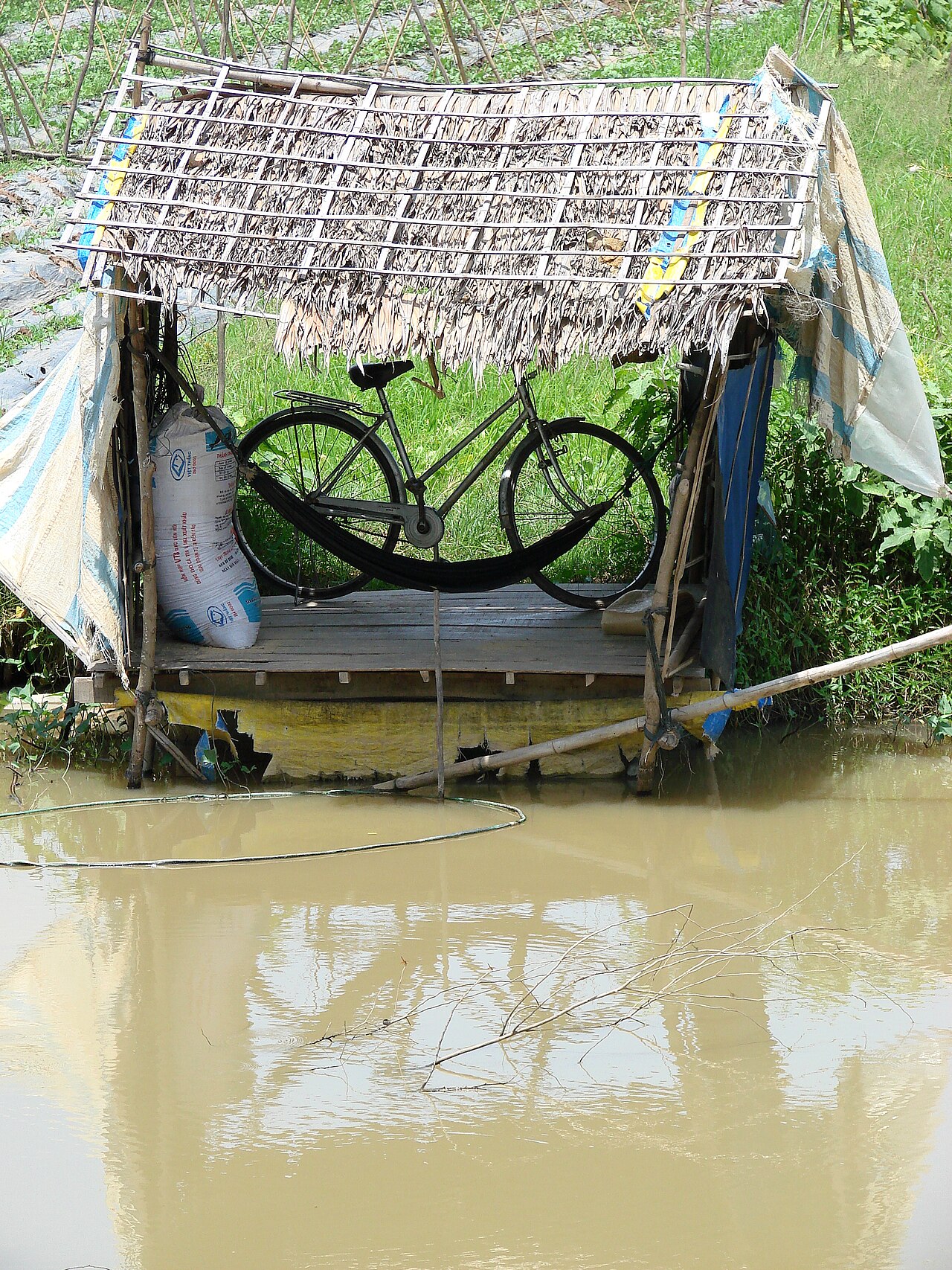
Photo: Adam Jones / Wikimedia Commons (CC BY-SA 3.0). A rice paddy near Chau Doc in the Mekong Delta, southern Viet Nam.
Source: CGIAR


Comments
(0)