
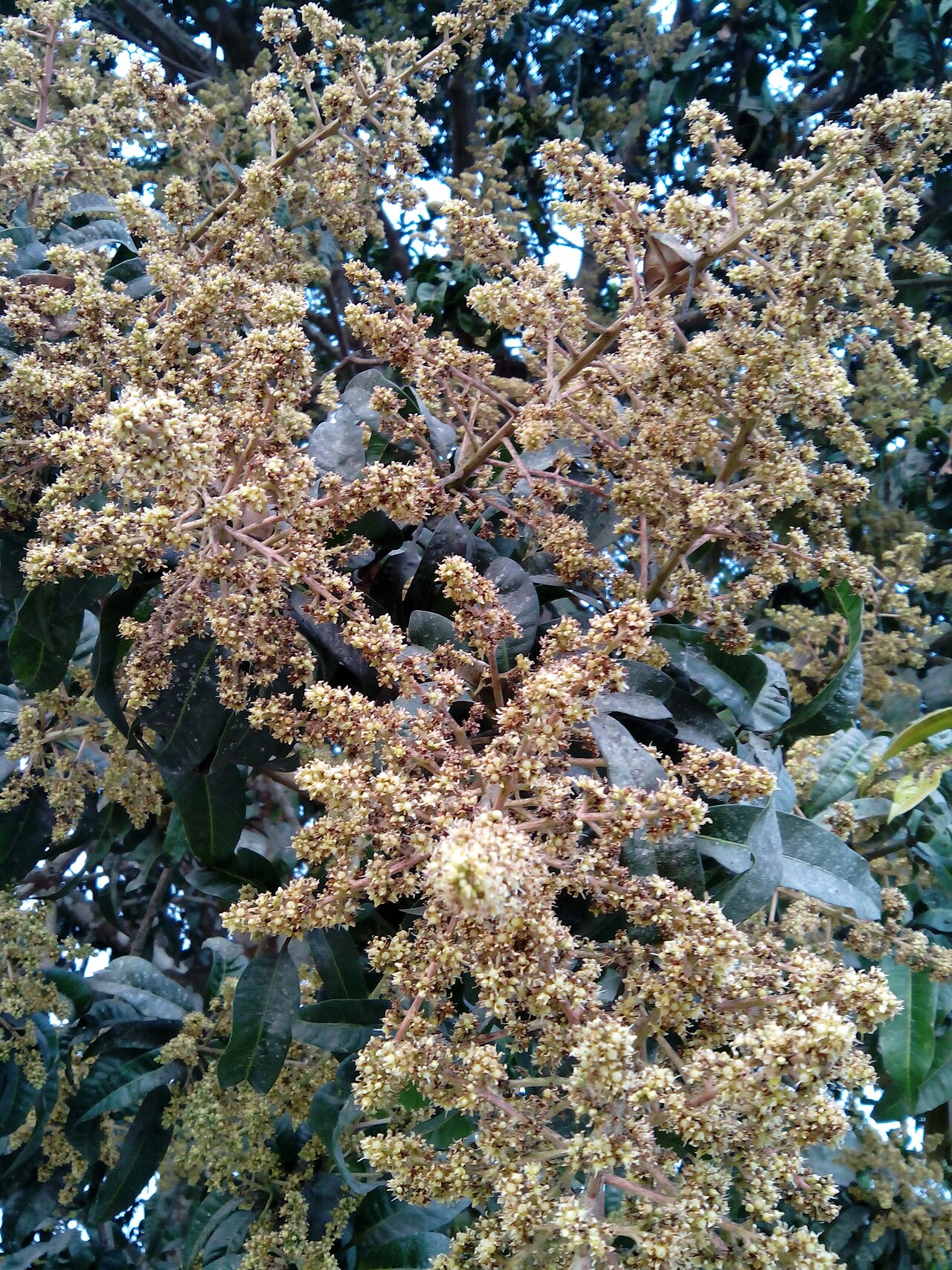
A mango graft planted in a rooftop drum in June or July has put out its first blossom by the following January or February. Anyone seeing those yellowish-green flower clusters would think the first home-grown mangoes are on their way. Yet experienced growers give surprising advice: break off every flower in the first year. Why that seemingly harsh step, and how a mango tree on a roof, a balcony, a courtyard or an attic terrace can be kept fruitful year after year, is what this report sets out.
Mango, widely called the king of fruits, is loved and grown in Bangladesh and in many other countries; in 2010 the mango tree was declared Bangladesh's national tree. In the field a mango tree usually grows huge. But thanks to grafted saplings and proper care, the fruit can now be grown on a roof or in a corner of a courtyard. It all starts with the soil and the container.
The national crop is huge. Department of Agricultural Extension figures published in the press show mangoes grown on about 250,000 hectares in the 2023-24 financial year, with output of about 2.589 million tonnes. Yet for city dwellers a mango is still something bought at a market. A tree at home narrows that gap, and the government is encouraging rooftop gardens: in 2023 it announced a 10 per cent holding tax rebate for rooftop gardening in city corporation and municipal areas.
Soil and container: laying the foundation
The first job is preparing the potting soil. For a drum, make the soil-and-fertiliser mix first. Loam is best for growing mangoes in containers; it is a balanced blend of sand, silt and clay that holds water yet lets the surplus drain.
Mix into the soil suitable amounts of cow dung, compost, MOP, TSP, bone meal and magnesium sulphate. Each has a job. Dung and compost keep the soil crumbly and feed the tree slowly. MOP is potash fertiliser, which strengthens the tree against disease and improves fruit quality. TSP supplies phosphorus, essential for root growth. Bone meal releases phosphorus and calcium slowly. Magnesium sulphate helps keep the leaves green, since magnesium sits at the heart of the green pigment in leaves.
Before filling the drum, make holes in its base so excess water can drain. Mango roots cannot tolerate standing water; without air they rot. Set pieces of broken clay pot around each hole from three sides so the opening is not blocked, cover them with another piece, and spread a thin layer of straw on top. Then fill the drum with the soil mix. This way water drains out but the soil does not wash away.
Which container, and how big
For a rooftop mango, a medium drum or a half-drum is best. Cutting one drum in half makes two half-drums and saves money. A large clay pot also works. Clay lets air through but is heavy and can break; plastic drums are light and durable. Whatever the container, what matters is that it holds enough soil and lets water out at the bottom.
Balcony, attic terrace or courtyard
Not every home has an open roof. For a mango on a balcony, first check how many hours of direct sun it gets; in a shaded balcony the tree may survive but will flower and fruit poorly. A tray under the pot protects the balcony floor, but water that collects in it must be emptied regularly or the roots will rot. An open space beside an attic room is a good alternative, provided it gets sun.
If there is room in a courtyard, the tree can go straight into the ground. With nothing to stop its roots, it grows far bigger than in a drum, bears more, and never needs replacing after a few years. Choose slightly raised ground rather than a spot where water pools in the rains, because in the ground as in a drum mango roots cannot stand waterlogging; it should, though, be planted well away from walls, pipes and neighbouring buildings. Wherever it goes, a good sapling comes first. When buying, look at the graft joint: a smooth, firm union shows the graft has taken. Government horticulture centres or a trusted nursery are the safest sources.
Choosing a variety
Bangladesh grows many varieties of mango, including a number of improved ones: Amrapali, Lata, Keitt, Bombai, Sinduri, Dasheri, Chausa, Sravani, Mallika and Neelum among them. Amrapali is very sweet, keeps for several days at home after ripening, and bears heavily.
The Bangladesh Agricultural Research Institute (BARI) released Amrapali as BARI Aam-3. According to the Agricultural Information Service, it fruits regularly every year, the tree is relatively short and upright, and its flesh is deep orange and fibreless. Many mango varieties bear heavily one year and rest the next; Amrapali's regular bearing is why it is so popular for pots. The Thai variety Dok Mai can also be grown in a drum.
When to plant
The best time to plant mango saplings is Jyaishtha and Ashar, roughly mid-May to mid-July. At the start of the rains the air is humid and showers are frequent, so a new sapling roots quickly. For Amrapali, Bhadra and Ashwin, roughly mid-August to mid-October, are also suitable.
The usual practice is to set the graft upright in the centre of the drum in June or July. With irrigation available, saplings can be planted at any time of year. Planted in midwinter or at the height of summer, though, a sapling is under more stress and needs extra care.
Planting and early watering
Plant the sapling upright. After planting, mound the soil a little around the base and firm it by hand so no hollow spaces remain. Take care that water does not collect at the base of the stem; standing water there can rot the trunk. Keep the graft union above the soil.
Once planted, tie the sapling to a straight stake so the wind does not tip it. Water sparingly at first, then gradually increase the amount. Frequent watering speeds a young tree's growth. Once the tree is established, watering about every ten days in dry weather is usually enough, but on a hot roof that has to be adjusted to how fast the drum dries out. Place the pot where it gets sun almost all day.
Where and how to set the drum
Water the graft after planting it in the pot or drum. If the graft is very tall and its tip touches the soil, trim the top a little; the tree will branch sideways and grow bushier.
Set the drum so it sits slightly raised off the roof, with a gap beneath. That protects the roof, since water cannot sit under the drum and damage the surface. Four bricks under the base, one at each side, will do it. One more point: a tree cannot thrive for ever in a drum's limited soil. After six or seven years it is best to remove it and plant a new one.
Fertiliser: how much and when
A mango tree needs proper care. Fertilise it every year after planting, and raise the dose as the tree grows. Use organic and inorganic fertilisers according to the recommended rules, and the tree will yield well.
Every year, before and after the rainy season, add cow dung and other fertiliser to the soil in the drum. Once a year, four fertiliser tablets can be pushed into the soil of each drum. Fertiliser tablets are compressed pellets that dissolve slowly underground and feed the tree over a long period. If tablets are used, cow dung is all that needs to be added; no other fertiliser is required.
The Agricultural Information Service's advice for field orchards is useful here too. It recommends applying the full amount of cow dung, TSP, gypsum, zinc sulphate and boric acid, plus half the urea and half the MOP, from mid to late September, with amounts rising as the tree ages. A drum-grown tree needs far less, but the timing, a good feed at the end of the rains, applies on the roof as well.
Flower drop and pests
Mango trees face different troubles at different times. The first is the drop of flowers and young fruit. To reduce it, a hormone spray called Planofix can be applied twice, just before and just after the blossom emerges. Plant hormones act like the tree's own growth regulators and help flowers and young fruit hold on to the stalk. Fungicide and insecticide can be sprayed at this time if needed.
The main blossom disease is anthracnose, which blackens the flower clusters until they dry and fall, and later leaves black marks on young fruit. The Agricultural Information Service advises spraying affected trees, after the blossom appears but before the flowers open, with half a millilitre of Tilt 250 EC or 2 grams of Dithane M-45 per litre of water. When the fruit is pea-sized, it advises a further spray of a mancozeb-group fungicide mixed with the insecticide. When spraying a home tree, keep children and pets away and never exceed the dose.
Hoppers, thrips, fruit flies and mango weevils can all reduce the yield and quality of the fruit, so keep an eye out. Hoppers suck sap from the blossom and make it drop. Thrips are tiny insects that scrape the surface of young leaves and flowers to feed. Fruit flies lay eggs in mangoes as they ripen, and the maggots ruin the flesh. The weevil's grub lives inside the stone and spoils the fruit with barely a sign on the outside.
The Agricultural Information Service sets out timings for controlling hoppers. Some 15 to 20 days before the blossom emerges, spray insecticide thoroughly over the whole tree. Then, when the blossom is 10 to 25 centimetres long but before the flowers open, and again when the fruit is pea-sized, spray a cypermethrin-group insecticide at 1 millilitre per litre of water. Do not spray when the flowers are open; that harms bees and other pollinators. Against fruit flies and weevils, the Agricultural Information Service describes wrapping young mangoes in paper bags as the most effective and profitable protection. On a home tree, bagging a few dozen fruit by hand is quite manageable.
Why the first year's blossom comes off
Back to the opening question. A graft planted in June or July usually flowers the following January or February. In that first year, break off every flower cluster, and keep the blossom that comes the year after. The result is a much heavier crop.
The reasoning is plain. A newly planted graft has not yet spread its roots through the drum, and its branches are thin. Let it fruit now and the tree's stored energy goes into the fruit; growth stalls, and sometimes the tree dies. Break off the first blossom and that energy goes into roots and branches instead. From the next year, let the stronger tree carry a modest crop at first and build up from there.
There is a watering caution tied to flowering, too. The Agricultural Information Service says it is best not to irrigate a mango tree for a month before flowering, because watering then pushes out new leaves and reduces the number of flower clusters. From fruit set until the monsoon begins, irrigating once a month is recommended. Because a drum dries fast, the rule should be followed while making sure the tree does not wilt.
Pruning: keeping light and air moving
To let light and air into the canopy, cut out unwanted branches and any that are diseased, dry, dead or weak. Crowded growth traps moisture, which invites fungal disease and pests. The Agricultural Information Service advises cutting out diseased or dead branches, with a little healthy wood, soon after the harvest, because new shoots appear once the fruit is picked, and next year's blossom forms on them. In a drum, pruning also keeps the tree to a size its limited soil can feed.
When and how to pick and keep the fruit
Mango is a summer fruit, and in Bangladesh June and July are the main months for picking and storing it. Cut each mango with its stalk and two or three leaves attached; that stops sap from the stalk staining the skin, and the fruit keeps longer.
When the skin just below the stalk turns slightly yellow, or half-ripe fruit starts dropping from the tree on its own, it is time to pick. Besides eating ripe mangoes, green mangoes can be dried and stored for use in cooking and pickles all year.
Laid in a single layer in the shade on newspaper or straw, picked mangoes ripen evenly on their own within a few days; piled on top of one another, they bruise and rot where they press together. Rather than stripping a home tree in a day, picking each fruit as it matures gives fresh mangoes a few at a time right through the season.
How many mangoes from one tree
A mango tree gives a good number of fruit. Well looked after, a medium-sized tree can yield 155 to 170 mangoes. In a drum, the number depends on the variety, the tree's age and the care it gets, so in the first few years it is better to watch the tree's health than to count fruit.
Nutrition, and the mango in the kitchen
Mango is juicy and sweet and full of goodness. According to the US Department of Agriculture's food database, 100 grams of ripe mango holds about 60 calories and about 36 milligrams of vitamin C. Its yellow-orange colour comes from compounds the body turns into vitamin A, which the eyes need.
Mangoes are not only eaten ripe. Green mangoes make many kinds of pickle, and mangoes go into jam and jelly. Green mango mashed with salt and chilli is a taste every Bengali knows, and mango finds its way into lentils, sour dishes, chutneys and sweets. With a tree of your own, you can pick a few green for the kitchen and leave the rest to ripen on the branch.
A year of care for one mango tree
Put together, the routine runs like this. In Jyaishtha or Ashar, plant a good grafted sapling upright, stake it, and water a little at first, more later. Feed with dung and fertiliser before and after the rains. Break off the first year's blossom. Hold back water before flowering, watch for hoppers and fungus at blossom time, and never spray open flowers. Prune dead and diseased wood after the harvest. Replace a drum-grown tree after six or seven years. Follow these few rules, and a single tree on a roof or in a courtyard can put sweet mangoes on the family's plates for years.
Photo: Mango blossom, Kayser Ahmad / Wikimedia Commons (CC BY-SA 3.0)
Comments
(0)