
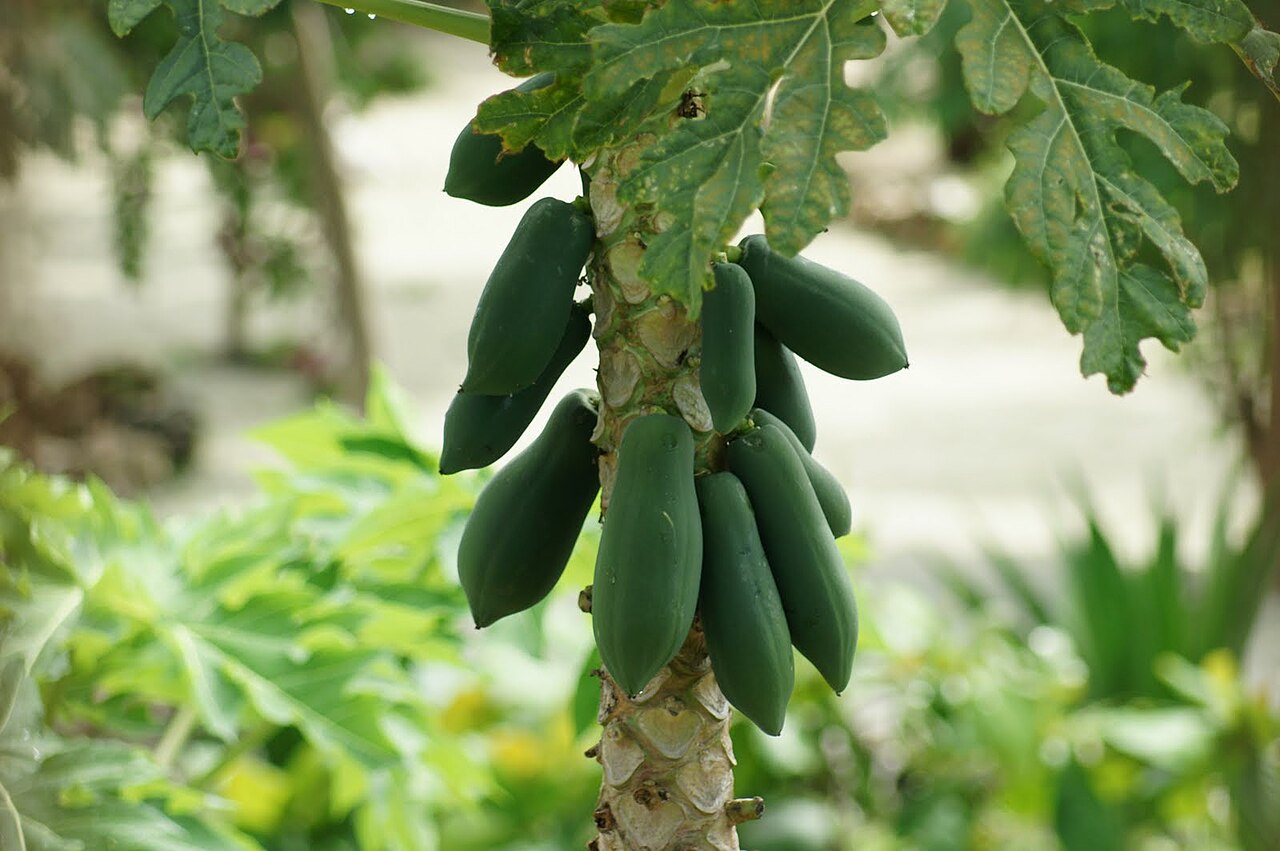
Krishna Chandra Haldar, a farmer in his seventies from North Simlapal in Hooghly, West Bengal, gets 75,000 kg of papaya a year from 1,875 trees on three plots, an average of about 40 kg a tree. That brings him about Rs 22.5 lakh.
Finding the local papaya prone to disease and low in yield, he began crossing it with the Red Lady 786 variety. Separating male and female flowers was a major challenge, and he succeeded after a long period of hand pollination. He claims the still unnamed papaya is disease resistant and high yielding; the report mentions no independent test of that claim.
The elongated fruit is 15-20 cm long, weighs 500-750 grams and has orange flesh. Typically 5 kg sells for Rs 150. His fields send 100 kg a day to Chandannagar.
He plants seedlings six to eight feet apart in clay soil and supports them with bamboo poles. Trees must be replaced every two years, at an initial investment of Rs 1 lakh per bigha. He uses mustard and groundnut cake, urea and pesticide.
Selected for jobs in the army and police in 1976, he chose farming instead and has grown papaya since 1986. Trained at Bidhan Chandra Krishi Viswavidyalaya, he now trains other farmers.
India's agriculture ministry figures put West Bengal's papaya output at about 334,000 tonnes.
Photo: Valugi / Wikimedia Commons (CC BY-SA 3.0)
Source: Sangbad Pratidin

Comments
(0)