
Walk into a mango orchard in Rajshahi or Chapainawabganj at the start of spring and the air is heavy with the scent of blossom. The owner looks up at the trees and starts counting in his head how many maunds of fruit the season will bring. That count can be wrecked by a handful of insects most people never notice. Within days the blossom can blacken and fall, tiny fruit can carpet the ground under the tree, and a ripe mango cut open at harvest can turn out to hold a grub. Mango is one of Bangladesh's principal fruits, and a handful of pests take a large bite of the crop every year. Recognised in time and handled correctly, nearly all of them can be kept under control.
A big crop, and a big risk
Mango is no longer just a seasonal treat in Bangladesh; it is a mainstay of the northern economy. Reports by the national news agency BSS, citing the Department of Agricultural Extension (DAE), put the country's mango production at more than 2.5 million tonnes. The largest producing district is Chapainawabganj, often called the mango capital, followed by Naogaon, Rajshahi and Natore. Chapainawabganj alone has roughly 37,000 hectares under mango orchards.
When a crop is this large, even a small share lost to pests is a heavy financial blow. Bangladesh is also working to sell more mangoes abroad, and export markets accept only fruit that is unblemished, free of pests and sprayed according to the rules. So an orchard owner needs to know the main pests by sight, when each strikes, and which measures do the most good for the least money. What follows are the six chief enemies of the mango orchard, the damage each does, and how each is controlled.
Fruit borer: the enemy inside the fruit
As the name suggests, this pest gets inside the mango. From the outside the fruit may look almost normal, perhaps with a small spot or hole. Inside, the grub is eating the flesh. Infested fruit rots and often drops before it ripens. When a mango that reached the market is cut open and a grub crawls out, the buyer's trust goes, and so does the price.
The first step is sanitation. Infested fruit should be picked from the tree, and fallen fruit gathered from the ground and destroyed, so that the grubs inside cannot mature and spread through the orchard again. Burying them in a deep pit works well. Pheromone traps can be hung in the orchard. A pheromone is a scent that insects release to find a mate; the trap holds an artificial version of that scent, lures in the males and holds them. This cuts breeding and also shows how many insects are about.
When the attack is heavy, chemical control is needed. The standard advice is to spray deltamethrin or cypermethrin at 2 millilitres per litre of water. The Bangladesh Agro-Meteorological Information Service (BAMIS) stresses that action against the fruit borer must be taken before the blossom appears. In other words, spraying after the grub is already inside the fruit does little good; preparation ahead of time is what counts.
A common mistake is worth mentioning here. Many owners, finding one infested fruit, spray the whole orchard again and again with strong chemicals. That raises costs, kills useful insects, and increases the risk of residues on the fruit. It is better to walk the orchard regularly, remove infested fruit, use traps to judge the numbers, and spray at the approved dose only when the attack is genuinely heavy. BAMIS advises two to three sprays at ten-day intervals, and no more.
Red spider mite: sucking the leaves dry
The red spider mite is often called an insect, but it is really a tiny relative of the spider. It is so small that it can barely be seen without a magnifying glass. Mites gather in colonies on the underside of the leaves and suck the sap. The leaves become speckled with small whitish or yellow spots and lose their colour. Because the leaves can no longer make food properly, the tree's growth is checked.
Mites multiply fast in hot, dry weather, so keeping the soil moist with regular irrigation holds them back. Infested leaves should be collected and burned. For a heavy attack, the advice is to spray abamectin at 1 millilitre per litre of water. It is worth remembering that ordinary insecticides often do not kill mites; a product made specifically for mites, a miticide, is what works.
Mango hopper: the blossom's worst enemy
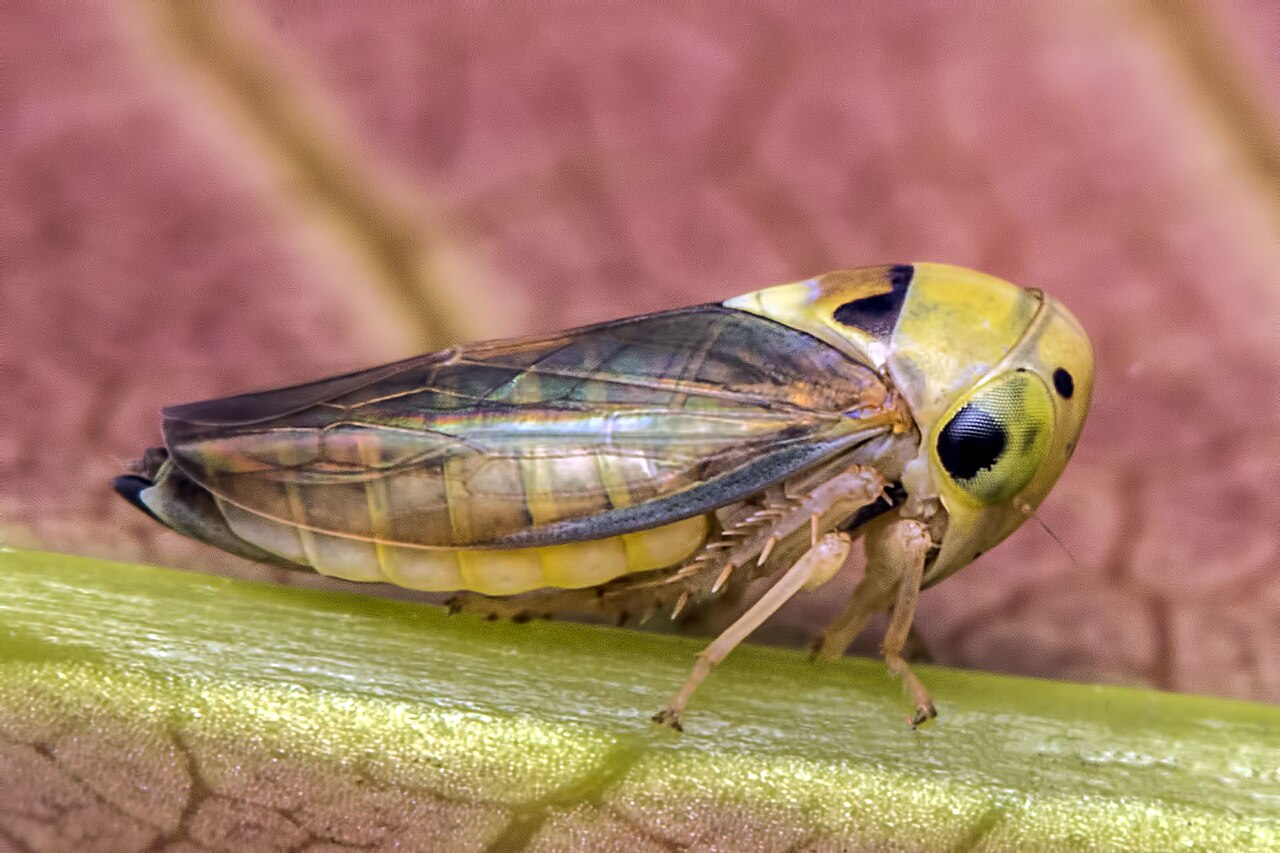
For mango growers the most familiar and most feared name is the hopper. These small, wedge-shaped insects hide in the cracks of the bark and come out as soon as the blossom appears. They suck the sap of the flowers and young leaves, and the blossom withers, turns brown and drops. Shake an infested tree and clouds of hoppers fly up.
Hoppers do harm in a second way. They excrete a sticky, sweet liquid known as honeydew, which collects on the leaves and blossom. A black fungus called sooty mould grows on it. Leaves coated in that black film get less sunlight and make less food. The yield falls, and the fruit that does set tends to stay small.
To control hoppers, keep the base of the tree clean and avoid over-watering the orchard, since damp, heavily shaded orchards encourage them. For chemical control, the advice is imidacloprid at 2 millilitres per litre of water. BAMIS is precise on timing: spray first when the flower spikes are 3 to 4 centimetres long, and again when the fruits are the size of a pea. It is better not to spray at full bloom, when bees and flies are busy pollinating. Pruning the branches so that light and air move through the canopy also reduces hopper attacks.
Stem borer: weakening the tree from inside
An attack shows as small holes in the trunk or the thick branches. Fine sawdust-like powder and insect droppings collect at the mouth of the holes and around the base of the tree. The borer's grub tunnels through the wood and cuts the channels that carry sap. Left alone for long, branches die back, the tree weakens and the yield drops. Old, neglected orchards suffer most.
The traditional remedy is to pour insecticide into the hole and seal the entrance with mud so that the grub inside dies. Older advice named monocrotophos for this job. Readers should know, however, that according to research published in the International Journal of Epidemiology, Bangladesh banned all pesticides in the World Health Organization's most hazardous Class I at the end of 2000, and monocrotophos was on that list. An insecticide approved by the upazila agriculture office should be used instead.
Keeping the area around the tree clean also helps. Cutting out dead and dry branches leaves the borer fewer places to hide. Painting the cut ends with coal tar or a fungicide paste stops pests and disease from getting in through the wounds. A habit of walking the orchard and looking for holes catches an attack at the start.
Leaf webber: eating inside a web
When the leaves at the tips of some branches are bound together with webbing, the leaf webber has arrived. Its caterpillars pull leaves together, spin a silky web around them, and feed from inside. Because they are sheltered by the web, sprays often fail to reach them. The damaged leaves turn brown and dry out, growth is checked and the tree weakens.
The most effective step is to cut out the webbed leaves and shoots with a pruning hook, collect them and burn them, which destroys all the caterpillars inside at once. After that a biological insecticide can be used, and Bt works well here. Bt is made from Bacillus thuringiensis, a soil bacterium; it works in the gut of caterpillars but does little harm to people, birds or bees, which is why it is counted as an environmentally friendly control.
Mealy bug: a coat of white cotton
The mealy bug's body is covered in a white, waxy powder, so from a distance colonies look like tufts of cotton on young shoots, blossom and fruit. They suck sap in large numbers, making the blossom and young fruit drop. Like hoppers, they excrete honeydew, and sooty mould grows on it and blackens the leaves. Both growth and yield suffer.
Young mealy bugs climb from the soil up the trunk. The most effective barrier exploits that habit: a sticky band, or a wide collar of polythene, wrapped around the lower trunk. The bugs get stuck in the glue or slip off as they try to climb. For a heavy attack, the advice is to spray dimethoate at 2 millilitres per litre of water. Biological control uses ladybird beetles. These small red and black spotted beetles live on mealy bugs and aphids, so they should never be killed when found in the orchard.
A well-kept orchard has fewer pests
Experienced growers often say that pests make their home in neglected orchards, and there is logic in it. A dense canopy that lets in no light or air gives hoppers, mealy bugs and leaf webbers a safe shelter. Eggs and grubs hide in dead wood and cracks in the bark. Leaves and rotten fruit piled under the tree become the source of next season's pests.
So pruning out dead, diseased and inward-growing branches after the harvest is part of pest control. Pruning lets light into the canopy, encourages new shoots, and helps sprays reach every part of the tree. Balanced fertiliser and timely irrigation keep the tree vigorous, and a vigorous tree tolerates an attack and recovers faster. Keeping the orchard floor free of weeds leaves pests fewer places to hide.
One more point matters. Blossom that blackens and drops is not always the work of insects; the fungal disease anthracnose also causes black spots on blossom and young fruit. Insecticides deal with insects and fungicides with fungi, and they are not interchangeable. Using the wrong product wastes money and leaves the problem in place, so when in doubt, the sensible course is to take a sample of the affected blossom or leaves to the agriculture office.
The general rules
Each pest has its own habits, but some rules apply to all of them. Agronomists call the approach integrated pest management: sanitation and natural methods first, then biological pesticides, and chemicals only at the end, when they are really needed. Following that order lowers costs, spares useful insects and reduces the risk of residues on the fruit.
- Keep the orchard clean; clear weeds and undergrowth.
- Remove fallen fruit and leaves from under the trees regularly, since they carry eggs and grubs.
- Prefer biological pesticides and environmentally friendly control.
- Use chemical pesticides only when needed, and pay close attention to dose and timing.
- Wear a mask, gloves and long sleeves when spraying, and never spray into the wind.
- Observe the waiting period printed on the pesticide label before picking fruit.
The last two rules matter most. Every pesticide label states how many days after spraying the fruit is safe to harvest. Mangoes picked before then may carry residues that are harmful to eat, and residues are one of the main reasons fruit is rejected in export markets. Spraying too often or at too high a dose also breeds resistance in the pests, until the old chemical stops working.
Which pest comes when
Pest pressure in a mango orchard is not the same all year; each pest has its season. Knowing the calendar lets an owner prepare in advance and saves money on needless sprays. The most important period runs from late winter into early spring, before and during flowering. This is when hoppers and mealy bugs become active, and preparation against the fruit borer has to be made before the blossom appears.
As the fruit swells, the fruit itself needs watching: any fruit with holes or rot should be removed promptly. When fresh flushes of young leaves appear before and after the monsoon, leaf-eating pests increase. BAMIS also warns of the leaf-cutting weevil, which snips off young leaves and drops them to the ground, and advises two to three sprays of an approved insecticide at ten-day intervals as soon as new leaves emerge. Red spider mites build up in the dry season, and stem borers need watching all year round.
The lesson is that pest control is not just spraying when a pest appears. At the start of the year an owner can note in a small notebook which pests to watch for in which month. A weekly walk through the orchard, checking the leaves, blossom, trunks and fruit of a few trees closely, catches most problems early, and early problems are cheaper to fix.
Save the bees, save the mangoes
A mango flower spike carries thousands of tiny flowers, and for them to set fruit they must be pollinated, which means pollen has to travel from flower to flower. In mango this work is done mainly by bees, flies and a variety of small insects. The humming that fills an orchard at full bloom is the sound of that pollination.
That is why the advice is not to spray insecticide at full bloom. Spraying then may kill hoppers, but it also kills the pollinators, and less fruit sets. The first hopper spray therefore comes before the flowers open and the second when the fruit is pea-sized. Where beekeepers place hives beside an orchard, the rule matters even more.
Spraying the right way
Even a good chemical fails if it is sprayed badly. First, it must be mixed at the stated dose in clean water; the idea that more chemical means more effect is wrong. Second, spray in the morning or late afternoon, when the sun is not fierce and the air is still. If rain is forecast, it is better not to spray that day, since rain washes the chemical off. Third, a large tree needs a sprayer that reaches the top branches; spray only the lower branches and the pests survive higher up.
Mixing several chemicals together on one's own initiative is risky; the agriculture office can say which products may be combined. Empty bottles and packets must never be thrown into ponds or canals; they should be buried. Children and livestock should be kept out of a sprayed orchard for a few days, and the person spraying should wash hands and face thoroughly with soap afterwards.
What the grower gains
Timely pest control pays the orchard owner directly. A healthy tree resists disease better, because many diseases enter through wounds left by insects. The size, colour and taste of the fruit improve, and so does the yield. Clean, pest-free mangoes command stronger demand and better prices, and only such fruit opens the door to exports. Above all, a well-tended tree stays healthy and fruits for many years, which is the real wealth of a mango orchard.
Controlled well, the pests take little and the orchard keeps both its yield and its quality. Knowing the pests, understanding the timing and putting environmentally friendly methods first are the grower's three most valuable habits. Anyone unsure about a pest or a dose should consult the union's sub-assistant agriculture officer or the upazila agriculture office, or call the Agriculture Information Service's Agriculture Call Centre on 16123.
Photo: The mango leafhopper (Idioscopus), arian.suresh from Chennai, India / Wikimedia Commons (CC BY 2.0)
Comments
(0)