
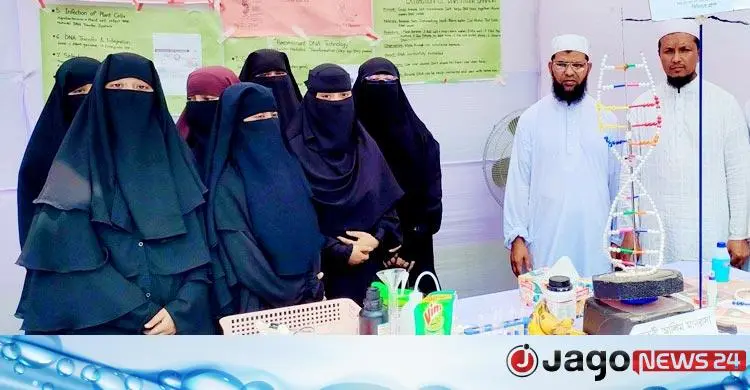
Bananas could be made rich in protein without changing their taste by using a gene from lentils. Five first-year alim students at Kurtubi Madrasa in Tangail have put forward this idea.
The idea
In March this year, while working with DNA technology in a biology lab class, the students noticed that although bananas are nutritious, they contain very little lysine, an amino acid essential for the human body. Under the supervision of teacher Ariful Islam, they began a project titled "Banana DNA extraction and recombinant DNA model for producing protein-rich banana".
How the model works
The model, based on modern genetic engineering, uses the familiar lentil as the protein source. The DHDPS gene was selected from lentil, which the students say is very effective for human growth and immunity. They first extracted banana DNA using easily available materials: ripe banana, salt, hot water, dishwashing liquid, a blender, a coffee filter and ethanol. They then used a theoretical model to outline how the lentil gene could be joined to the banana DNA, turning an ordinary banana into a protein-rich "super food".
The project won first place at the Tangail Sadar upazila and district science fairs, came second at divisional level and went on to the national science and technology fair.
What the students say
Student Anamika Alfi Amri said Bangladesh still suffers from malnutrition, especially protein deficiency among children and pregnant mothers, and the innovation would be a blessing if it succeeded in the field. Miftahul Jannat Maya said bananas are cheap and available to everyone, so a protein-rich banana could meet the nutritional needs of poor and disadvantaged people. Fatematuz Zohura said nutrition in fruits and crops can be raised naturally, without artificial supplements or chemicals. Meghla Akter said commercial cultivation of the genetically modified banana could benefit farmers and it could even be exported.
Teacher Ariful Islam said the students had shown how protein rich in essential amino acids could be produced through gene transfer. Principal Md Rezaul Karim said the madrasa would continue to support students in science, research and innovation.
Source: Jagonews24 (reported by Abdullah Al Noman). First published in Bengali on The Agro News.
Comments
(0)