
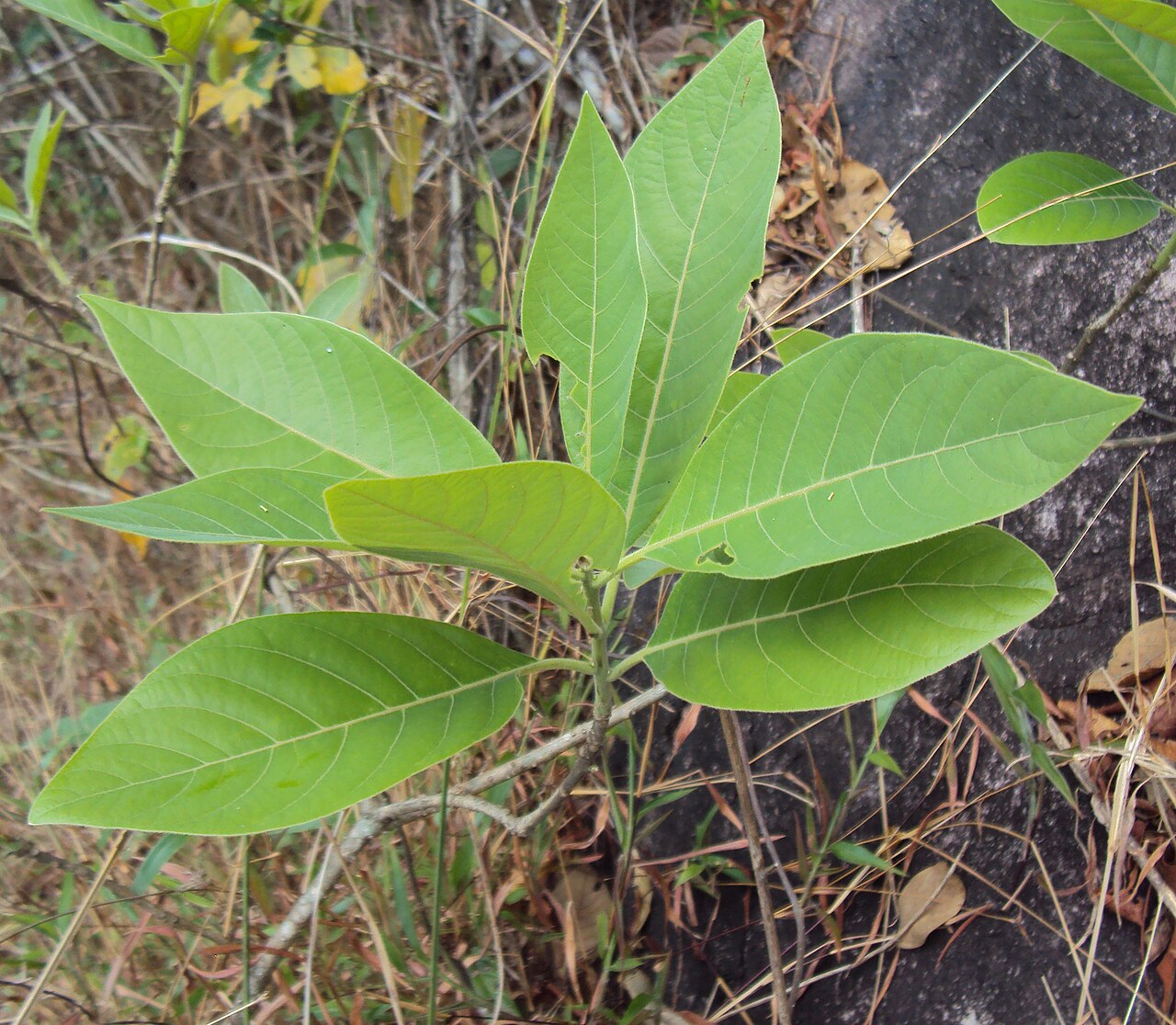
Kukurchita grows easily along roadsides and in scrub, yet few people know it. Depending on the region it is also called menda, meda, kharajora, pipulti or karjuki. Chayan Bikash Bhadra, professor and head of botany at Muminunnessa Government College in Mymensingh, introduces the tree in Prothom Alo. This year he found it flowering in April behind Kachharighat on the Brahmaputra in Mymensingh, and in fruit in June at Narsingdi Government College.
Its scientific name is Litsea glutinosa. It grows naturally across tropical and subtropical Asia, Bangladesh included. A medium-sized evergreen, it reaches 8 to 15 metres, with a straight trunk and grey, slightly rough bark. Rubbed between the fingers, its leaves give off a sticky, fragrant sap; the leaves and bark are rich in mucilage, the easiest way to recognise it.
From May to July it bears clusters of small, pale yellow or greenish-white scented flowers that draw bees and small insects. Small round green fruits follow at the end of the monsoon and ripen red or dark purple in autumn. Forest birds and squirrels love them, and the hard seed inside spreads the tree naturally.
The writer notes that its leaves and bark have a long history of use in folk and Ayurvedic medicine, and that studies have reported antioxidant and anti-inflammatory compounds in it; such uses are no substitute for a doctor's advice. In villages its sticky bark and leaves are made into the paste for incense sticks.
The tree matters to the environment too: it helps hold soil against erosion, its dense leaves shelter birds, and its fruit feeds wildlife. Professor Bhadra says modernisation and deforestation have made wild kukurchita much scarcer than before, and that it urgently needs protecting.
Photo: Vinayaraj / Wikimedia Commons (CC BY-SA 3.0)
Source: Prothom Alo

Comments
(0)