
Engineers at Simon Fraser University's Global Institute for Agritech in Burnaby, British Columbia, have built and field-tested a laser weeding robot designed to cost a fraction of commercial machines and aimed at small and resource-constrained farms rather than the large mechanised operations most precision weeders serve. The peer-reviewed study, led by Woo Soo Kim with eight co-authors, appeared online in Smart Agricultural Technology on 19 June 2026 and in the journal's August print volume.
The robot, LiteWeed, pairs a low-power laser with artificial intelligence that runs on the machine itself rather than in the cloud. It uses a 4-watt blue diode laser, far smaller and cheaper than the industrial carbon-dioxide lasers in commercial weeders, with a compact YOLOX-nano vision model on a Raspberry Pi 5. When it detects a weed the robot stops, aligns a small two-jointed arm over the target and fires a laser dose calibrated to the species and size, a stop-and-align strategy.
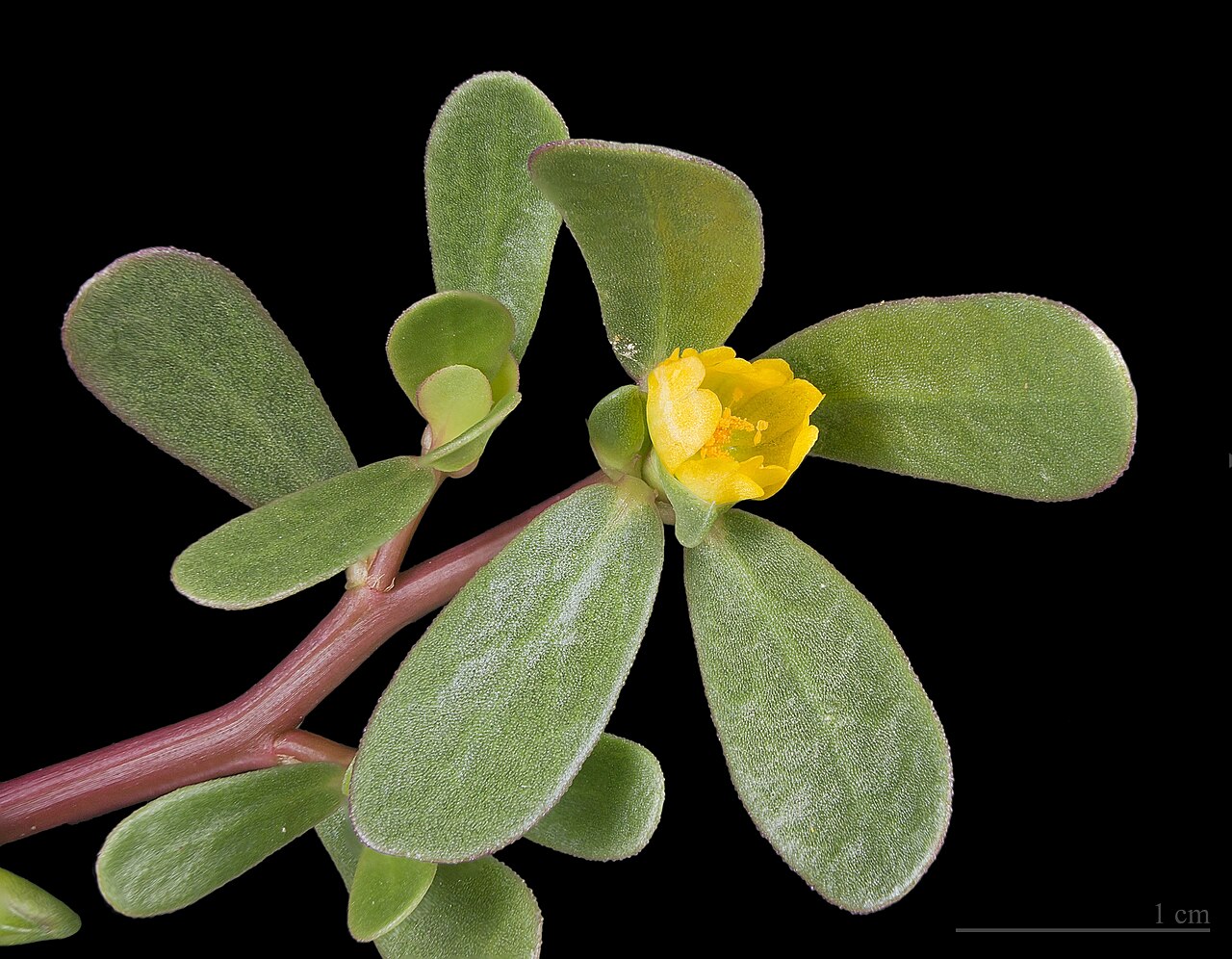
The team tested it on three difficult weeds, pigweed, purslane and nutsedge, at three growth stages, on bare-ground plots in Vancouver and in Arusha, Tanzania, the second site chosen to show the system works outside a resource-rich research setting. Results were consistent: 97 percent of targeted weeds were eliminated in Vancouver and 96 percent in Arusha, most within 30 seconds of exposure and at most 60 seconds for the largest pigweed. Detection accuracy measured 0.32 mean average precision, which the authors call a solid baseline for a low-cost system, with about 118 milliseconds of processing per detection.
Cost is the other headline. A complete unit was priced at about C$500, roughly US$370, from off-the-shelf parts: about $100 for computing and camera, $200 for the wheeled platform, $50 for the arm, $50 for the laser module and $100 for power and safety. Commercial autonomous laser weeders are typically large tractor-mounted implements costing tens of thousands of dollars.
The authors are candid about the limits. LiteWeed moves at about 5 centimetres a second and can realistically cover only 0.01 to 0.03 hectares a day depending on weed density, so it is unsuited to clearing broadacre fields. They position it for early-stage, low-density spot treatment on small plots, market gardens or field edges, where herbicides are hardest to justify and hand-weeding labour is scarce or dear.
Laser weeding has drawn heavy commercial investment in North America and Europe, almost all of it into capital-intensive row-crop machines. The authors argue a low-cost, open approach is needed if the technology is to reach smallholder and mid-sized farms in Africa, South Asia and Latin America, where hand-weeding remains the norm and herbicide cost and resistance are growing concerns. Killing weeds by localised heat also avoids the disruption to the soil microbiome associated with repeated herbicide use.
Photo: Didier Descouens / Wikimedia Commons (CC BY-SA 4.0)
Source: Global Agriculture

Comments
(0)