
Lightning deaths have risen in Bangladesh. A Bangladesh Agricultural University study says more than 1,800 people were killed by lightning in the eight years from 2010 to 2017, based on reports in four leading dailies; Shykh Seraj believes the true number is higher. Figures from the Disaster Forum show 205 deaths in 2017, 245 in 2016, 186 in 2015, 210 in 2014, 285 in 2013, 301 in 2012 and 179 in 2011, and 90 per cent of the dead were farmers and farm labourers.
Why farmers are at risk
Bangladesh has no technology to record how many lightning strikes occur; Indian weather radar and Japan's space agency put the average at about 2,400 a year. Scientists say one reason for rising deaths is the loss of palm trees, which once took strikes and carried them to the ground. In an open field, the farmer is often the tallest object, holding a sickle or metal tool.
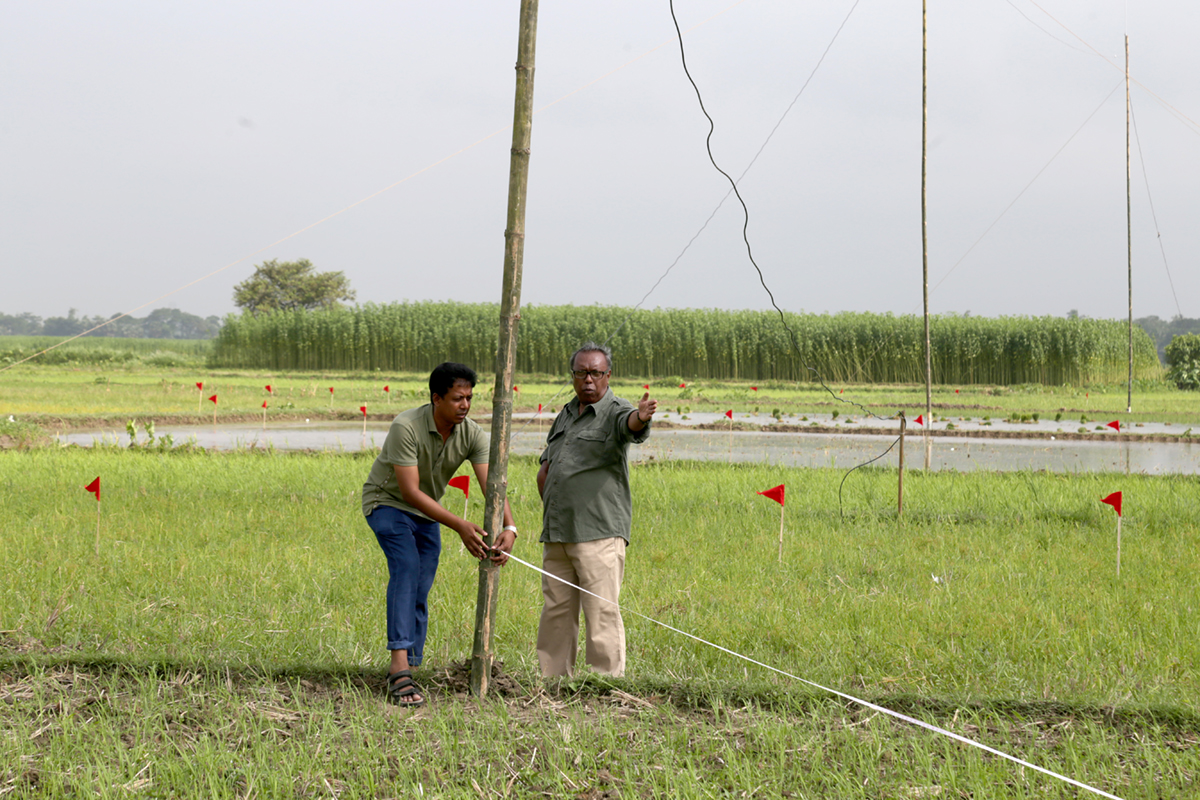
In Faringa village, Dhamrai, farmer Piyar Ali said his brother Iman Ali was killed while four men stood under one umbrella. Local engineer Md Monir Hossain explained that Iman held the umbrella, which had a metal handle, and was barefoot, so the current passed through him.
A bamboo lightning conductor
Monir Hossain has built his own lightning arrester: an iron rod or plate on a 30-foot bamboo pole, topped with a steel plate or lid, connected by aluminium wire to a rod buried in the ground for earthing. Copper wire would be better, he said, but it is costly and likely to be stolen. He says the setup protects people within 30 feet, that earthing below 10 ohms keeps a farmer safe, and that farmers can move it to wherever they are working.
Expert advice
Dr Md Shamim Hasan Bhuiyan, a consultant with Action on Climate Change in South Asia, praised the effort and said it could help with some refinement, but awareness is essential. If the gap between flashes keeps shrinking, lightning is approaching and the farmer should seek shelter. He advised carrying a wooden or plastic stool to crouch on and wearing rubber shoes.
Yasir Arafat, associate professor at the Bangladesh University of Engineering and Technology (BUET), called the idea largely scientific but not full protection. He cited the 30-30 rule: if thunder follows lightning within 30 seconds, take shelter and stay there 30 minutes after the last thunder. Anyone sheltering under a large tree should stay 10 to 12 feet from the trunk.
Awareness and research
From January to June, farmers should read the clouds before working in the fields. Seraj calls for high-level research and a simple field method for farmers, while praising the young engineer's first step.
Source: Shykh Seraj. First published in Bengali on The Agro News.

Comments
(0)