
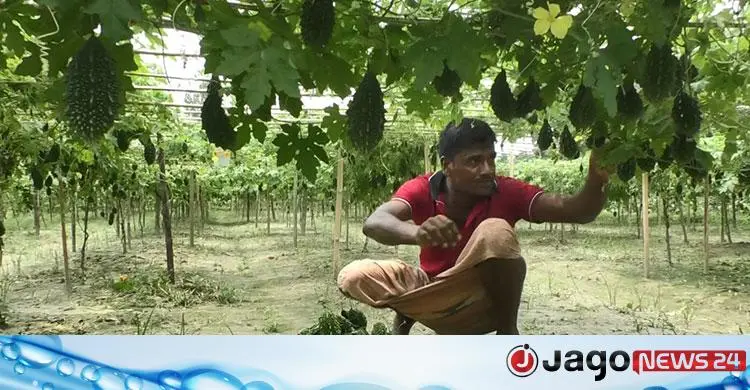
Temperatures are rising and rainfall is falling in Kurigram. Climate change is creating a new reality in the district's weather, with a direct effect on farming, and farmers are looking for new ways to survive by adopting organic and climate-resilient methods.
According to the Rajarhat weather and agricultural observation centre, the district's maximum temperature rose by 5.3 degrees Celsius in the six years from July 2019 to July 2025.
New methods in the field
Under climate-resilient farming, farmers are reducing chemical fertilisers and pesticides and turning to organic fertiliser, trichocompost, mulching, pheromone traps, coloured sticky traps and biopesticides. Farmers say this lowers production costs, keeps moisture in the soil and helps grow safe vegetables.
In Mohidhor and Khondokkhetro villages of Chinai union in Rajarhat upazila, farmers are following these methods for beans, bitter gourd, aubergine, cauliflower, cabbage, cucumber and other vegetables. With support from RDRS Bangladesh and the Palli Karma-Sahayak Foundation (PKSF), 20 farmers, including Lovely Begum, Moslem, Abul Hossain and Minoti Rani, are growing safe crops on about five acres using trichocompost, mulching paper, yellow, white and blue sticky traps and pheromone traps.
What farmers say
Lovely Begum grew bitter gourd on 20 decimals using mulching. Using yellow traps and poison bait, she has almost stopped using chemical fertiliser and pesticide; costs have fallen and yields are good.
Farmer Abul Hossain said he used to apply chemical fertiliser and pesticide regularly, but now gets good results from organic fertiliser, pheromone traps and coloured sticky traps, with lower costs and less disease.
Chinai union parishad chairman Lutfor Rahman said most farmers in the area once grew rice and jute, but many have moved to vegetables to adapt to the changing weather, making three to four crops a year possible and raising incomes and employment.
Advice from officials
Rajarhat upazila agriculture officer Mst Saifunnahar Sathi said organic fertiliser and compost raise the soil's water-holding capacity, and mulching keeps soil moist for longer. She advised against transplanting seedlings during heatwaves, avoiding unnecessary fertiliser and pesticide, and monitoring fields regularly.
Abdullah Al Mamun, deputy director of the Department of Agricultural Extension (DAE) in Kurigram, said surviving extreme heat requires advance planning, conserving soil moisture, organic fertiliser and integrated pest management, and that district and upazila offices provide training, farmer field schools, demonstration plots and technical support.
Source: Jagonews24. First published in Bengali on The Agro News.
Comments
(0)