
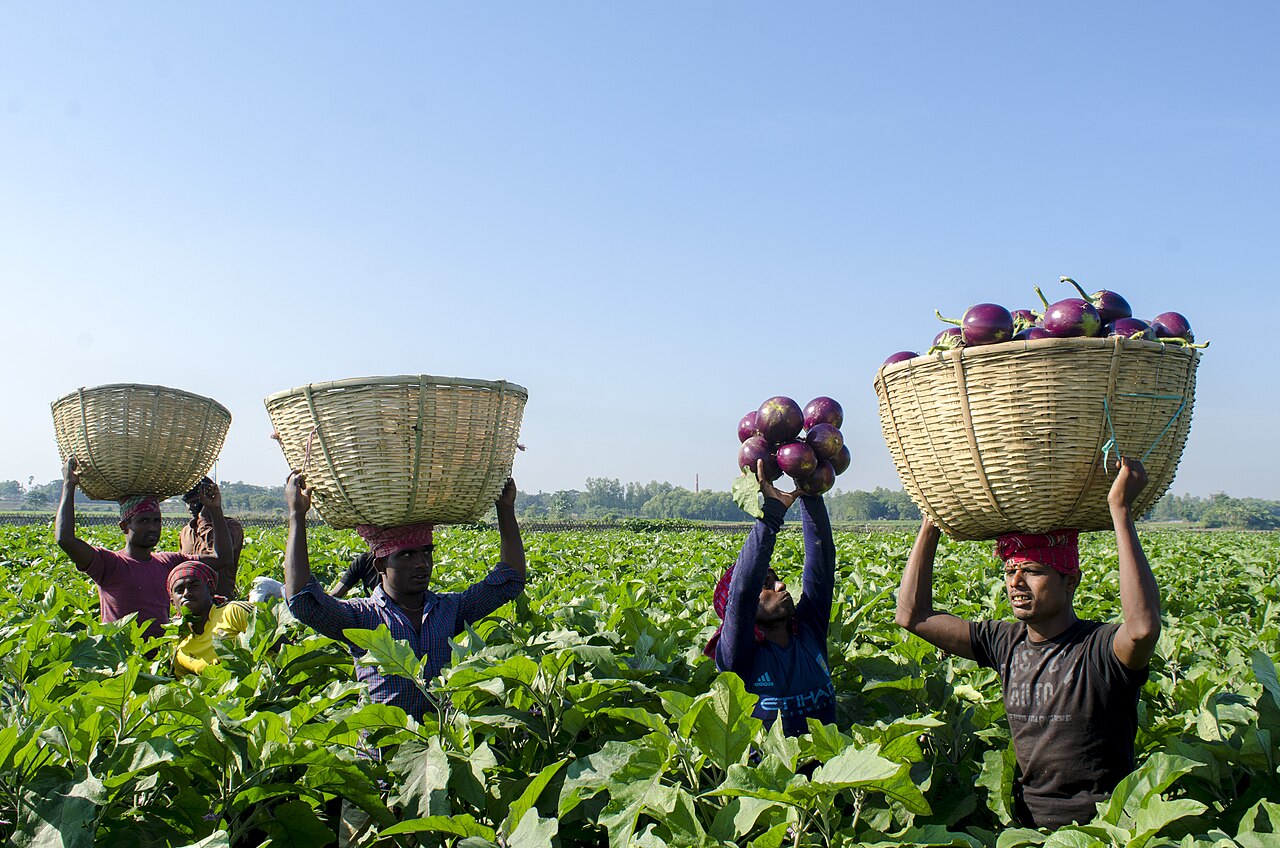
A virus has broken out in brinjal (eggplant) fields across Kurigram, including its char lands. The leaves of infected plants are turning yellow and the fruit is losing its shape and curling. Farmers say spraying one pesticide after another has done nothing, so a season of good yields has turned into one of worry.
According to the district office of the Department of Agricultural Extension, about 1,400 hectares of brinjal have been planted in Kurigram this season, about 150 hectares of it as an early crop. Brinjal is grown most on the river-bound district's chars and is an important cash vegetable for its farmers.
In the fields, some plants carry ripe brinjals and others new fruit, but on some the leaves have already yellowed. The fruit of infected plants loses quality and less of it can be sold. Farmers say they are not sure what disease the plants have or how to control it, and spraying again and again is only adding to their costs.
Shafiqul Islam, a farmer in Gulkur in Sadar upazila, said almost everyone's brinjal field is in the same state as his, but nobody from the agriculture department is at their side. Abdul Awal from the same area spent Tk 22,000 on brinjal on 22 decimals and has sold Tk 10,000 worth so far. Suddenly, he said, the leaves are yellowing as if drying out and the brinjals are curling.
Farmers complain that even after their fields were hit, field-level officers have not come to identify the disease or advise on treatment. Those who planted more land in the hope of good prices are the most worried, having already spent heavily on land preparation, seedlings, fertiliser, irrigation and pesticides.
Nahida Afrin, agriculture officer for Kurigram Sadar upazila, said that when brinjal plants show symptoms of yellow mosaic virus it is important to identify the infected plants and stop the spread: infected branches should be cut off and, where infection is heavy, whole plants pulled up. She said the department's field staff are advising farmers.
The report is by Krishi Shomoy's Kurigram correspondent.
Photo: Ayman Nakib Badhan / Wikimedia Commons (CC BY-SA 4.0)
Source: Krishi Shomoy

Comments
(0)