
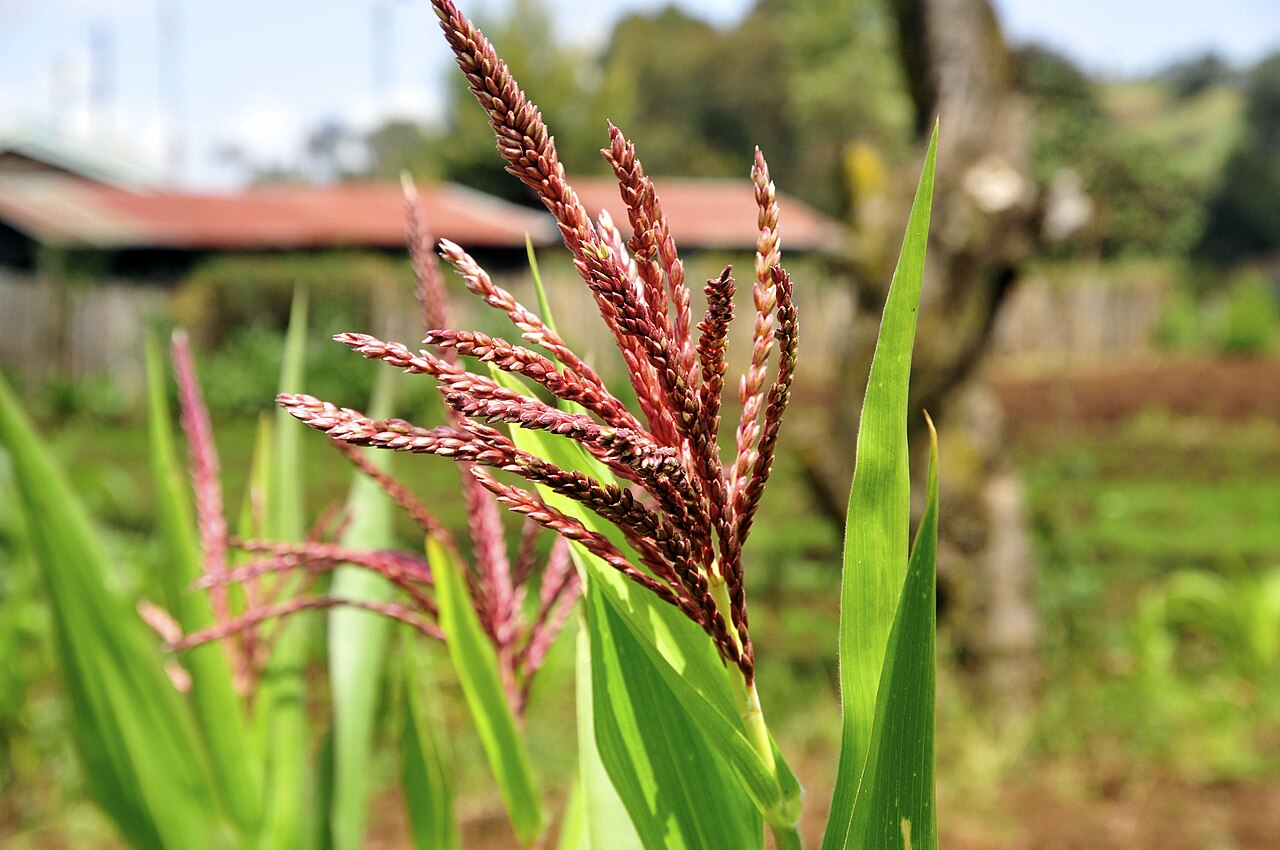
The African Plant Nutrition Institute (APNI) has completed a round of post-harvest dialogues in five Kenyan counties for its OFE 2.0 initiative, which puts farmers at the centre of crop nutrition experiments run on their own fields.
OFE 2.0, short for the On-farm experiment-mediated Nutrient-Catalyzed Agricultural Transformation for Africa, works in Siaya, Kakamega, Embu, Meru and Machakos counties with a network of more than 200 farmers. Its aim is to build data-driven, local approaches to crop nutrition and a model that can be adapted and scaled; the current pilot is in maize-mixed farming systems.
Between August and September 2026 the farmers met again with scientists, government officers, extension workers, companies, banks and other partners to review the 2025 short-rain season and the 2026 long-rain season. The talks drew on agronomic and socio-economic analysis of the data collected from the farmers' plots, so that what farmers saw could be set beside what the measurements showed.
Farmers explained the changes they had made to their management, the technologies they tried, the problems they met and what shaped their results, and worked out updated plans for the coming season. The discussions also covered record keeping, gross-margin analysis, access to finance and market links, since better yields only help if they make the farm a better business.
Participants included the Ministry of Agriculture and Livestock Development, the Kenya Agricultural and Livestock Research Organization (KALRO), OCP Africa, the Cereal Growers Association, Bayer East Africa, the Agricultural Finance Corporation, the Kenya National Farmers' Federation, Kenya Commercial Bank and One Acre Fund. Groups used a Business Model Canvas to look at what an on-farm experimentation service could offer, what it would cost and how it could be sustained.
APNI says the lessons will feed a self-sustaining, replicable on-farm experimentation service that could be used beyond the first pilot.
Photo: CIAT / Wikimedia Commons (CC BY-SA 2.0)
Source: Global Agriculture

Comments
(0)