
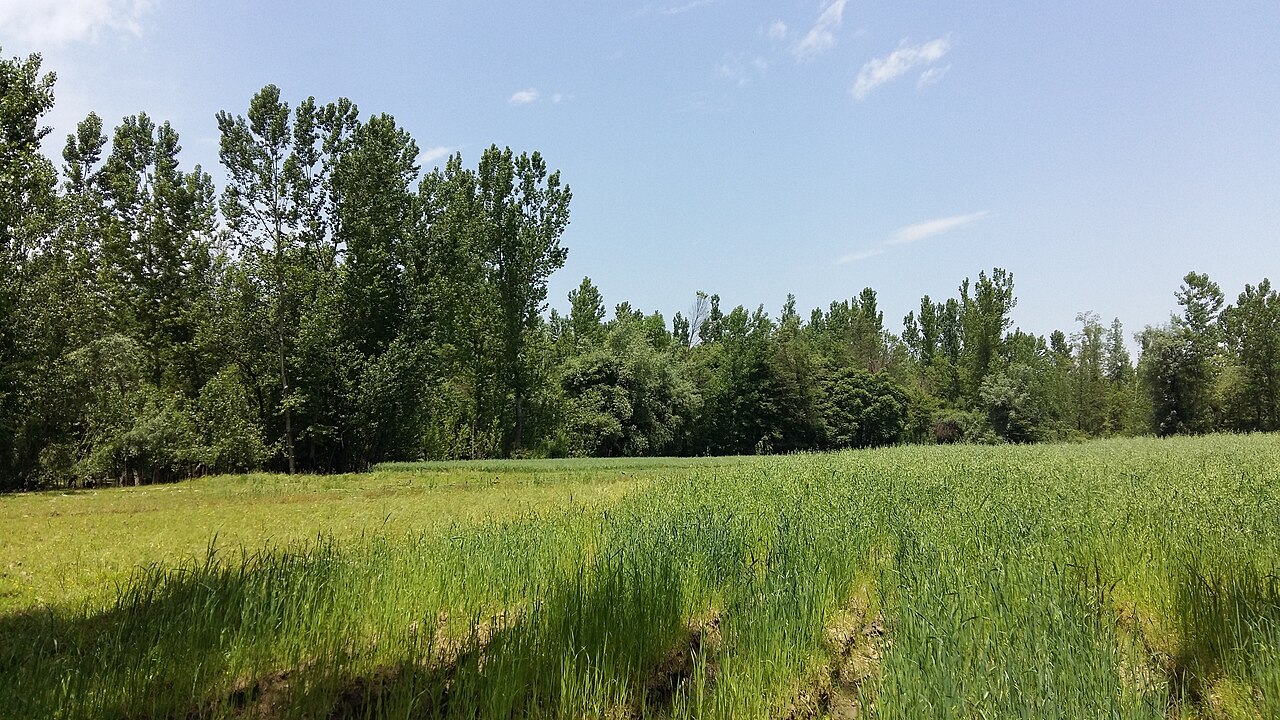
Three publications on agricultural carbon markets were released at the Sustainable Mountain Development Summit (SMDS) 2026 in Srinagar, Jammu and Kashmir, which Sher-e-Kashmir University of Agricultural Sciences and Technology of Kashmir (SKUAST-Kashmir) is hosting from 12 to 14 October.
SKUAST-Kashmir prepared them with the International Institute for Environment and Development (IIED) and the Voluntary Carbon Markets Integrity Initiative (VCMI), with the endorsement of India's Ministry of Agriculture and Farmers' Welfare. The ministry will adopt one of them, the Environmental and Social Management Framework, as the basic safeguard for screening and managing the environmental and social risks of agricultural carbon projects under India's Carbon Credit Trading Scheme.
The second, a Farmer's Guidebook, explains how climate-smart practices can cut emissions and store carbon, and how farmers can join carbon market projects on informed, transparent and fair terms. The third, an Article 6.2 Toolkit, guides governments and institutions on cooperative carbon-market arrangements under Article 6.2 of the Paris Agreement, covering authorisation, governance and environmental integrity.
SKUAST-Kashmir Vice-Chancellor Nazir A. Ganai said the publications give practical guidance on bringing carbon markets into farm climate action while protecting ecological integrity and social equity, and stressed the role of soil carbon and sustainable land management. George Hodgetts, policy manager at VCMI, said high-integrity carbon markets could channel climate finance to agriculture, which remains underfunded despite its exposure to climate risk.
Ritu Bharadwaj, director of climate resilience, finance and loss and damage at IIED, said farmers must understand the terms of participation, receive a fair share of the benefits and be protected from risk.
Together, the organisers say, the publications are meant to help policymakers, institutions and farming communities judge carbon market opportunities while keeping projects responsible and fair to the farmers who join them.
Photo: Sauood07 / Wikimedia Commons (CC BY-SA 4.0)
Source: Global Agriculture

Comments
(0)