
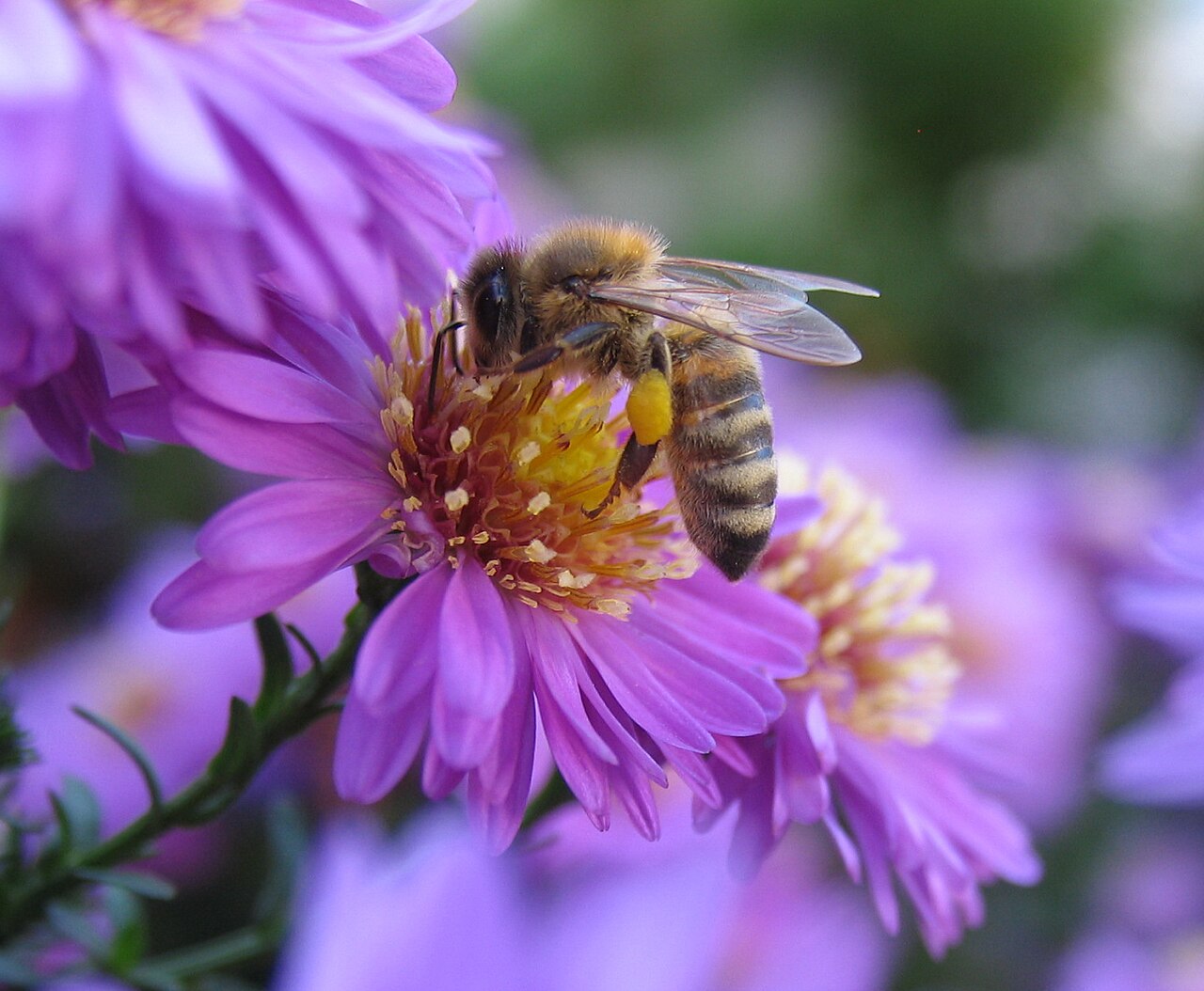
The ivy bee (Colletes hederae), first recorded in Ireland in 2021, has been spotted in Sixmilebridge, County Clare, far west of where it was known to live, Agriland reports. Citizen scientist Jim Oldroyd found a colony on 26 September while walking with his children; until now the species had been recorded only in the south-east, mainly on the Wexford coast, with New Ross its most westerly site.
The bee nests in loose, light or sandy soil on south-facing banks near flowering ivy and is most active in September and October. It is solitary, but thousands of nests can gather in one place, and like most wild bees in Ireland it is not aggressive. "All nature needed was a bare slope and some flowering ivy," Oldroyd said of the colony on the edge of a housing estate.
Owen Beckett of the National Biodiversity Data Centre said the record suggests the species may be much more widespread than thought. Because the bee times its emergence to ivy flowering between August and October, he asked farmers to wait until winter to cut hedges with flowering ivy, although cutting is legal after 31 August.
Ireland has 80 solitary bee species, 21 bumblebees and one honey bee. Pollinators are declining mainly through loss of habitat, and the All-Ireland Pollinator Plan 2026-2030 aims to create pockets of habitat every 200 metres. Clare County Council's biodiversity officer Barry O'Loughlin called the find significant, a new county record.
Photo: CrazyD / Wikimedia Commons (CC BY-SA 3.0)
Source: Agriland


Comments
(0)