
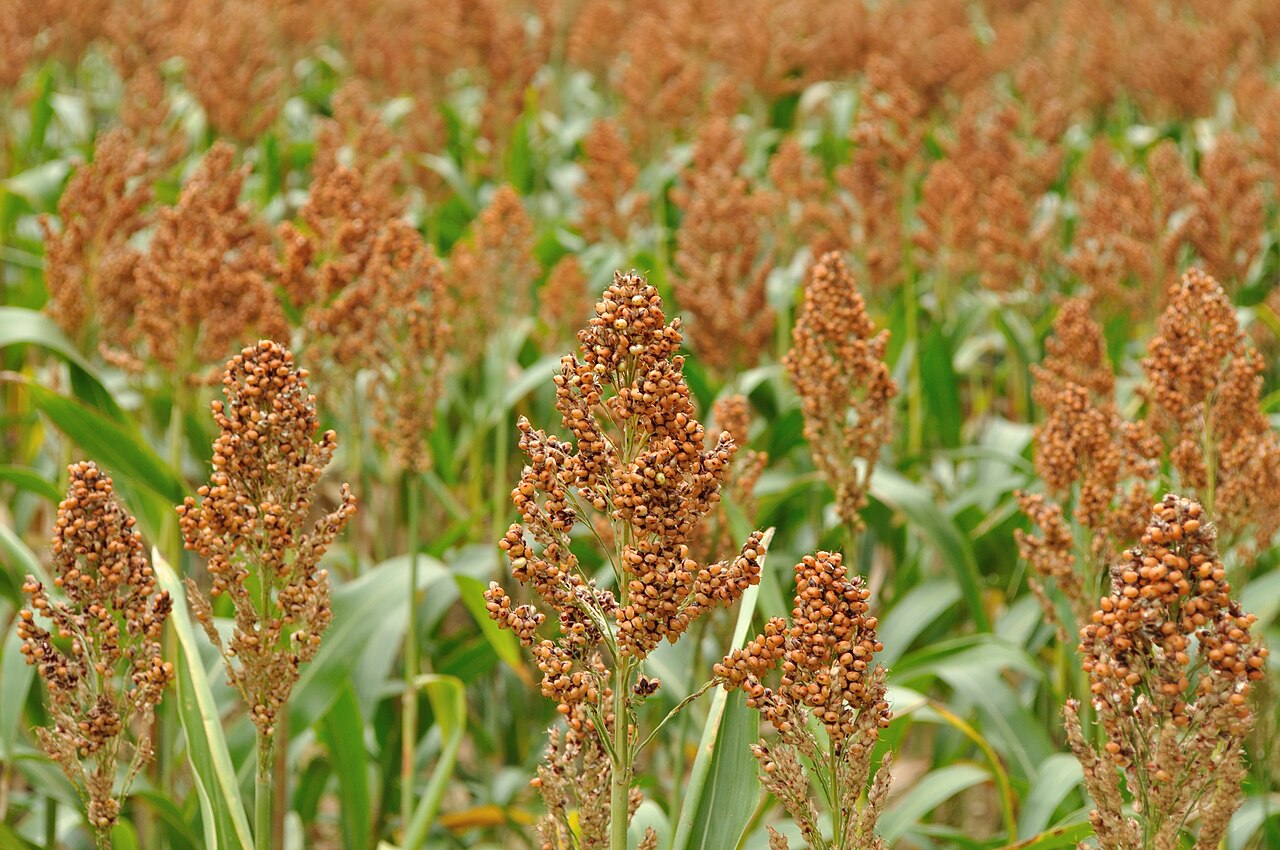
Sorghum could take a much bigger place in European farming as heat and water scarcity squeeze maize, according to new research from France's National Research Institute for Agriculture, Food and Environment (INRAE), reported by Seed World Europe.
Sorghum covers just 0.1% of Europe's cropland today, although it tolerates heat and limited water far better than maize, which needs a lot of water and is widely grown for livestock feed. The study projects average sorghum yields rising from 3 tonnes per hectare under current conditions to between 3.4 and 3.8 tonnes per hectare between 2050 and 2100.
The gains would vary by region: northern Europe could see higher yields as temperatures rise, while southern Europe could see modest declines as it gets hotter and drier. The share of European cropland able to support high and stable sorghum yields would grow from about 22% now to between 29% and 34% by the end of the century, depending on the climate scenario.
The researchers estimate that if sorghum were grown once every three years in suitable rotations, it could replace about 90% of the maize now used for livestock feed in Europe. In France, maize accounts for 38% of irrigated cropland, so a switch could cut irrigation demand and free water for other crops while improving feed self-sufficiency.
The team built a machine-learning model trained on historical sorghum yields and climate variables such as temperature, precipitation and relative humidity, and ran it against 20 scenarios from five climate models. The authors note that the benefits depend on future conditions, regional suitability and whether farmers actually adopt the crop.
Photo: Gyrostat / Wikimedia Commons (CC BY-SA 4.0)
Source: Seed World Europe


Comments
(0)