
India's cotton shortage is expected to worsen as new free trade agreements raise demand for its textiles and garments while El Nino and drought cut the crop, The Economic Times reports from Pune. Domestic production is expected to fall 3.4 percent to a new low.
Imports hit a record of an estimated 7.1 million bales of 170 kilograms in 2025-26, against 5.74 million the year before, and prices have risen more than 7 percent in the past month. Industry leaders link part of the rise to the end of the import duty exemption: India waived its 11 percent duty on raw cotton from 1 June to 31 October. Since the new cotton year began on 1 October, the benchmark Gujarat 29-millimetre cotton has risen by ₹4,500 per candy to ₹68,500, spot data show.
The Southern India Mills Association told finance minister Nirmala Sitharaman in a recent letter that the country consumed around 34 million bales in 2025-26 and imported about 7 million. Its secretary general, K Selvaraju, said export demand from the United Kingdom has risen in the last couple of months and that demand next season may exceed 36 million bales because of the trade agreements. "El Nino and drought have affected the cotton crop in several regions and production may fall below 28 million bales," he said, which could leave a gap of more than 9 million bales and a shortage of quality cotton. Demand would rise further if the agreement with the European Union takes effect in 2027.
Domestic prices have climbed above minimum support price levels on expectations of a smaller crop and uncertainty over the duty exemption. Pradip Jain, president of the Khandesh Ginners' Association, said ginning has become difficult because yarn prices have not risen in step with cotton, and that farmers are holding their crop in expectation of higher prices.
In the field, industry leaders said many farmers took only one picking this year and cleared their land for other crops because of a lack of moisture, and yields are likely to fall. The report was written by Jayashree Bhosale.
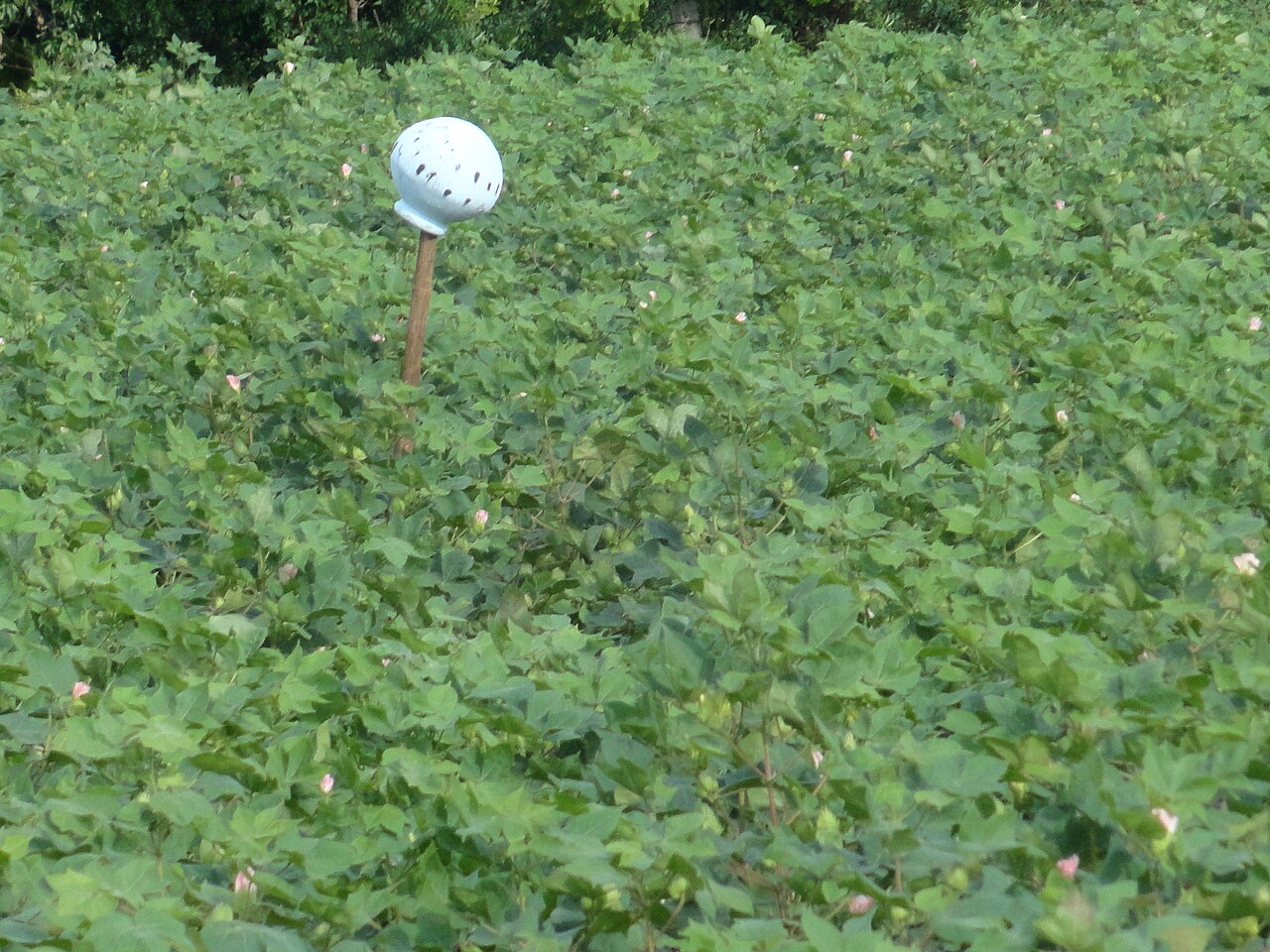
Photo: Bhaskaranaidu (Bt cotton crop at Nagarjuna Sagar, India) / Wikimedia Commons (CC BY-SA 3.0)
Source: Economic Times Agriculture/Food


Comments
(0)