
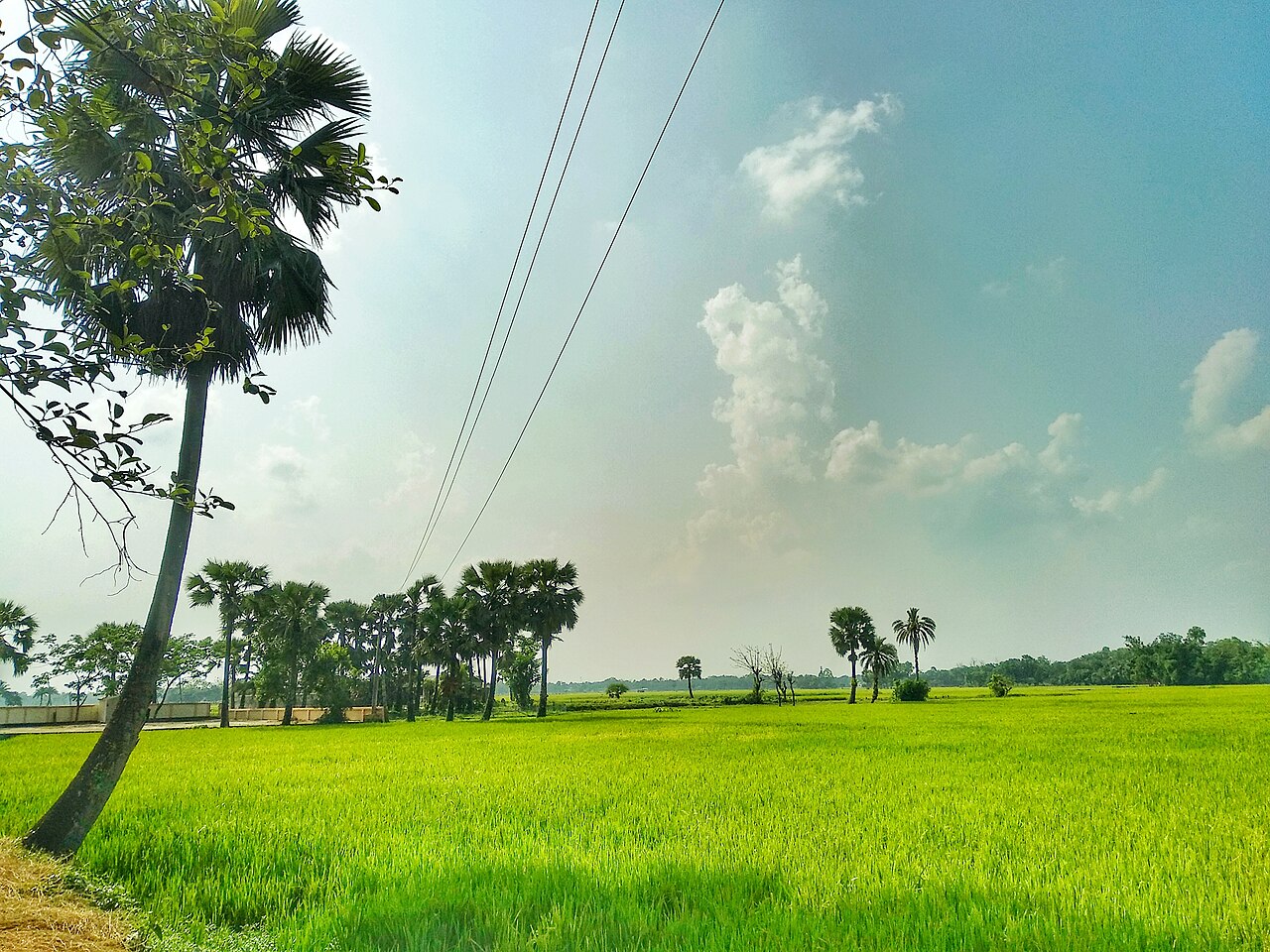
On the Shyamnagar coast of Satkhira, many Aman rice fields have dried out and cracked for want of irrigation water. With the plants already turning yellow, local farmers fear a heavy loss of yield this season.
The upazila agriculture office says Aman was transplanted on 17,009 hectares in Shyamnagar this year, and at least 25 per cent of that land is now short of water. Farmers in the Munshiganj, Burigoalini, Atulia, Ishwaripur, Ramjannagar, Nurnagar and Kashimari unions are the most worried.
Salinity and the lack of irrigation leave much of this coast fallow in the Boro season, so Aman is the crop farmers here depend on. Torupashu Sardar, a farmer from Kultali village, said Aman is grown on rain, but a drought has set in early this year; in a long working life, he said, this is the first time he has run short of water for Aman.
Farmer Sunil Joardar pointed out that the field needs water when the tillers form, when the panicles emerge and when the grain fills; a shortage at those stages means no harvest worth the name. Asit Kumar of Dhankhali village said that when fresh water falls in the dry spell, the salinity of soil and water becomes an even bigger problem.
Upazila agriculture officer Oliul Islam said that in a water shortage, salinity stops the rice plant taking up water and nutrients normally. Growth slows, leaf tips dry and the plants weaken, putting the yield at risk. He hopes a depression expected soon will bring rain and some relief.
In a study of Shyamnagar's water crisis, the research organisation BARCIK (Bangladesh Resource Centre for Indigenous Knowledge) has recommended digging large field-level ponds or reservoirs and storing rainwater, so that it can be used for irrigation when needed. It sees this as the lasting answer for farming on the coast.
Reported by Banglanews24's district correspondent Sheikh Tanzir Ahmed.
Photo: A paddy field in Bangladesh (illustrative), Shahidul Hasan Roman / Wikimedia Commons (CC BY-SA 4.0)
Source: Banglanews24

Comments
(0)