
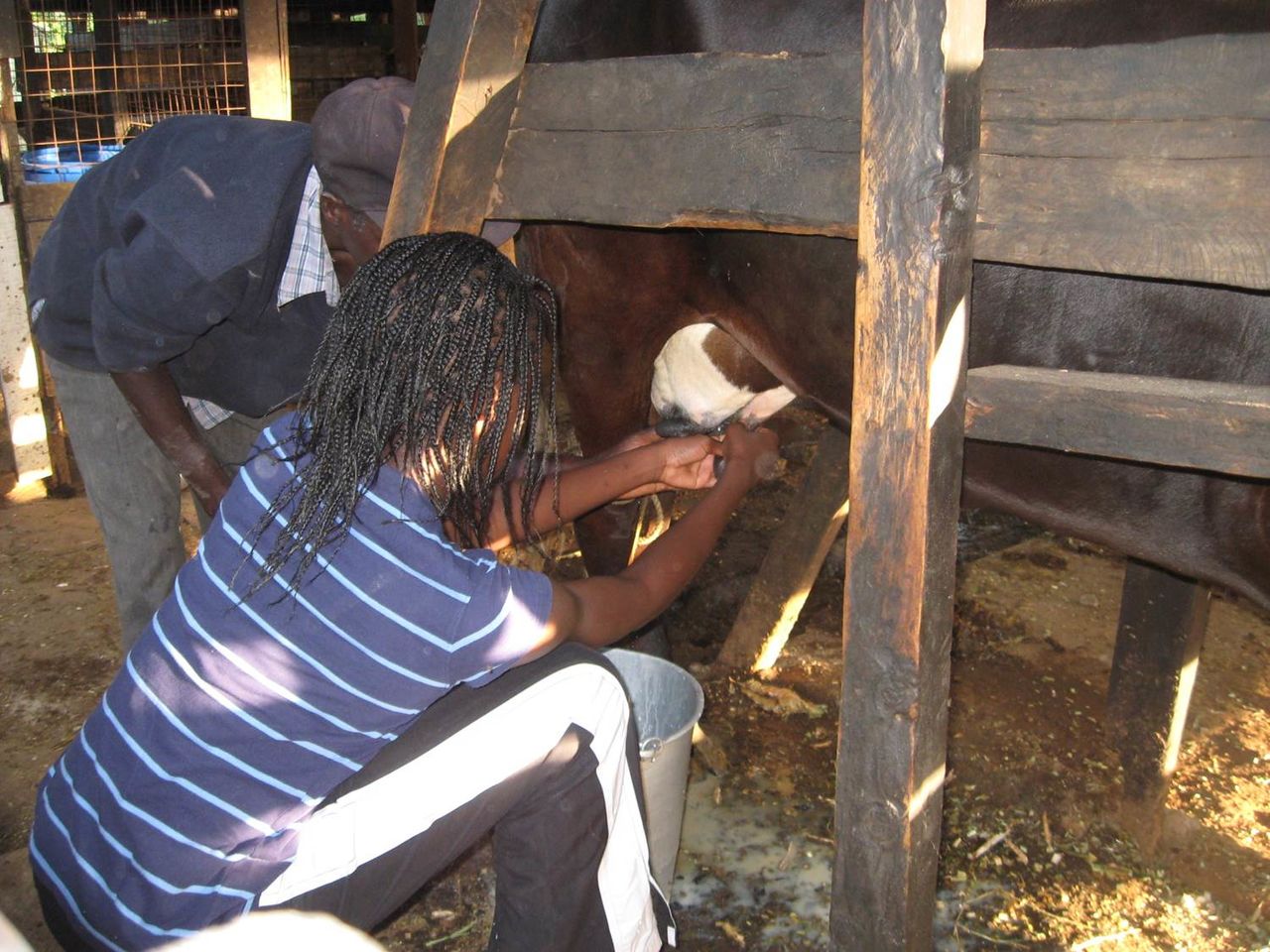
The International Livestock Research Institute (ILRI) has launched Livestock Futures, a multi-year flagship series to help low- and middle-income countries use their livestock sectors for sustainable development, at the 2026 Borlaug Dialogue in Des Moines, Iowa.
Livestock already contributes around 40% of agricultural GDP in those countries and supports the livelihoods of 1.7 billion people, ILRI says. Yet healthy diets that include animal-source foods are out of reach for almost 2.7 billion people, according to the latest UN data, and in Africa, where demand for such foods is forecast to double by 2050, they are the least affordable.
The series will take one priority area a year to 2030, bringing together experts to fill evidence gaps and outline solutions for different production systems. The four priorities, identified in a recent review, are livelihoods and food security; climate, natural resources and One Health; climate action and food security; and climate action and livelihoods. It builds on earlier work on genetic improvement, livestock vaccines and index-based livestock insurance.
The review found that livestock is often missing from research on nutrition, livelihoods, One Health and the environment; that evidence on emissions and climate risks to animals rarely connects to other development outcomes; and that many studies do not distinguish pastoral, smallholder and intensive systems.
"Livestock are much more than a source of commodities. They are a foundation for food and nutrition security, livelihoods, resilience and sustainable development for billions of people," said ILRI Director General Professor Appolinaire Djikeng. The Dialogue's livestock session, co-organised with the University of California, Davis and Iowa State University, was the first time livestock featured in its plenary. Consultations are under way and the first flagship product is expected in 2027.
Photo: Johntez / Wikimedia Commons (CC BY-SA 4.0)
Source: ILRI
Comments
(0)