
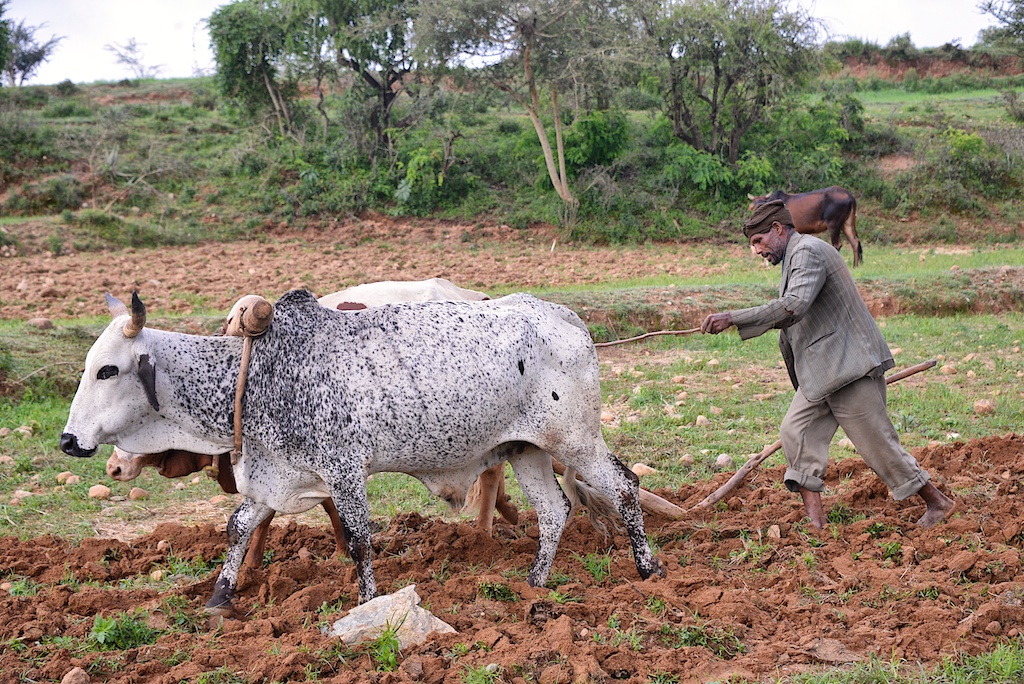
The International Food Policy Research Institute (IFPRI) is launching research on seed systems in conflict zones, looking at how climate shocks, violence and displacement affect farmers' access to seed in northern Ethiopia and northern Nigeria. Fieldwork is due to begin this month, November 2026.
The work is funded by the UK Foreign, Commonwealth & Development Office under CGIAR's Breeding for Tomorrow programme. It asks a practical question: what kinds of emergency seed aid meet farmers' immediate needs while also strengthening the local seed systems they depend on.
The authors, Guush Berhane, Claudia Ringler and Rewa Misra, write that fragile and conflict-affected countries face overlapping crises of climate volatility, violence, displacement, food insecurity and weak institutions. The current "super" El Niño, the strongest on record so far, is adding droughts, heavy rains and other weather shocks. Farming households in the affected areas of sub-Saharan Africa must decide whether, when and what to plant, often when seed and other inputs are hard to find or too expensive.
Seed aid, the researchers argue, can get suitable seed to farmers before a shock or replace seed a shock has destroyed, so that production continues. But they note that access, not supply, is often the bigger problem. Evidence suggests that after a shock farmers are more likely to struggle to afford seed than to find none available, which is why aid has to be designed for local conditions rather than as a standard handout.
The project will look at both regions through that lens, to see which forms of support keep fields planted in the short term without weakening the seed markets and seed-saving that farmers fall back on in later seasons.
Photo: Rod Waddington / Wikimedia Commons (CC BY-SA 2.0)
Source: CGIAR

Comments
(0)