
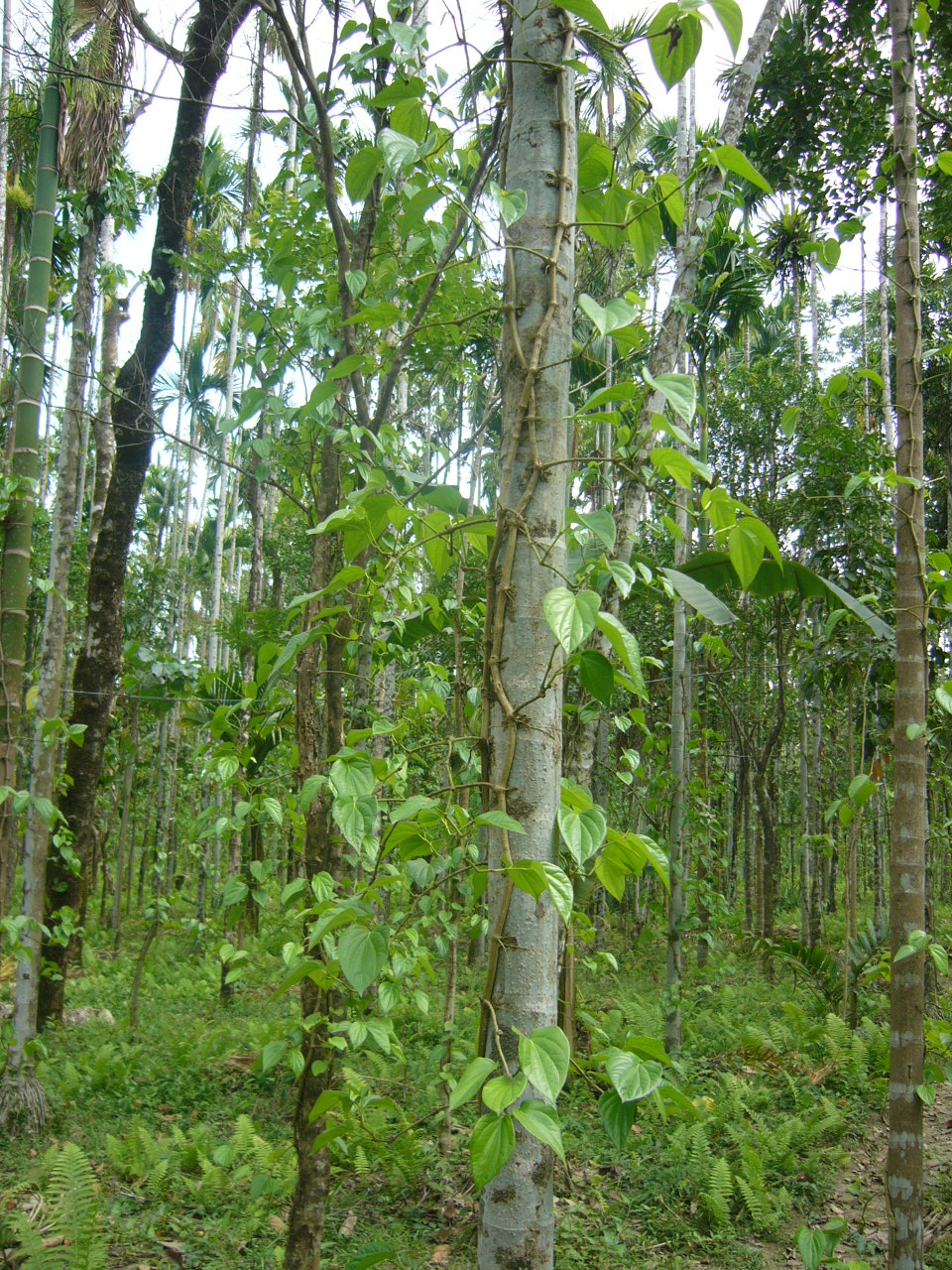
Betel leaf output in the Khasi punjis (hill villages) of Moulvibazar has fallen to about half this year, growers say. Rainfall dropped in September and October, the vines are not growing normally and the leaves are smaller, while labour and input costs have gone up, so sales no longer cover their costs.
There are 65 Khasi punjis, large and small, in the hills of Sreemangal, Kamalganj, Kulaura, Juri, Barlekha and Rajnagar upazilas. The Khasi grow betel as a cash crop on forested hillocks among other trees, and it is the backbone of their livelihood. In their language the leaf is called "tempeu".
Growers say the monsoon is the peak season, when one vine yields one and a half to two times what it does at other times. Leaves are normally picked from a vine every one to one and a half months; this year they have had to wait two to two and a half months. Large leaves fetch the best prices, and small ones do not.
The men tend the vines and pick the leaves; the women sort them into bundles for market. Twelve leaves make a guchhi, twelve guchhis a kanta or bira, and twenty kantas a kuri. A kuri sells for Tk 500-600 in the monsoon and up to Tk 2,000-3,000 in the dry season, and a family sells two or three kuris a week.
Many growers take advances from local wholesalers at the start of the monsoon to tend their plots and must then sell to them cheaply. After weekly NGO loan instalments and wages, they say, nothing is left. Fila Patmi, the headman of Lawachara Khasi punji, said even the crop saved after this year's disease is not fetching a fair price and many families are falling into debt. The growers are asking for government support.
Md Jalal Uddin, deputy director of the Department of Agricultural Extension in Moulvibazar, said the department is advising growers and will look at any further problems. Khasi betel leaf meets domestic demand and is also exported, so a poor season hits both hill families' incomes and exports. The report is by Krishi Shomoy's Moulvibazar correspondent.
Photo: Md. Shahnoor Habib / Wikimedia Commons (CC BY 2.5)
Source: Krishi Shomoy

Comments
(0)