
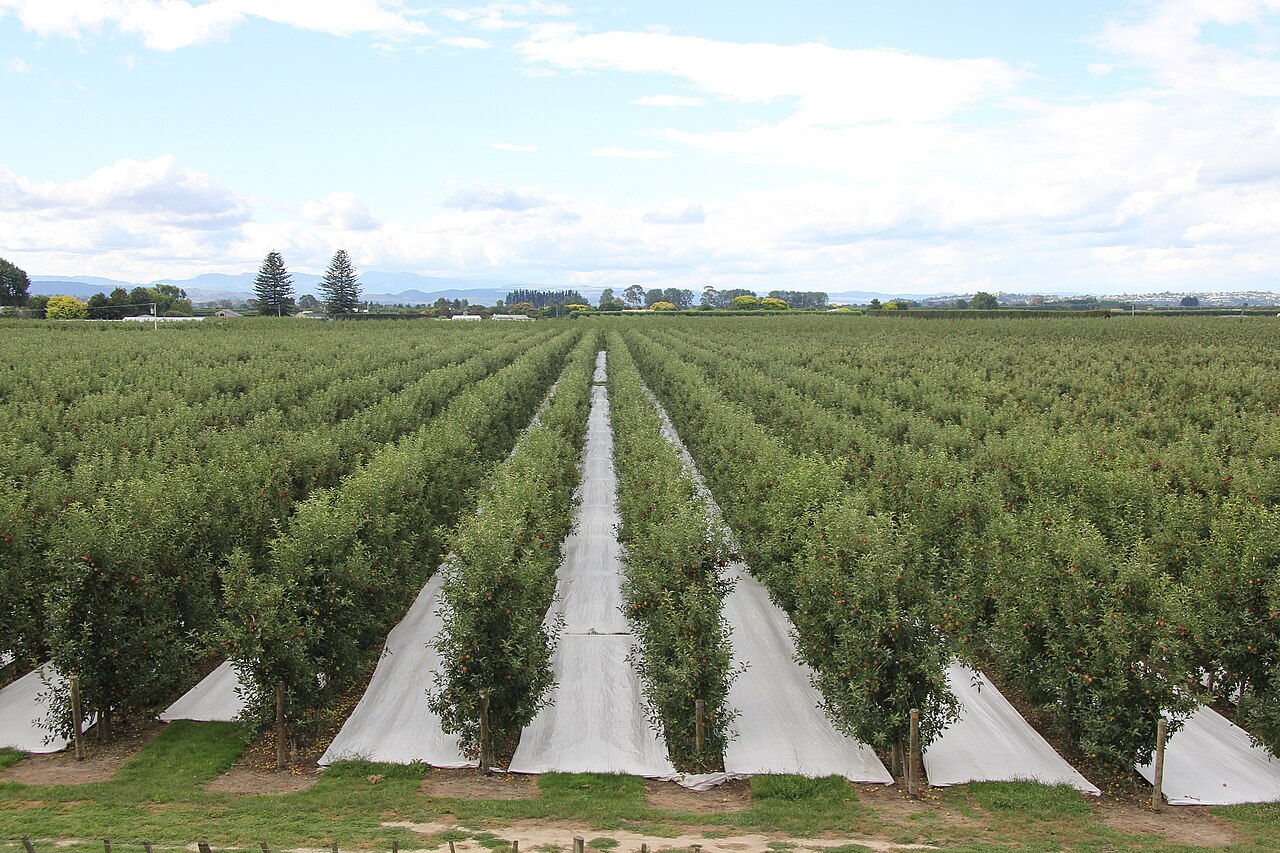
New Zealand agritech company Hectre has opened a fruit quality research laboratory in Auckland to develop hyperspectral imaging that can spot internal defects in fruit, Rural News reports. Agriculture Minister Todd McClay opened the facility, which houses a programme worth nearly NZ$5 million co-funded by the government.
The lab will develop the next generation of Hectre's Arc camera, designed to use light to read a fruit's maturity, starch content and firmness through the skin. Knowing what is inside lets packhouses decide earlier what to store, what to pack and what to ship, so fruit reaches market in better condition with less waste.
"Hectre is the world leader in fruit colour and grade detection, but reading for internal defects is a much trickier problem," said chief executive Matty Blomfield. "Understanding the internal structures of fruit being shipped allows packhouses to make smart decisions around how to store, pack and ship their product. It reduces avoidable waste and brings value back to the growers and packhouses."
The three-year project is led by Hectre with co-investment from the government's Primary Sector Growth Fund. It aims for a proof-of-concept algorithm with at least 80 percent detection accuracy by June 2027 and a packhouse prototype validated in commercial conditions by June 2028.
Hectre's current Arc camera scans fruit as trucks arrive at packhouse intake and returns size, colour and external quality data in near real time. It is used in packhouses in 22 countries, covering billions of pieces of fruit a year, with accuracy approaching 99 percent from samples about 200 times larger than manual checks allow. The company closed a $12 million Series A round this year, led by Punakaiki Fund.
Photo: Reinhard Kraasch / Wikimedia Commons (CC BY-SA 4.0)
Source: Rural News Group

Comments
(0)