
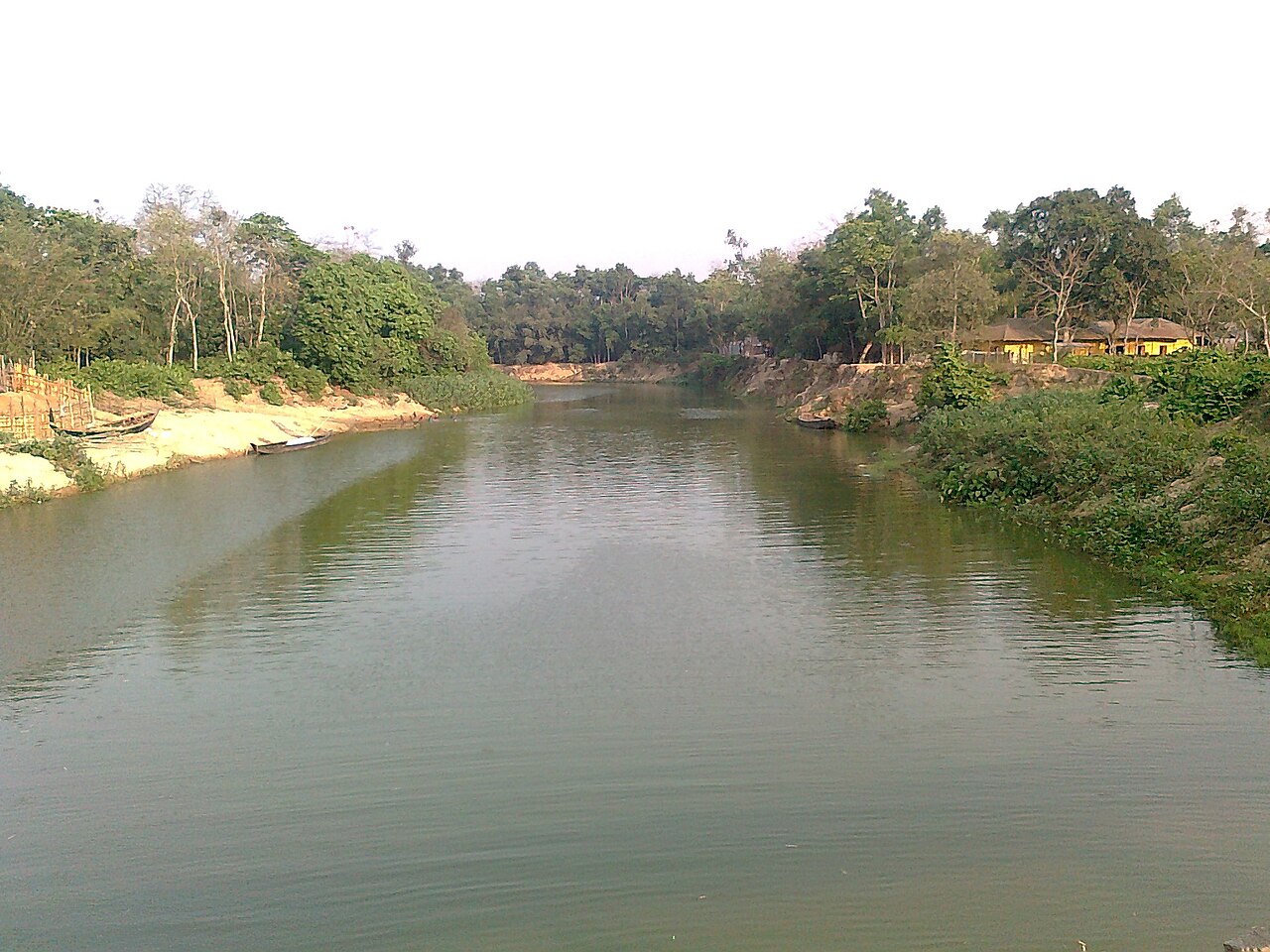
Toxic industrial waste, untreated household sewage and farm chemicals are endangering the Halda, Bangladesh's only natural breeding ground for carp. Researchers say dealing with two large sources of waste could cut the river's pollution by about 80 percent. They gave the findings after a joint field visit by the Department of Environment in Chattogram and Chittagong University's Halda River Research Laboratory.
Halda researcher Professor Dr Manzoorul Kibria said the main sources are waste from the Chattogram City Corporation area that flows through Ananya residential area, and waste from the Bahir Signal industrial area; solving those two would cut pollution by about 80 percent. No deadline for cleaning up the river has yet been set.
By his assessment, earlier measures have prevented about 60 percent of the pollution: the Asian Paper Mill and the Hathazari peaking power plant have been shut down completely, and tobacco growing in the area has been stopped. But 30 to 40 percent remains, much of it from scattered and distant sources.
Waste from factories, housing and markets reaches the Halda through canals including the Krishnakhali, Khondokia, Katakhali, Madari and Boalia, while the Bamanshahi and Kuyesh canals carry waste from the cantonment, Chowdhury Hat and Baradighir Par. Untreated waste from factories and high-rises between Oxygen and Kulgaon, an amusement park in Raozan, parts of Fatikchhari and pesticides from tobacco fields upstream also enter the river, the researchers said.
Pollution and climate change are raising concern for the breeding of rui, catla, mrigal and kalibaus. Mother fish spawn from April to July when hill flows, thunderstorms and favourable currents come. Published figures show a record 25,536 kg of eggs collected in 2020, about 14,664 kg in 2023, about 1,680 kg in 2024 and about 14,000 kg in 2025. Late rain and environmental stress brought last season's collection down to about 6,000 kg.
Beyond the two sources, the researchers say waste must be traced to where it starts, treated, and kept out of the river; effective enforcement, monitoring and coordination among government agencies are now the main challenge.
Reporting: Dainik Bangla.
Photo: Syed Nur Kamal / Wikimedia Commons (CC BY-SA 3.0)
Source: Dainik Bangla

Comments
(0)