
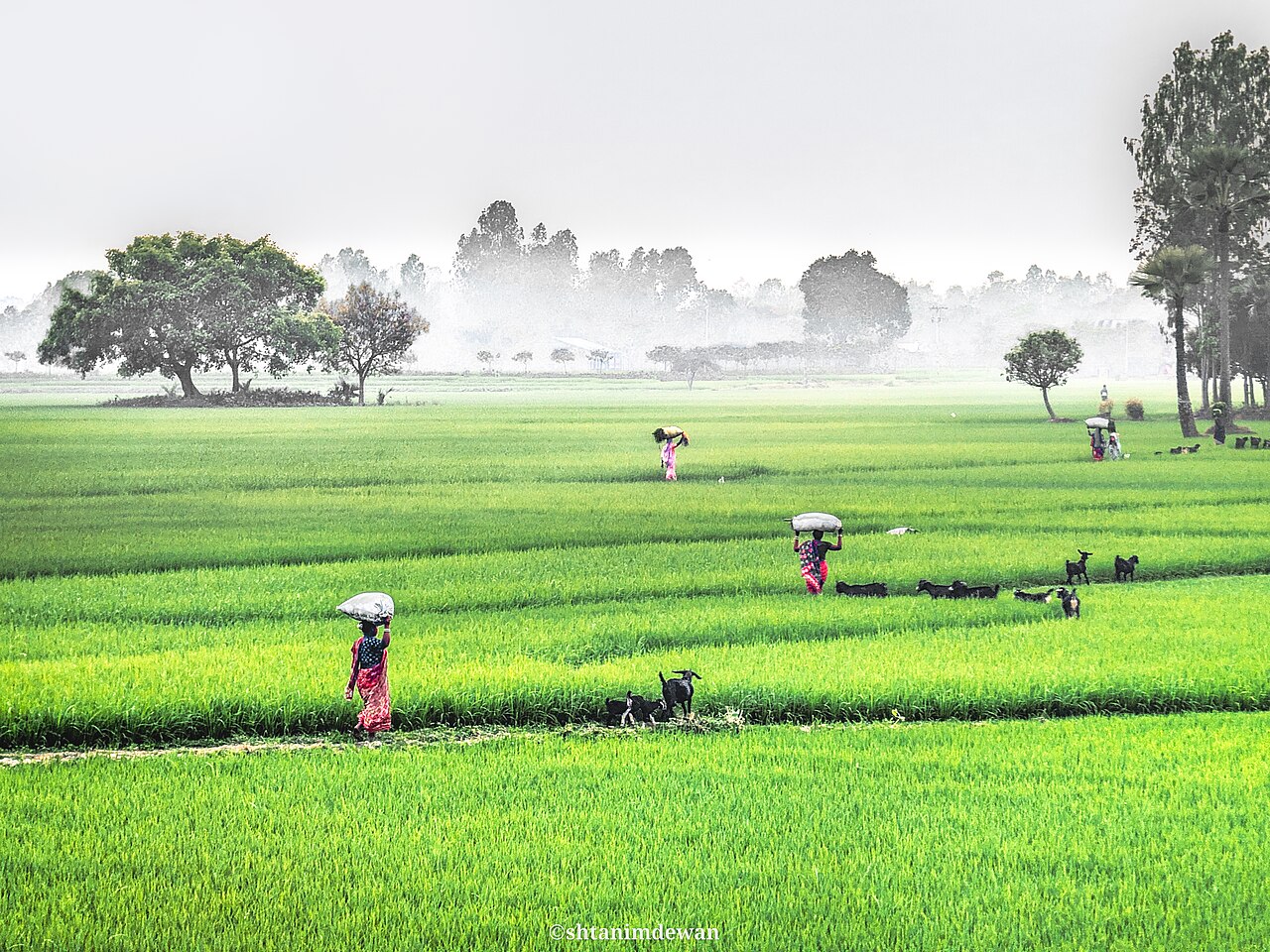
Experts, public representatives and stakeholders have called for an integrated water management policy to tackle the worsening water crisis in the Barind region, driven by falling groundwater, shrinking surface water and rising temperatures. The call came at a day-long policy dialogue, Protecting the Barind Region, in Rajshahi on Saturday, 31 October, BSS reported.
Professor Golam Mostafa, director of Rajshahi University's Institute of Environmental Sciences, said groundwater levels in the Barind region are falling by 0.1 to 0.6 metres a year. About 1,054 million cubic metres of water are drawn every year, nearly 90 percent of irrigation water comes from underground, and about 15,000 deep tube wells are in use. Temperatures reached 43C in 2024; heatstroke killed 67 people in Rajshahi division in 2024 and 31 in 2025.
Naogaon-1 MP Mostafizur Rahman said decades of expanding irrigated farming had led to excessive groundwater extraction, and called for a policy coordinating the agencies involved, along with rainwater harvesting and the digging of ponds and canals.
Jahangir Alam, executive director of the Barind Multipurpose Development Authority (BMDA), said projects have been taken to bring Padma water to Niamatpur, Tanore and Nachole. Government ponds dug by BMDA should stay under its management for irrigation and recharge, but there is a tendency to lease them for other uses; a proposal to the ministry has had no decision. He also pointed to weak monitoring of private pumping and wasteful distribution.
Chief guest Dr S M Ziauddin Haider, the prime minister's special assistant on health, urged an integrated water plan for the whole Barind, restoration of dried-up canals and wetlands, and reservoirs linked to the Padma to store monsoon water for the dry season. Reserved-seat MP Mahmuda Habiba said upstream barriers on the Farakka, Teesta and Mahananda had cut water downstream.
The dialogue was organised by Youth in Research and Action for Social Change with UN Human Rights, WaterAid, Swisscontact and the Centre for Climate Change and Environmental Research.
Reporting: BSS, Rajshahi.
Photo: S.H. Tanim / Wikimedia Commons (CC BY-SA 4.0)
Source: BSS

Comments
(0)