
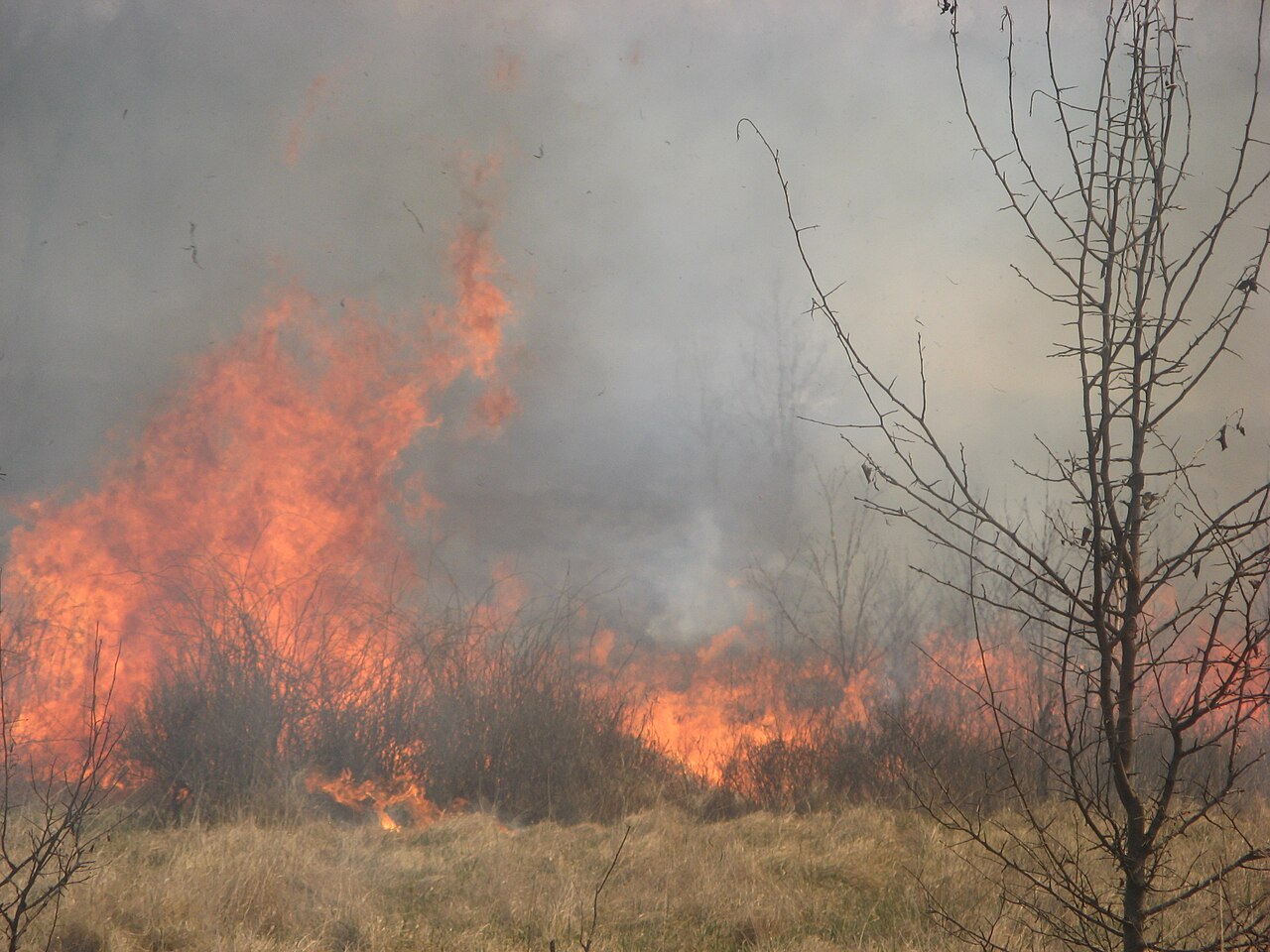
A doctoral researcher at Kansas State University is developing a fire-danger index tailored to Great Plains grasslands, designed to help ranchers and land managers decide when prescribed burns are safe, Farms.com reports.
Prescribed fire is a routine tool on the Plains, used to manage vegetation, support ecosystem health and reduce the fuel that feeds larger wildfires. Most burns are completed safely, but changing weather and other factors can push a fire beyond its intended boundaries and threaten nearby communities.
Mayowa George, in the university's Carl and Melinda Helwig Department of Biological and Agricultural Engineering, says many existing fire-danger models were built for other regions, vegetation types or wildfire programmes, which makes them less suitable for grassland.
His localized Grasslands Fire Danger Index (GFDI) combines wind speed, temperature, grass curing, fuel moisture and long-term drought to estimate how easily a grass fire may spread and how hard it could be to control. He has also created submodels to predict dead fuel moisture and grass curing, both critical to fire behaviour. It organises data from weather stations, fuel-moisture models and vegetation assessments into practical information for burn decisions.
The aim is to add to experience rather than replace it. "My goal is to develop a tool that works alongside land managers and supports their judgment," George said, adding that the right data and insights can make burns safer and reduce risk. The index may also help preserve field knowledge and make it available to new managers and people working in unfamiliar areas.
George's interest began in childhood, when a major fire in his community caused heavy loss of life and property. His advisor is Zifei Liu, an assistant professor in the same department. The work was featured in an article by Julia Hall.
Photo: U.S. Fish and Wildlife Service / Wikimedia Commons (Public domain)
Source: Farms.com
Comments
(0)